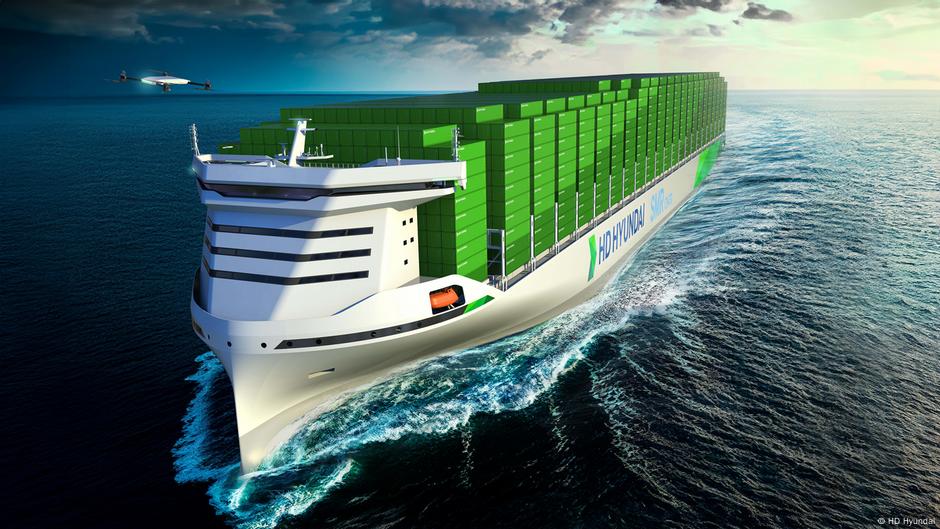
The Potential of Nuclear-Powered Ships in Reducing Carbon Emissions
With most cargo vessels still relying on dirty bunker oil, the global shipping industry is under pressure to meet its CO2 reduction targets. However, it seems that one of the most obvious solutions — nuclear energy — has been overlooked. Could this be the key to revolutionizing the future of maritime transport?
On July 21, 1959, former US First Lady Mamie Eisenhower smashed a champagne bottle against the towering hull of the NS Savannah before the newly built ship slid into the Delaware River. This moment marked the beginning of a bold experiment in maritime technology. Instead of a conventional diesel engine, the Savannah was powered by a nuclear reactor. Between 1962 and 1970, this merchant vessel transported goods and people around the world, showcasing the peaceful use of nuclear energy.

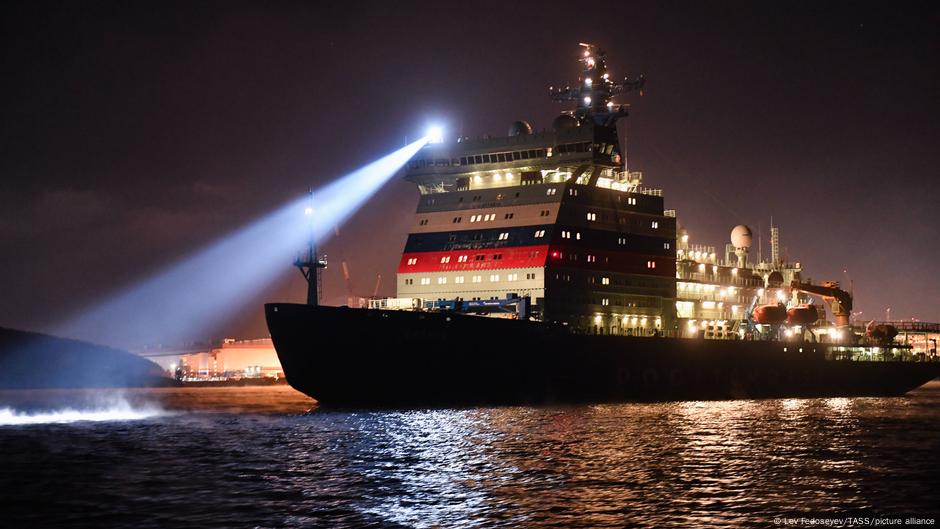
Today, only a few countries operate nuclear-powered ships, and these are mostly for military purposes, such as aircraft carriers and submarines. Russia, for instance, uses a small fleet of nuclear icebreakers along the Northern Sea Route in the Arctic. Cargo vessels, let alone passenger ships, that run on nuclear fuel have largely disappeared from the seas. However, some experts believe that the time has come to bring them back.
Shipping’s Carbon Emissions Problem
Merchant ships carry about 80% of all internationally traded goods, making them essential to the global economy. However, the majority still rely on bunker oil, a thick, tar-like fuel derived from crude oil. These ships emit significant amounts of CO2, with their collective emissions comparable to those of an entire country like Japan.
The International Maritime Organization (IMO) aims for the sector to reach net zero emissions by around 2050. However, current technologies like batteries or alternative fuels such as methanol and ammonia may not be sufficient to achieve this goal on their own.
Building a Case for Nuclear-Powered Ships
As global efforts to reduce CO2 emissions intensify, the idea of using nuclear energy in shipping is gaining more attention. Jan Emblemsvag, an engineering professor and project lead at the Norwegian research consortium NuProShip, highlights the main advantage: “Nuclear-powered ships would have no emissions.”
Inside the NS Savannah, a pressurized water reactor (PWR) used nuclear fission to heat water, producing steam to turn turbines and power the ship’s propeller and electrical generators.

The benefit of nuclear fuel lies in its ability to pack a huge amount of energy into a small space, allowing vessels to travel for years without refueling. “That gives a tremendous range,” said Emblemsvag. For example, the NS Savannah could make 14 trips around the world on a single fuel load, while modern container ships typically can’t even complete one trip without refueling.
What Killed the NS Savannah?
Despite its potential, the NS Savannah faced several challenges that led to its retirement in 1970. Built at a cost of $46 million (about $500 million today), the ship required large annual government subsidies to operate. During periods when oil was cheap, this became financially unsustainable.
Additionally, the ship had a limited cargo capacity of only around 10,000 tons, needed a specially trained crew, and faced restrictions due to nuclear safety concerns. Its design was also costly, with thick shielding around the reactor and extendable fins for stability in rough waters.

After the NS Savannah, only three other nuclear cargo ships were built — Germany’s Otto Hahn, the Japanese Mutsu, and the Russian Sevmorput. The first two were later converted to diesel, and the Severmorput is nearing retirement.
New Reactor Types for a Technological Breakthrough?
The current discussion about a nuclear revival in shipping is driven by advancements in next-generation nuclear reactors. Mark Tipping from Lloyd’s Register explains that “the technologies we’re looking at today for maritime are very different from what was applied in the 1960s and 70s.”
These so-called “Generation IV” reactors promise to be “safer than those of the past.” Unlike traditional pressurized water reactors, which require active intervention during failures, new reactors are designed to be failsafe, eliminating the need for human intervention.
Emblemsvag’s Norwegian consortium, including the Norwegian University of Science and Technology (NTNU) and shipbuilder Vard, evaluated 80 different reactor designs to identify the most promising ones for maritime use. They found that some reactor technologies could reduce fuel costs by up to 40% compared to heavy fuel oil.
However, none of these reactors have been built yet, and production capacities for large-scale manufacturing remain uncertain.
Legal and Safety Challenges
The International Maritime Organization (IMO) is updating its rules governing civilian nuclear vessels, which date back to 1981 and cover only pressurized water reactors. Ricardo Batista, IMO’s Technical Officer for Maritime Safety, emphasizes the need to understand the hazards and safety requirements before developing mitigation measures.
Questions remain about the safety of nuclear ships: How can we prevent nuclear fuel from leaking if a ship sinks? How can we stop it from falling into the hands of terrorists? And what happens to nuclear waste?
Classification societies, port authorities, and insurers must also update their guidelines, adding complexity to the legal framework surrounding nuclear-powered ships.
Will Nuclear-Powered Ships Remain a Sailor’s Yarn?
While some experts hope to see nuclear ships in operation by the early 2030s, the process of addressing all legal and safety issues is expected to take years. As such, the return of nuclear-powered ships may remain a distant dream for now.


