A Nation at a Crossroads
Zimbabwe is currently facing a critical juncture, as factional politics threaten to spiral out of control with potentially devastating consequences. The question that looms large is whether the church and God’s people can provide solutions that help the nation escape its destructive cycles.
Throughout history, religious institutions have often played a pivotal role during national crises, guiding societies through periods of transformation. This could be another such moment, where moral and spiritual leadership might offer a path toward unity and stability.
From the earliest days of the struggle for independence, faith leaders were seen as figures capable of transcending narrow ethnic or regional loyalties. One of the first examples was Thompson Douglas Samkange, a Methodist minister who led the Southern Rhodesia Bantu Congress, an early national organization run by Black people. His pastoral background gave him credibility as a unifier.
A generation later, Ndabaningi Sithole, a clergyman from the United Church of Christ in Zimbabwe (UCCZ), co-founded the Zimbabwe African National Union (Zanu) in 1963 after breaking away from Joshua Nkomo’s Zimbabwe African People’s Union (Zapu). While his contributions were significant, they also introduced divisions that would shape Zimbabwean politics for decades.
During the 1960s and 1970s, when nationalist movements were banned and leaders imprisoned, Bishop Abel Muzorewa was called upon to provide caretaker leadership. Through the African National Council (ANC), he mobilized resistance against the Pearce Commission, which aimed to impose a false compromise with colonialism. His role as a unifier stemmed from his position outside the Zanu-Zapu split of 1963.
However, when Muzorewa transformed this caretaker role into a partisan project through his United African National Council (UANC), more splintering followed. His brief tenure as prime minister of Zimbabwe-Rhodesia in 1979 failed to secure liberation, but he still played a part in the Lancaster House negotiations that led to independence.
Factionalism did not end in 1980. During the liberation war itself, Zanu showed deep divisions, sometimes along ethnic and regional lines. Lives were lost in the process. Though Zanu and Zapu initially agreed to contest the 1980 independence elections together under the Patriotic Front banner, Robert Mugabe and his colleagues broke the pact, entering the elections alone. That betrayal deepened mistrust and sowed the seeds of conflict.
When Zanu-PF turned its power against PF-Zapu in the early 1980s, it unleashed the Gukurahundi massacres in Matabeleland and the Midlands, where thousands of innocent people were killed. Again, violence—not persuasion or debate—was the instrument of choice.
In this dark chapter, clergy were again drawn in. Reverend Canaan Banana became Zimbabwe’s first president at independence. Though ceremonial, his role was meant to inspire confidence at home and abroad. Later, Banana contributed to the 1987 Unity Accord, which ended the Gukurahundi massacres, though it failed to eliminate factionalism.
Meanwhile, the Catholic Commission for Justice and Peace documented the atrocities of Gukurahundi, courageously preserving the truth in hopes of future healing. Yet decades on, the wounds remain raw and unresolved.
Factionalism soon spread to the opposition. The Movement for Democratic Change (MDC), launched in 1999 out of alliances among civil society, trade unions, and churches, initially embodied the promise of a new, unifying politics. But personal rivalries and disregard for party constitution soon fractured the party.
Disputes among Morgan Tsvangirai, Welshman Ncube, Tendai Biti, Thokozani Khupe, and others splintered the movement. Even at Tsvangirai’s funeral, violence threatened, with Khupe needing protection from Chamisa supporters. Once again, personality-driven politics proved stronger than institution building.
Within the ruling party, factionalism continued unchecked. Robert Mugabe presided over decades of internal rivalries until his ouster in 2017, when the military-backed Lacoste faction displaced the G40 group. That transition demonstrated a recurring truth in Zimbabwean politics: factions are rarely settled by dialogue or policy, but by force.
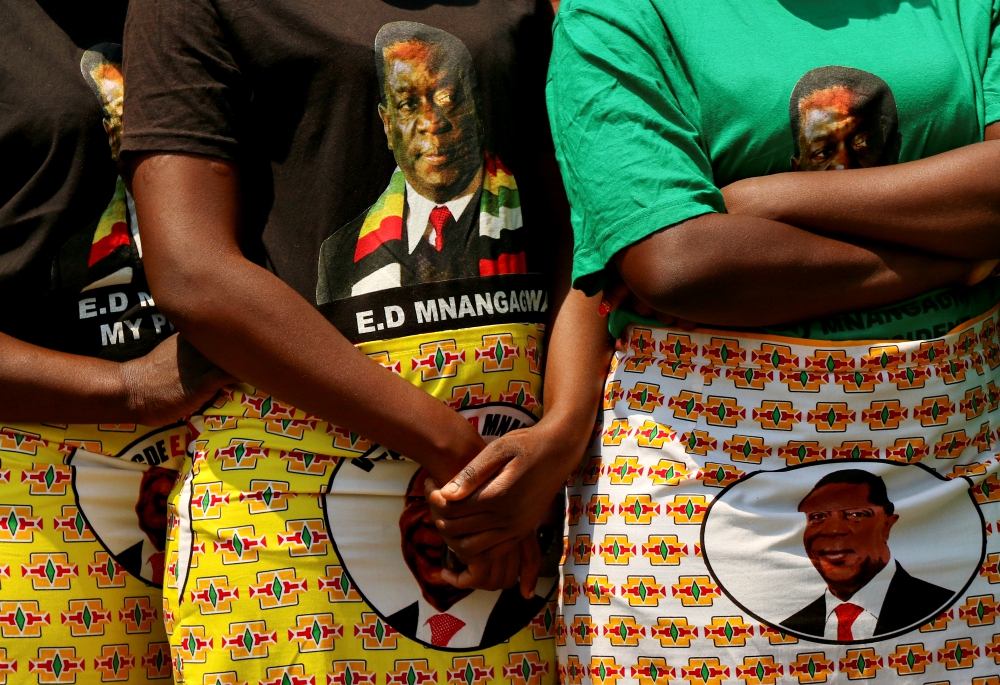
Today, as the succession debate resurfaces, tensions between President Emmerson Mnangagwa and Vice President Constantino Chiwenga raise the spectre of new confrontations. If these rivalries are not peacefully resolved, they risk destabilising the armed forces and pushing the country toward yet another violent rupture.
What then is the role of the church? From Samkange to Sithole, Muzorewa to Banana, and most recently Father Fidelis Mukonori’s mediation during Mugabe’s ouster in 2017, clergy have been present at almost every turning point in Zimbabwe’s modern political journey. Sometimes they succeeded, sometimes they failed—but they always mattered.
This is because factional struggles in Zimbabwe are never merely intra-party squabbles; they spill over into the lives of the entire nation. Imagine the possibilities if Zanu and Zapu had stayed united from independence, or if MDC leaders had maintained their common vision. Countless lives could have been saved, and Zimbabwe might today be more prosperous and stable.
Factionalism is destructive to national progress. Its violent resolutions have left deep scars, and this pattern cannot be allowed to continue. At its core, Zimbabwe’s factionalism thrives on politics organised around personalities rather than institutions or ideas. Leaders are idolised to the point where their word becomes law, constitutions are bent or ignored, and the destiny of the nation is mortgaged to individual ambitions.
The church must reject this culture. It must refuse to take sides in these factional contests. Rather, it must challenge the idolatry of personality politics in both ruling and opposition parties. The church must call for the strengthening of institutions that outlast individuals, and for unity around programmes, policies, and projects that foster abundant life for all Zimbabweans.
Only then can the church help the nation move beyond its cycles of division and violence.
Psalm 133 (Adapted for Zimbabwe):
How good and pleasant it is when Zimbabweans live together in unity!
It is like precious oil poured on the head, running down on the beard, running down on our forefathers’ beard, down on the collar of our grandmothers’ robes.
It is as if the dew of Mount Nyangani were falling on Zimbabwe and Khami Ruins.
On this unity, the Lord bestows his blessing, even life forevermore.