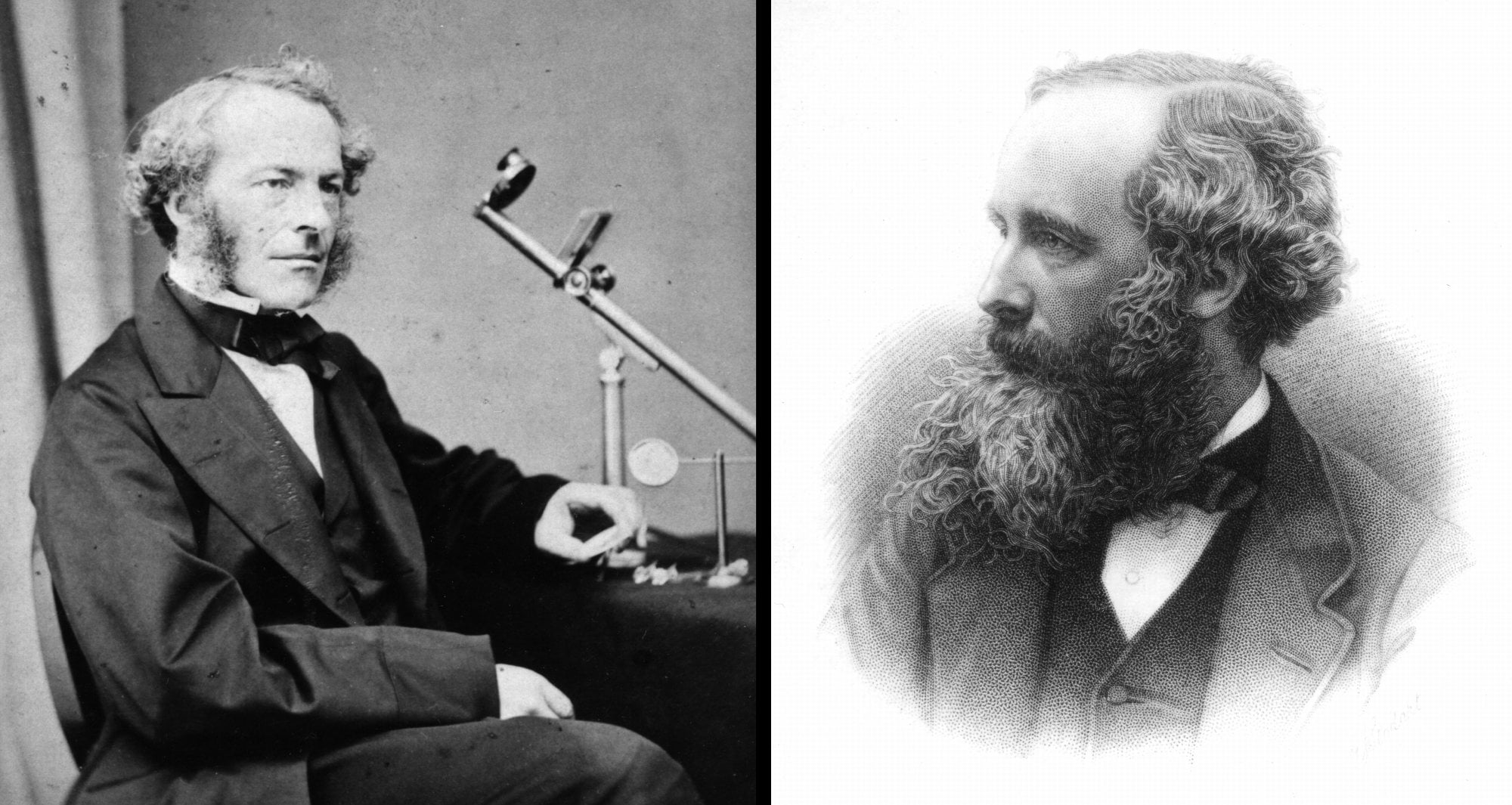
Legendary experiments in ‘cat-turning’ from the 1850s can teach us about will, control and goal-seeking behaviour
Cats are wonderful gymnasts. Their ability to land on their feet – even when dropped upside-down – caught the attention of two of the nineteenth century’s greatest mathematical physicists, Sir George Gabriel Stokes and James Clerk Maxwell.
The remarkable feats of cats inspired these theorists to perform, in the 1850s, legendary experiments in “cat-turning”, as Maxwell later described:
“There is a tradition in Trinity that when I was here I discovered a method of throwing a cat so as not to light on its feet, and that I used to throw cats out of windows,” he wrote.
Do you have questions about the biggest topics and trends from around the world? Get the answers with SCMP Knowledge, our new platform of curated content with explainers, FAQs, analyses and infographics brought to you by our award-winning team.
“I had to explain that the proper object of research was to find how quick the cat would turn round, and that the proper method was to let the cat drop on a table or bed from about two inches, and that even then the cat lights on her feet.”
These pioneering experiments in cat-turning were limited by the available technology. High-speed photography revolutionised the subject. Etienne-Jules Marey developed a chronophotographic camera that could record 12 frames per second, and in 1894 he published a classic, delightful series of stop-action photographs that reveal the sequence of actions through which cats reorient themselves on the fly (literally) and stick the landing.
In 1969 a now-classic dynamical model appeared. Even today the subject is not exhausted: a 2026 study began replacing idealised hinges and cylinders with measured properties of a real cat’s spine.
Similarly, human divers and gymnasts learn how to guide themselves, catlike, through routines that reorient their bodies in motion. For the cat much of this control may be reflexive; in a human athlete it can be planned, rehearsed and revised.
These abilities seem, on the face of it, to violate the spirit of Newtonian mechanics, which says that accelerated motion occurs through the action of physical forces, not willpower. That tension, I think, is one reason that cat-turning fascinated Stokes and Maxwell.
A second, more technical reason has to do with the relationship between angular momentum and angular motion. Starting with zero angular momentum and with no external torque, the cat nevertheless changes its orientation. This would be impossible for a rigid body, but by executing a closed loop in its space of possible shapes the cat manages to rotate.
A big part of the reason why classical Newtonian mechanics was difficult to discover, and a big part of why it is such a towering intellectual achievement, is that it required a kind of cognitive dissonance.
Specifically, it required – and still requires – people to reconcile two very different, quasi-contradictory descriptions of motion, both successful and convincing within their domains of application.
There is the “common sense” understanding of movement, in which the concepts of will and purpose are central. This is the way we live our everyday lives: when we reach out to pick something up, we don’t compute forces and accelerations, we just decide to do it.
Then there is classical mechanics proper – austere, rigorously mathematical, and deterministic – from which those concepts are excluded.
Before the mechanical world-view took hold, self-directed motion was often treated as evidence of an animating principle – a soul – absent from inert matter.
Today, science has understood that matter, embodying a system of known, (relatively) simple, mathematically formulated laws, can support the sort of complex emergent behaviour we find in molecular biochemistry, neurobiology and synthetic intelligence. With that understanding, we can bring mind back into mechanics without sacrificing its integrity.
The abilities of cats, divers and gymnasts don’t really evade the laws of physics, of course – if they did, we’d promptly change the laws.
The fruitful way to engage this problem is not to deny the role of mind in mechanics, but rather to welcome it in.
The cat does not invent a new force; it chooses a path in shape space and uses its muscles to redistribute its mass. Ordinary mechanics translates that path into rotation. Thus, to do justice to cat-turning we must enrich mechanics’ vocabulary and its stock of concepts.
We can call this expanded subject – which brings ideas about will, control and goal-seeking behaviour into mechanics – “mind-full mechanics”. Its technical ingredients flourish under names such as biomechanics, control theory and robotics. Mind-full mechanics names the conceptual innovation they share in common.
In mind-full mechanics, we let ourselves assume that our cat, diver or gymnast can change its shape by acts of “will”.
“Will” is the product of minds that have plans aimed at achieving goals, monitor progress, and respond to cues from the external world. Purpose is not a new force; it is a new way of organising forces.
Ordinary mechanics – basically, physics according to Sir Isaac Newton – governs how willed shape changes get translated into motion through space.
Will is not a force. It is a policy for choosing and coordinating forces. To describe the purposive motion, we need both forces and minds. This hybrid approach defines mind-full mechanics. It is how biologists, athletes and trainers generally think about the mechanical issues they deal with.
Allowing for mind and will spices up mechanics considerably. It invites new kinds of questions and permits new kinds of answers.
What degrees of freedom can mind-full acts of will call into play? What kinds of observations can guide good choices? How can feedback help to provide stability? What is the role of practice and learning? How did cats’ abilities evolve, and how can athletes move more efficiently or more beautifully?
Engineers who design machines for transport, manufacturing, or many other purposes practice mind-full mechanics. Consider, for example, what goes into designing a self-driving car. Sensors provide perception, computers implement a control policy, and actuators translate the policy into forces.
The sensors and computers form a narrowly focused mind, while the actuators are like muscles that it activates. Modern “mechanical” engineers learn not only physical mechanics but also control theory, operations research and optimisation.

These playful and practical aspects of mind-full mechanics should not obscure its profundity. It is a big step to connect mind and matter. Here we do just that, concretely and successfully. With feet planted on the ground, then, let us contemplate the clouds. Mind-full mechanics shines a bright light into the murky philosophical question of free will versus determinism.
The fundamental equations of present-day physics suggest that the complete physical state of a closed system fixes its future. But that is rarely the question we are interested in. We usually have only approximate knowledge of a few aspects of the state of a system, and our interest is focused on limited aspects of its behaviour.
For instance, it would be hopelessly difficult, not to mention silly, to try to do psychiatry by evolving the patient’s fundamental wave function. (“How are your gluons arranged today?”)
Usually, we have approximate knowledge of a few aspects of our system, and we want to predict a few aspects of how it is likely to behave. Given only that partial information, many underlying states remain possible, leading to a range of possible macroscopic outcomes that we often describe probabilistically.
Determinism names a property of a dynamical theory: given a complete state of a closed system at one time, the theory prescribes its later state. But an agent never possesses that complete description and, more importantly, does not pose that question.
Its question is not simply “What will happen?” but “What will happen if I do this rather than that?” It has partial information, several available actions, and a goal. It faces a problem of control.
Those alternatives do not contradict determinism. If I perform action A, one consequence follows; if I perform action B, another follows. Deliberation is the physical process through which one of those conditions is made actual. Memories, reasoning and imagined consequences are among the causes that shape the choice. Choice is not outside the causal chain; it is one of its links.
In philosophical language, determinism is an ontological claim, not an epistemic gift. That is, it says something about the ultimate nature of reality, not about our knowledge of reality. Determinism does not imply predictability across all contexts, and it does not erase the inside perspective of an embedded, finitely informed agent.
From outside, an idealised complete description will contain one trajectory. From inside, the agent encounters information, counterfactuals, goals and handles.
For people-oriented questions, physical determinism is rarely a useful language. We can’t know a person’s complete “state of mind” in the sense of physics. And we wouldn’t be able to use that information even if we had it – the calculations required are much too hard.
In practice, if we want to predict how someone will behave, we try to understand their state of mind using concepts like knowledge, motivation and mood and to figure out how their personality will translate that state into action. For the questions at hand, ontological determinism is largely academic.
This applies to our self-awareness, too. Free will is not an illusion, but a useful and legitimate way to understand ourselves. It is very plausible, I think, that free will is how intelligent minds process, and experience, determinism. In short, free will is what determinism looks like from the inside.
The quantum state of a closed system evolves deterministically, just as in classical physics. There is a new wrinkle: no embedded observer can measure everything about the complete quantum state, even in principle, without changing it.
Quantum theory only widens the classical gap between formal description and experienced reality; it does not create it.
Another famous physics cat – Schroedinger’s – dramatises the gap between a complete formal description and an uncertain experienced outcome.
The falling cat dramatises a different gap: between a trajectory described from outside and a future navigated from within. Of the two cats, the falling one may teach us more about free will.
More Articles from SCMP
Mexican foreign minister to meet Wang Yi in China as US demands trade ties rollback
Hong Kong Nepalese man searches for cousin missing in flood: ‘I cannot sleep’
China-Singapore security team claims breakthrough in hacking Starlink terminals
Moonshot AI – creator of Kimi K3 model – has filed for Hong Kong IPO: sources
This article originally appeared on the South China Morning Post (www.scmp.com), the leading news media reporting on China and Asia.
Copyright (c) 2026. South China Morning Post Publishers Ltd. All rights reserved.