The Central Bank of Nigeria’s Strategic Interest Rate Cut
The Central Bank of Nigeria (CBN) has made a significant move by reducing its benchmark interest rate, the Monetary Policy Rate (MPR), to 27 percent. This decision marks a shift in monetary policy, signaling a more growth-oriented approach. The adjustment was announced during the 302nd Monetary Policy Committee (MPC) meeting held on September 22–23, 2025. It reflects Nigeria’s alignment with global trends as central banks worldwide begin to ease their policies after years of aggressive tightening.
This rate cut follows five consecutive months of disinflation, a stronger external reserve base, and an acceleration in economic growth. In August, headline inflation dropped to 20.12 percent from 21.88 percent in July. Additionally, the economy expanded by 4.23 percent in the second quarter of 2025, driven by a 20.46 percent rebound in the oil sector output.
The CBN emphasized that the stability in the macroeconomic environment has provided room for monetary policy to support economic recovery. The reduction in the MPR is expected to lower borrowing costs, encourage credit expansion, and reinforce recovery momentum in Africa’s largest economy.
Key Adjustments and Implications
The MPR cut of 50 basis points, along with adjustments to the Cash Reserve Ratio (CRR) and standing facilities corridor, represents a notable recalibration of the monetary stance. The CRR for commercial banks was set at 45 percent, while a new 75 percent CRR on non-TSA public sector deposits was introduced to tighten liquidity management. Analysts suggest these measures, alongside a stable liquidity ratio of 30 percent, are aimed at balancing growth ambitions with financial system stability.
For the private sector, the rate cut could bring relief. Lower rates are expected to ease financing costs for businesses, particularly small and medium enterprises (SMEs), and stimulate consumer demand. For the government, this decision provides policy support to deepen private investment and sustain fiscal reforms.
However, questions remain about the effectiveness of this transmission. Historically, Nigeria’s high-risk lending environment has limited the extent to which rate cuts translate into cheaper credit for businesses and households.
Expert Perspectives and Challenges
Managing Director of Financial Derivatives Company Limited, Mr. Bismarck Rewane, described the CBN’s decision as “tactically appropriate,” given moderating inflation and relative exchange rate stability. He noted that while the CBN is seizing the opportunity provided by the disinflationary trend to stimulate the economy, the success of this rate cut depends on whether banks can actually lend at lower rates and businesses can absorb that credit effectively.
Rewane warned that while Nigeria is aligning with global easing, risks remain. Globally, central banks are cutting rates to encourage growth, but Nigeria’s inflation is still above 20 percent. Without structural reforms to complement monetary easing, the benefits could be muted.
Dr. Muda Yusuf, CEO of the Centre for the Promotion of Private Enterprise (CPPE), welcomed the move, stressing the importance of easing for Nigeria’s overburdened private sector. He highlighted that businesses have been grappling with double-digit lending rates that often exceed 30 percent. The reduction in MPR sends a positive signal to the market and could help reduce financing costs, especially for SMEs.
Yusuf argued that an excessive focus on inflation control has slowed growth and worsened unemployment. He emphasized the need for monetary policy to strike a balance between price stability and growth, calling for complementary fiscal measures—tax incentives, infrastructure spending, and investment in production—to reinforce the effect of monetary easing.
Global Context and Economic Outlook
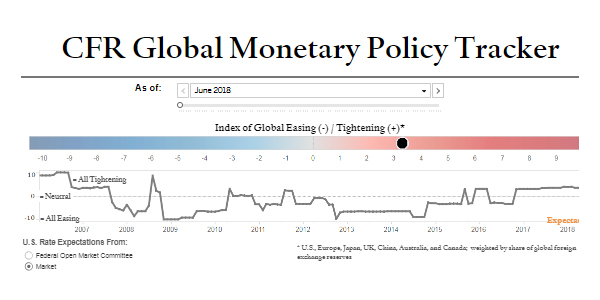
The CEO of The CFG Advisory, Mr. Tilewa Adebajo, emphasized that Nigeria’s move mirrors a wider global shift. He noted that the U.S. Federal Reserve, the European Central Bank, and several emerging market central banks have pivoted toward easing after extended tightening cycles. Nigeria is essentially aligning with this global trend.
Adebajo pointed out that Nigeria’s stronger external reserves, now at $43.05 billion with an import cover of 8.28 months, and a current account surplus of $5.28 billion, provide a buffer against potential capital outflows. However, he stressed that policymakers must remain vigilant due to global uncertainties such as geopolitical tensions and commodity price volatility.
Investor confidence depends on policy consistency. This decision signals to investors that Nigeria is committed to supporting growth while managing risks. But execution and credibility remain paramount.
Conclusion
Nigeria’s rate cut comes amid a wave of global monetary easing. In the U.S., the Federal Reserve has hinted at rate cuts as inflation cools and labor markets soften. The European Central Bank (ECB) lowered rates earlier this year to counter weak growth in the Eurozone. In emerging markets, Brazil, Chile, and South Africa have also begun easing after years of steep tightening.
By moving in tandem, Nigeria ensures its policy stance does not become a drag on competitiveness or capital flows. The CBN’s easing was enabled by improved macroeconomic fundamentals: Headline inflation declined to 20.12 percent in August, with both food and core components easing; GDP expanded 4.23 percent in Q2, driven by oil sector recovery and resilient non-oil performance; Reserves rose to $43.05 billion, while the current account surplus expanded to $5.28 billion in Q2; Ongoing recapitalization has strengthened banks, with 14 institutions already meeting new capital thresholds.
Stakeholders believe that together, these factors provided the CBN with space to pivot toward growth without undermining financial stability. However, significant challenges loom. The MPC flagged the build-up of excess liquidity in the banking system, largely from fiscal disbursements linked to improved revenues. If not managed, this could reverse the disinflation trend.
Other structural hurdles include inadequate infrastructure, particularly in power and logistics; a high level of informality, limiting monetary policy reach; shallow credit penetration, which restricts transmission of rate cuts into real economic activity; and exposure to global uncertainties.
The MPC projects further disinflation in the months ahead, supported by stable exchange rates, subdued energy prices, and the harvest season’s boost to food supply. If these projections hold, the CNB may have more room for easing in late 2025.
Still, analysts caution that monetary easing alone is insufficient. Broader economic reforms are needed to unlock growth. As Rewane succinctly noted: “Cutting rates is the easy part. Ensuring that the cut translates into real growth is the harder challenge.”
The CBN’s decision is both symbolic and strategic. It signals Nigeria’s intent to stimulate growth, deepen credit markets, and attract investment, while also aligning with global monetary trends. Yet, the true test will be execution. Without policy consistency, structural reforms, and coordination with fiscal authorities, the easing could fall short of expectations.
For now, the move has been welcomed as pragmatic. As Tilewa Adebajo put it, “Nigeria is finally moving in step with the global orchestra of monetary easing.” The challenge ahead is ensuring that this harmony produces real, inclusive, and sustainable growth for the Nigerian economy.


