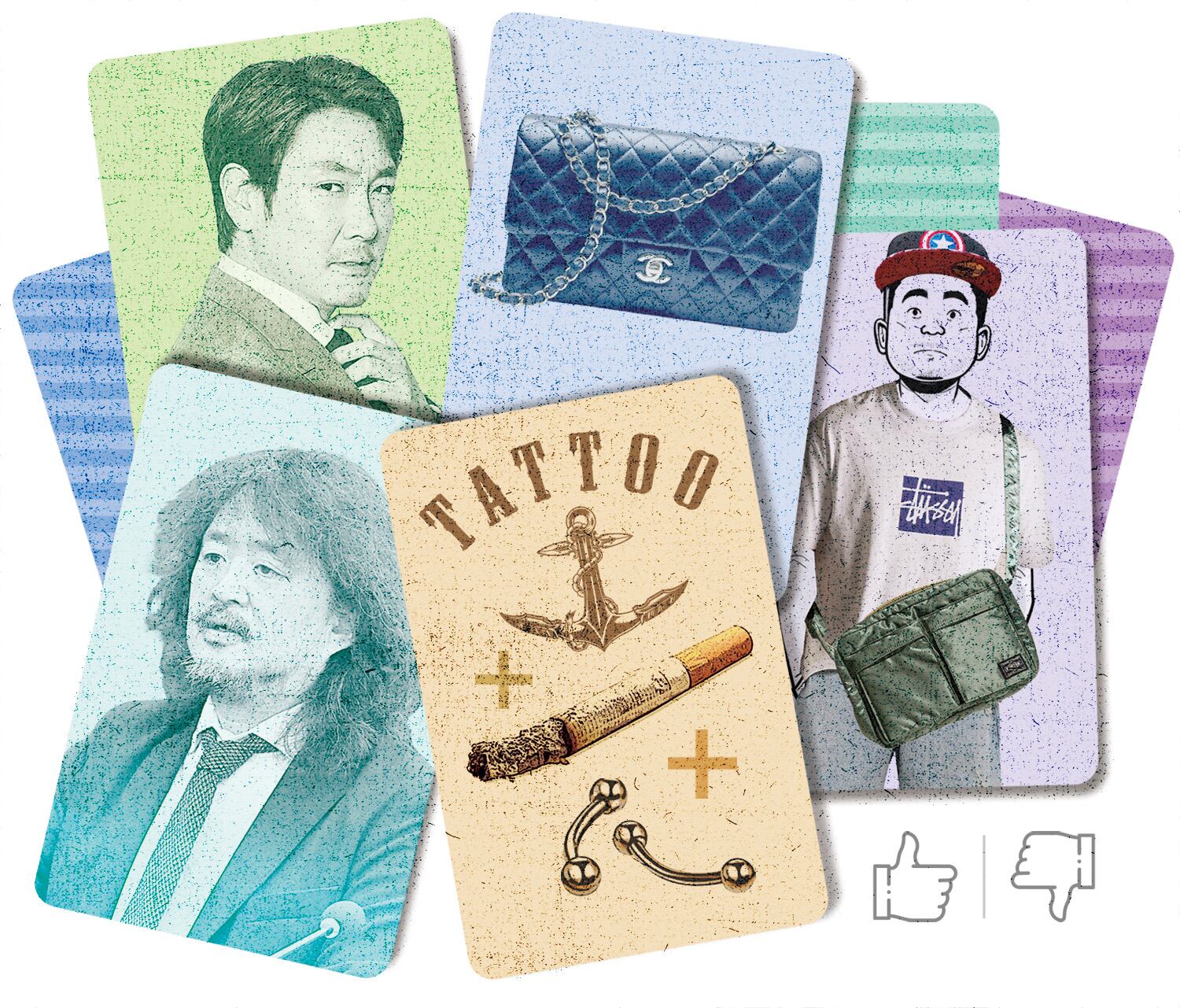
“They were talking about Chanel bags. It seems like everyone had one. All ‘out (eliminated)!’ For people earning 3 million Korean won monthly, a Chanel bag is two months of their life. Two months.”
The Chanel bag has unexpectedly become a symbol of gender conflict in South Korea. This was said by a cast member named Young-cheol on the dating program “I Am Solo” when describing the female participants. It was a declaration of rejection toward women carrying Chanel bags. Whether the woman has a certain personality, worldview, income, assets, or spending habits and preferences is irrelevant. A woman carrying a bag priced at 10 million Korean won is an “open-and-shut case,” someone to “avoid from the start.”
Female-dominated communities are in an uproar. Comments like “Thanks for filtering,” “This is why it’s called the ‘Chanel talisman’ for weeding out low-quality men,” “It’s an explosion of inferiority complex and jealousy,” and “I’ll definitely buy a Chanel bag for my daughter” have created a solid front of confrontation.
However, it is not just Chanel bags. In South Korea today, there are widely accepted “human indicators.” These are evident in gender relations, political leanings, and generational conflicts. The common expression is “I avoid people who like ○○○.” A few items or signals are enough to trigger a warning light: “A person who cannot coexist with me, someone to stay away from!”
Chanel, Starbucks, K5, Tattoos
The Chanel bag controversy feels familiar. The Chanel debate also emerged during the “doenjang woman” and “kimchi woman” controversies about a decade ago. The term “doenjang woman” was a derogatory expression for Korean women perceived as vain, and among the criteria for filtering them out were “women carrying Chanel bags” and “women using Chanel cosmetics.” After social issues like dating violence and the #MeToo movement intensified gender conflicts, such “avoidance formulas” have appeared more frequently in gender relations.
Take the case of tax accountant Kim Young-soo (pseudonym, 42). He met his wife (37) through a blind date a few years ago and was impressed by her understated appearance without prominent brand logos. Kim said, “Based on several dating experiences, I judged that women who like luxury brands are not compatible with me. People who bring luxury bags to a first meeting seemed thoughtless.” He added, “After synthesizing stories from close friends, there are converging points. Women who must do what others do, like collecting Starbucks merchandise, eventually become exhausting.”
Lee Young-sook (pseudonym, 43), who works at a large corporation, is on the opposite end. She owns luxury bags, shoes, and jewelry suitable for important occasions, mostly purchased with her own money. Lee said, “I intentionally dress to show my purchasing power and taste for safe meetings and breakups.” She also has several indicators for judging men. “Of course, tattoos are a red flag. Driving is a hobby, and there’s a reason to avoid cars called ‘Science No. 5 (K5),’ which gained popularity for its sporty design from the early days but became associated with reckless driving. In my experience, everyone who drove a white K5 ended badly.”
The so-called “tattoos, cigarettes, piercings” are human indicators applicable to both genders. If someone has all three, they are automatically considered someone to avoid. “Mundwae” (tattooed pig) has even evolved into a comedic character.
Divorce lawyers upload checklists on YouTube like “100% Divorce if You Marry This Type of Woman,” and both men and women create “avoidance lists” for certain professions as marriage partners. All of these judge a person—a “microcosm”—based on superficial traits and professions rooted in prejudice.
Kim Ou-joon and the Yellow Ribbon
Political inclination is perhaps the area where prejudice and preconceptions are most actively at play. According to a public opinion survey by this newspaper in 2023, 44–45% of citizens find it uncomfortable to share a meal with someone of opposing political views, and six out of ten accuse those with differing views of prioritizing their own interests over the nation’s. A 2024 survey by the Korea Institute for Health and Social Affairs found that over half (58.2%) of respondents would not date or marry someone with opposing political views.
Kim Sang-cheol (pseudonym, 46), who runs a private business, has recently been troubled by an employee named A. Kim said, “I trusted A, having known him for a long time, and entrusted him with organizational management, but he was saying, ‘The boss is a bad person’ behind my back. However, after learning that A listens to Kim Ou-joon’s broadcasts every morning, I thought, ‘Of course.’ For me, ‘Kim Ou-joon’s YouTube’ is at the top of my avoidance list.” Kim added, “Leftist thinking steeped in conspiracy theories is unhelpful in a company that needs to generate profit. It’s more comfortable and feels like living in the same world when surrounded by people with similar political inclinations.”
Choi Jeong-suk (pseudonym, 45), a housewife in Seoul, shares the same view. She said, “I quietly distanced myself from a friend’s mother who watched conservative YouTube channels like ‘God’s Move.’ I felt something was off, and indeed, differing inclinations make it impossible to become close.”
Although the principle of secret ballots makes it a tacit rule to avoid revealing political leanings, certain signals still exist. Lee Hyun-suk (pseudonym, 41), another housewife, said, “As a parent, the Sewol Ferry tragedy is still heartbreaking, but people who still wear yellow ribbons clearly display their political preferences. I don’t ask about their inclinations, but I naturally become cautious.”
Both ruling and opposition parties tend to cater only to their hardcore supporters, exacerbating this trend. Kim Hyung-jun, a distinguished professor at Pai Chai University, said, “Politics is obsessed with demonizing opponents instead of mediating and integrating conflicts. Confirmation bias, where people only chase what they believe is true, is intensifying.”
Can You Avoid Villains Just by Looking at KakaoTalk Profile Pictures?… Cho Avoids Them
Even Socrates in ancient times said, “The children of today have no manners.” Generational conflict is a human challenge. In South Korea, the most prominent conflict is between men in their 40s–50s and those in their 20s–30s, a frontline where gender, political, and class conflicts are intertwined.
Cho Young-sik (pseudonym, 34), a six-year career employee, said, “Our department head is the epitome of a ‘Seoul homeowner Kim,’ subtly bragging about real estate investments while exploiting male subordinates and supporting the Democratic Party. We don’t match on any level.” He came to believe that a person’s inclinations are revealed in so-called “young forty-something fashion.” “They drive Carnivals as family cars, use profile pictures with snapback hats, and are the real-life versions of the ‘young forty-something meme’ trending online. Outside work, I never want to associate with such people.”
A post titled “How to Avoid Villains by Looking at KakaoTalk Profile Pictures” became a hot topic in a workplace community. One person’s “insight” claimed that those who post book pages or quotes are not highly educated or avid readers, and couples who post happy photos together are likely to divorce. People with many selfies, frequent profile changes, or over 100 photos are mentally weak, emotionally unstable, and highly likely to be attention-seekers. Although lacking scientific basis, many resonated, calling it “on par with psychology papers.”
These numerous “human indicators” are likely products of hatred and division. Recently, controversies surrounding actor Cho Jin-woong and broadcaster Cho Sae-ho revived the “Cho surname avoidance list.” It refers to the fact that many problematic figures in society have the surname Cho, such as Cho Hee-pal, dubbed the worst con artist since Dangun; Cho Joo-bin of the Nth Room sexual exploitation case; and Cho Doo-soon, a child sex offender. Some celebrities and high-ranking officials involved in scandals are also lumped together. Of course, very few actually believe in avoiding the Cho surname. Generalizing an entire group based on a few cases is unscientific and illogical. Cho is the seventh most common surname in South Korea (over 1 million people, according to the 2015 Ministry of Data and Statistics).
Seo Yi-jong, a sociology professor at Seoul National University, said, “As political polarization and economic recession deepen, people increasingly stigmatize and view each other as targets for elimination. It’s regrettable that expressing personal difficulties through the lowest and most vulgar prejudices has become a trend.”