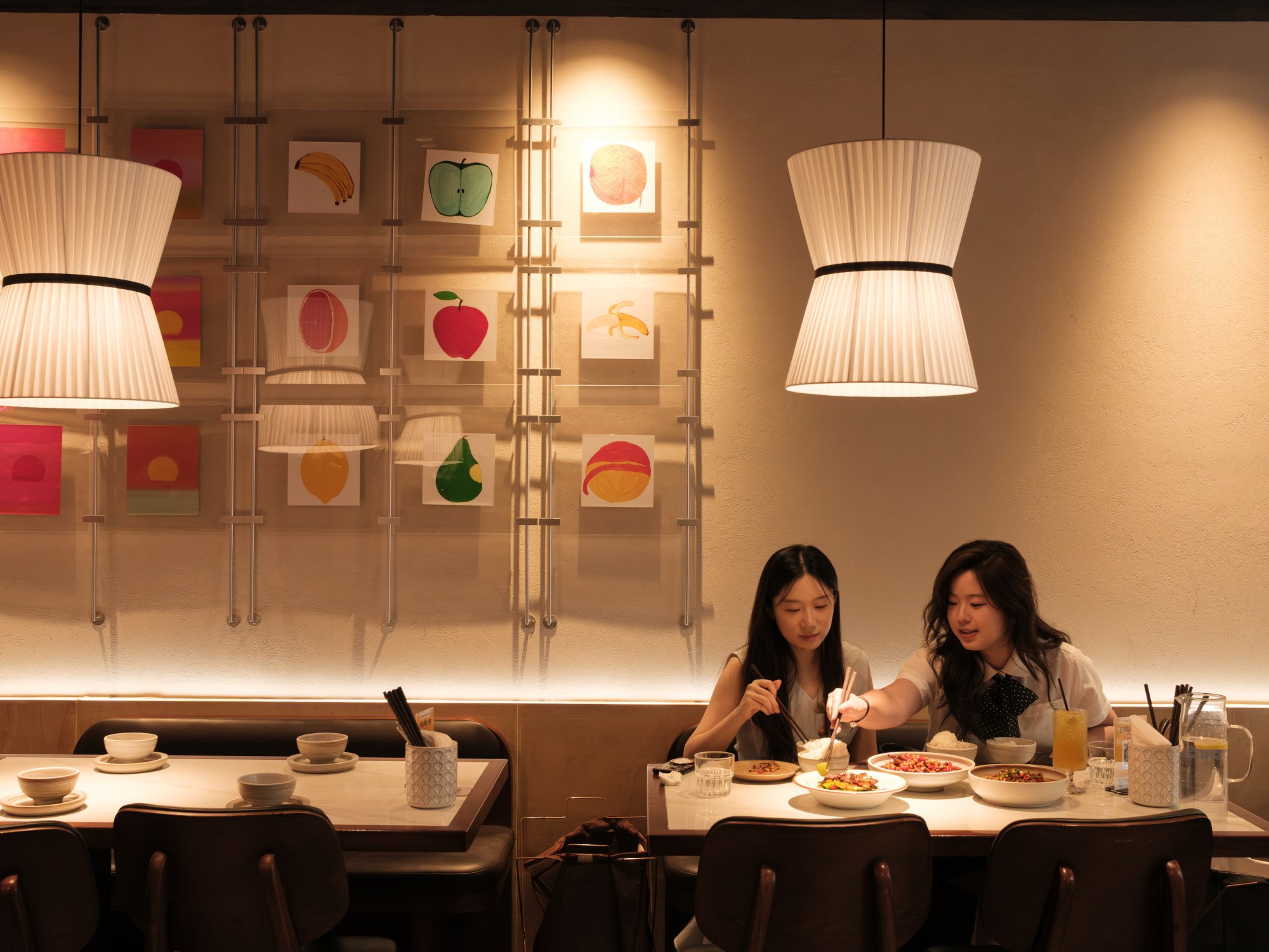
The Rise of Chinese Bistros in Shanghai and Hong Kong
Shanghai and Hong Kong are witnessing a vibrant bistro boom, driven by young diners eager to explore regional flavors beyond the well-known Sichuan ma la. This trend is reshaping the dining landscape, with restaurants offering unique experiences that blend authenticity with modernity.
Sophie Wang Yuan, a passionate chef from Jiangxi province, had always dreamed of serving dishes that highlight the heartiness and heat of her home region. In 2019, she opened Latang, a restaurant that quickly gained popularity for its spicy offerings and cozy atmosphere. The name “Latang” translates to “a spicy hall/room,” and it soon became a favorite among food enthusiasts. As content creators from across China and even Japan flocked to experience the chilli challenge, the restaurant went viral.
Wang’s success inspired her to expand her vision further. In December of last year, she opened Fuqingcheng Orange Bistro, known simply as Orange, in downtown Shanghai near the Jingan Temple. Her timing was impeccable, as the concept of Chinese bistros began to gain traction nationwide. Search results on Dianping, a popular restaurant rating app, show over 130,000 bistro-related entries in Shanghai alone, and more than 110,000 in neighboring Hangzhou. On social media and e-commerce platform RedNote, the hashtag #bistro has over 152 million views.
The pandemic disrupted international travel plans for many mainland Chinese, leading them to explore less mainstream destinations such as Jiangxi. As travelers sought out cuisine as their main draw, they turned away from Sichuan’s tongue-numbing flavors towards the sour, fermented, and acidic tastes of Yunnan, Guizhou, and other regions. By 2024, Jiangxi had become the top province in the spicy-food arms race, surpassing even Sichuan.
The Expansion of Yunnan-Guizhou Bistros
Cheap-and-cheerful Yunnan-Guizhou (Yun-Gui) style restaurants accounted for 3.1% of China’s full-service dining market by 2024. The year also saw the launch of several names that now dominate what’s become the “Yun-Gui bistro empire.” Shanye Banzha, Yeego, and Ameigo have expanded rapidly, with Shanye Banzha having 37 locations across China, Ameigo operating more than 30, and Yeego having 19.
Backed by the Yunhaiyao restaurant chain, which specializes in Yunnan cuisine and now has over 200 outlets in China, The Mushroom opened in Hong Kong’s Lan Kwai Fong in August. A sister restaurant to Shanghai’s MO Huān Bistro, which launched earlier this year, The Mushroom brings “concepts already popular and mature on the mainland into Hong Kong,” says co-founder Zhang Quan. “That way, Hongkongers don’t need to cross the border or fly to Yunnan or Shanghai to enjoy this food.”
Experiencing Guizhou Flavors in Shanghai
If anyone does fly to Shanghai, they may wish to sample the bistro fare at Chill Chili, a Guizhou restaurant and RedNote darling. The second branch of the restaurant opened in 2024 on bustling Fumin Road, in the former French Concession. The wide facade blurs the boundary between indoors and out, with trees filtering shadows onto its green-and-white storefront.
Owner Alisha Zhao Qianqian says her clientele tends to be young, stylish female diners between the ages of 20 and 35, most of whom discover the restaurant through Dianping. However, its curated image resonates most strongly with RedNote users, for whom a photo-friendly ambience matters as much as the food.

The menu is anchored by Guizhou classics such as sour soup fish, made with fermented mao la guo tomatoes and ciba chilli. Ciba is a traditional snack of glutinous rice pounded into a chewy paste, while the chilli is crafted by softening and pounding local chilli peppers until they reach the same dense, sticky texture. The result is a fiery, velvety paste that flavors everything from spicy chicken to Guizhou-style spicy crab.
At night, the offerings include street-style comfort food, Guiyang skewers, and roasted chicken braised then grilled over charcoal, eaten with dips such as charred or fermented chilli, or the notoriously pungent zhe’ergen, made from the roots of fish mint, a Guizhou herb with a sharp, earthy flavor often compared to coriander crossed with wasabi.

The Social Aspect of Bistros
Chinese bistros also encourage a “light buzz” drinking culture. “We wanted to give Shanghai’s office workers a place where they could taste authentic Guizhou dishes and also enjoy a relaxed, chill gathering space,” says Zhao. “A bistro is a social gathering, sitting down to eat inevitably involves drinking. We want the drinks to look good, taste great, be innovative and provide emotional value.”
Chill Chili’s cocktails are inspired by Guizhou ingredients; the Wild Tomato riffs on sour soup, and the Chill Chili is infused with chilli and served inside a bell pepper.

SoGood Bistro, which opened on Nanchang Road in early 2024, leans into the “lying flat” and “low-desire lifestyle” movements common among young Chinese. The restaurant’s Chinese name translates as “enough, not the best, not No 1.” “The name reflects our philosophy,” says owner Dai Xinran. “It’s more of a relaxed mindset, instead of always being tense, striving to be No 1, trying to outdo everyone else.”

The interiors match the ethos: bare concrete walls and floors lend a raw edge, softened by earthy tableware. Green dominates the color palette. “We envisioned the space to be like a friend’s living room,” says Dai. SoGood was conceived through a simple love of wine. Before the pandemic, Dai and her partner ran an advertising studio. After working late into the night, they would often end up at a bistro for a relaxing glass or two. Opening a bistro of their own was always in the back of their minds and, stuck at home during Shanghai’s two-month Covid lockdown in 2022, they were struck by a sense of urgency. Once restrictions were lifted, they took the leap.

The Nanchang Road location is small but in the heart of the city, where young people gather. It was one of the first bistros in Shanghai to host wine tastings and even classes. SoGood’s second branch, on Fuxing Road, adds a twist: Wenzhou cuisine paired with wine, blending wok hei, or breath of the wok, with relaxed sipping. Wenzhou’s seafood shines when accompanied by white wine. The red crab steamed with sweet potato uses hard-shell red roe crab instead of the more common swimming crab. The sweet potato absorbs the crab’s rich brine. Another dish pairs tender braised yellow croaker with chewy rice cakes that soak up every drop of the sauce, a quintessential taste of Wenzhou.

Bottles of wine average about 300 yuan (HK$328), lower than the 400-yuan entry point common in Western restaurants, and, for Dai, that is key. Before the pandemic, diners weren’t especially price-sensitive, herself included; opening a 700- or 800-yuan bottle at a bistro felt casual, she says. But after the “revenge spending” wave post-lockdown, by mid-2024, consumers had grown more frugal.

Cultural Experiences in Bistros
In Hong Kong, The Mushroom is adding to its offerings live performances that will include the High Mountains and Flowing Water toasting ritual. Practised by the Miao and Yi ethnic minorities, the ritual will be performed by singers and dancers from Yunnan wearing traditional dress, who will interact with guests and offer them drinks.

“We want to lead a new wave of Chinese bistros in Hong Kong,” says Zhang, who was born and raised in Shanghai. “Dining is about experience. Just as Western restaurants add live piano or saxophone, we will have Yunnan’s unique music and dance. Guests can enjoy authentic food and a cultural performance at the same time.”
“A decade ago, there were maybe two or three Sichuan restaurants in Hong Kong; now there are more than 100,” says Zhang. And whether the bistro trend survives or not, “I believe Yunnan cuisine has the potential to go from niche to mainstream in Hong Kong, just like Sichuan food did.”


