The Intersection of Business Strategy and Power
Over the years, I have dedicated my professional life to building systems across various sectors such as finance, agriculture, logistics, and insurance. In these fields, success is not just about strategy but also about leveraging resources effectively. Through this journey, I came to understand that what we call business strategy in commerce and what political scientists refer to as power in international relations are essentially two sides of the same coin. This realization led me to pursue a Master’s in International Relations at the University of Staffordshire, where I aimed to explore the architecture of power both in markets and in the world at large.
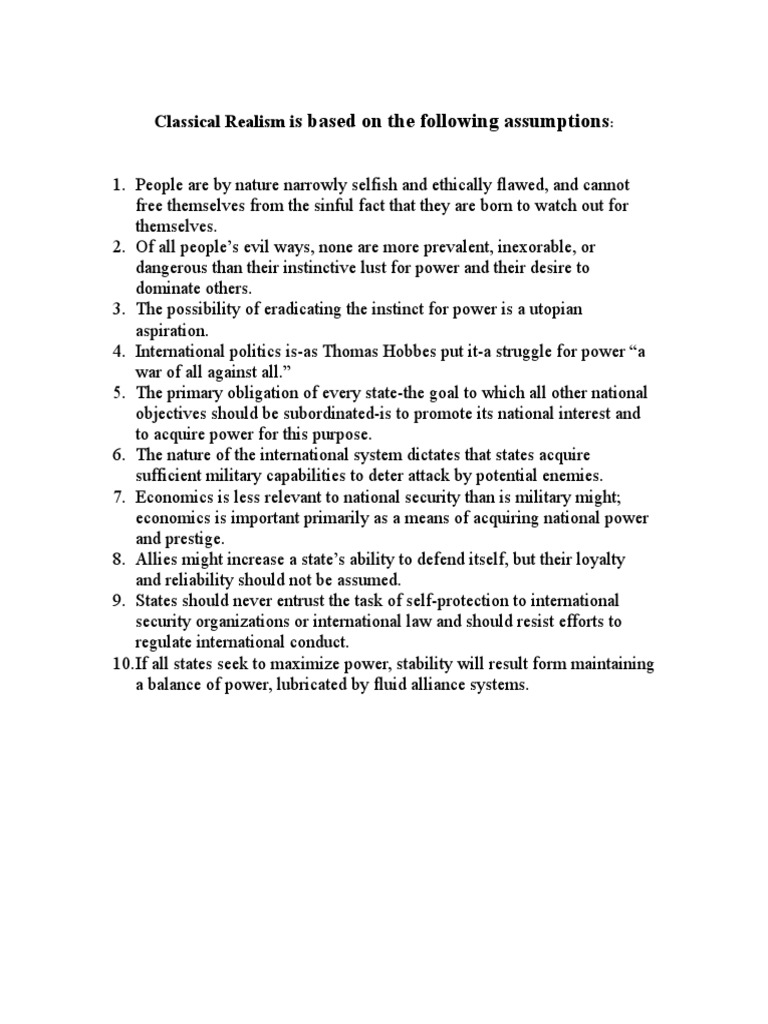
The academic pursuit introduced me to classical realism, a school of thought that posits power as the central organizing principle of international life. This perspective strips away illusions and compels every business, government, or community to confront an essential question: what do you actually control?
The Roots of Realism
Classical realism emerged from the ashes of failed idealism. The optimism of the post-World War I era, symbolized by the League of Nations, promised that cooperation and law would end war. However, the 1930s saw the rise of fascism, invasion, and collapse. Thinkers like E. H. Carr viewed this as evidence that moral idealism without power is a luxury for the strong. In The Twenty Years’ Crisis, Carr argued that ignoring power as a decisive factor is purely utopian. He was not celebrating cynicism but warning against naivety.
This insight remains relevant today, especially for modern institutions that confuse vision statements with actual power. Power is not arrogance; it’s the collection of tools and structures that make ideals enforceable. Whether in diplomacy or business, your ability to act is limited by your leverage.
Morgenthau and the Human Condition
If Carr sounded the alarm, Hans J. Morgenthau built the philosophy. In Politics Among Nations (1948), he argued that politics, like society, is governed by objective laws rooted in human nature. Humans, driven by fear, ambition, and survival instincts, create states that mirror those same instincts. In a world without a global government, states act like individuals, pursuing power to ensure their survival.
Morgenthau defined power broadly as “anything that establishes and maintains control of man over man.” This includes force, persuasion, and prestige. It’s a relational force, not just a material one. The relevance to modern business is clear: market share, information control, and trust are all forms of power. Managing any system requires understanding these relationships of influence.
Morality Through Power, Not Against It
Carr’s most unsettling idea is that morality itself is born from power. “Law and morality in international politics,” he wrote, “are functions of power.” The powerful define norms because they can. The weak moralize because they must. This doesn’t mean morality is false; it means that moral codes only endure when anchored in strength.
This lesson extends beyond geopolitics. Both businesses and nations often fail when they confuse intentions with actual capacity. A fair system must also be a strong one. In Ghana’s agricultural markets, for example, fairness to farmers only succeeds when supported by logistics, finance, and enforcement—forms of structural power. Classical realism subtly underpins sustainable development itself.
Prudence as the Realist Virtue
Morgenthau regarded prudence as the highest virtue of leadership: the ability to choose the lesser evil over the unreachable good. This concept, developed amid the moral chaos following World War II, still shapes mature governance. The realist leader is not heartless; he is disciplined. He understands that idealism without realism breeds catastrophe.
That same prudence sustains institutions. At Maxwell Investments Group, I have observed how businesses thrive when they avoid the temptation of instant success in favor of long-term resilience. Realism in politics and enterprise shares a core principle: restraint breeds longevity.
Bartlett’s Cold War Lessons
Historian C. J. Bartlett extended this thinking to the post-war order in The Rise and Fall of the Pax Americana (1974). He noted that “the Americans could use power as realistically as any other state, [but] they used it less consistently and wholeheartedly.” In other words, even superpowers struggle with the tension between moral aspiration and pragmatic necessity.
That same tension haunts leadership everywhere, whether in corporate or government sectors. When we preach values but fail to establish systems that safeguard them, our credibility diminishes. Bartlett’s warning is equally relevant to multinationals that vow sustainability without governance frameworks to uphold it.
The Invisible Infrastructure of Power
What Carr and Morgenthau understood, and what many forget, is that power often hides in plain sight. It is not only held by armies and economies but also in trust, information, and reliability. Nations, like brands, rise or fall on credibility. When trust is broken, even the most powerful lose leverage.
This “invisible infrastructure” explains why realism resonates with modern economics. A financial system relies on faith in regulations. Supply chains depend on mutual reliance. The loss of trust, as seen in the 2008 financial crisis, is ultimately a collapse of power—the power to assure continuity.
Realism’s Modern Return
Today’s headlines reflect the realist worldview. When Russia invaded Ukraine, when China secured mineral corridors across Africa, and when the U.S. fought for semiconductor dominance, these were not moral dramas but realist maneuvers. Even the climate transition now follows realist logic: nations pursue sustainability not only to save the planet but to secure advantage in the emerging energy order.
In this light, realism is not cynicism; it’s comprehension. It recognizes that cooperation requires capability, and peace is upheld not by goodwill but by balance.
The African Reading of Power
For Africa, realism provides a framework for agency. In global negotiations, moral appeals alone are not enough. States need to build leverage through regional integration, infrastructure, and credible institutions. The African Continental Free Trade Area (AfCFTA) is a realist project disguised as an idealist one; it is turning solidarity into bargaining power.
Ghana’s long history of trade, from cocoa to gold, teaches the same lesson. Our economic independence depends not on slogans but on systems in finance, logistics, and governance. The weak depend on sympathy; the strong negotiate terms.
Lessons for Business and Leadership
In many ways, realism is the unspoken philosophy behind every enduring enterprise. You cannot run a business on goodwill alone. You need structure, information, credibility, and the ability to influence. At Maxwell Investments Group, our work across finance, agriculture, insurance, and logistics has demonstrated that resilience grows when each entity reinforces the others—a web of interdependent strength, not isolated ambition.
This logic behind our MIG ecosystem is realism in action. I see it clearly now. The most ethical institutions are those strong enough to outlive personalities. Realism teaches that power, when properly understood, is not about dominance but about durability.
Power, Prudence, and Peace
The classical realists were not pessimists; they were guardians of proportion. They believed human ambition could never be erased, only balanced. Peace, therefore, is not the absence of power but its management.
As Morgenthau wrote, the wise leader must act with “prudence,” aware that even noble motives can lead to destructive outcomes. That humility, the awareness of power’s limits, is the moral core of realism.
Why It Still Matters
The world’s crises, from war to inflation to broken supply chains, are ultimately crises of power and its misuse. Carr, Morgenthau, and Bartlett remind us that stability depends on the strength and restraint of those who hold it. The lesson applies just as much to global politics as to boardrooms: power is not the opposite of morality; it is its foundation.
While studying International Relations at the University of Staffordshire, I have realized that realism is not merely a theory about states. It is a philosophy of maturity. It encourages us to act with clarity rather than sentimentality; to construct structures that uphold our ideals sustainably.
For Ghana, and for every leader navigating the fragile balance between aspiration and capacity, classical realism offers a sobering yet empowering truth: the moral order you desire is only as strong as the power you build to sustain it.

Related posts:

Fiction park: He was the best in class. He still wasn’t good enough

Gagan Thapa takes oath as Congress president, vows to regain public trust

Inside knowledge that has locals gripped by fear after gran’s body found decomposing in cattle dip

New property purchase disclosure rule in Japan sparks fears it may curb foreign investment

Dino-mite treasures: inside Singapore’s Fort Knox storing playthings of ultra-rich