A History of Division and Reunification
Nepal’s communist parties have a long-standing tradition of splitting and merging, a pattern that has persisted for over seven decades. The Communist Party of Nepal, established in 1949 to challenge the Rana regime, has undergone multiple transformations, leading to an increasing number of communist groups over time. This trend seems set to continue, as the latest developments in the Unified Socialist party highlight.
The Rise of the Gen Z Uprising
The recent Gen Z uprising played a significant role in triggering these changes. As dissatisfaction with the governance of older political parties grew, the younger generation took to the streets, ultimately leading to the downfall of a powerful coalition government. This movement created a power vacuum, which has now influenced the internal dynamics of the Unified Socialist party.
The Unified Socialist’s Current Situation
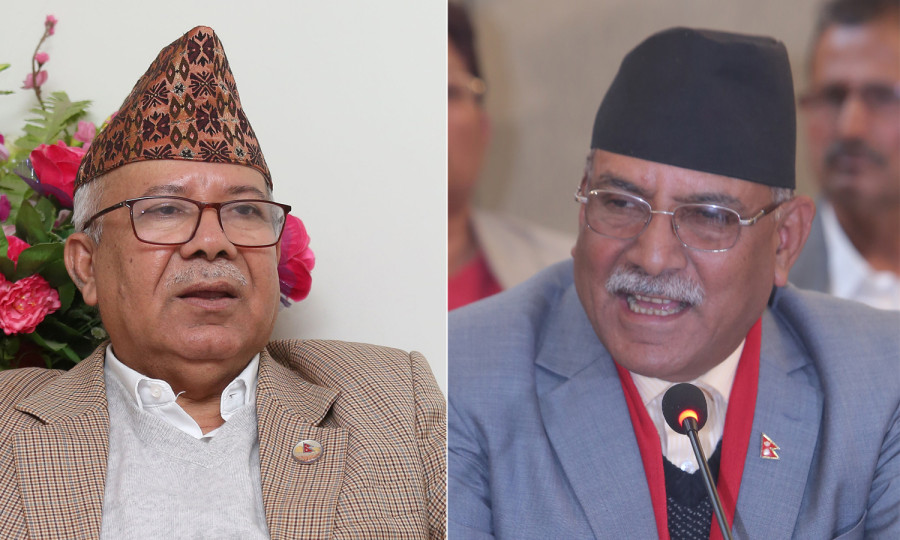
Established just four years ago, the CPN (Unified Socialist) is now facing potential division. In August 2021, a faction led by Madhav Kumar Nepal and Jhalanath Khanal split from the UML to form the Unified Socialist. Since its inception, the party has faced scrutiny regarding its relevance and the justification for its split from the UML.
Now, the new party is on the verge of division again, with senior leader Khanal opposing the chairperson’s push for unification with the Maoist Centre. Despite this, vice-chair Jagannath Khatiwada claims that the situation should not be termed a split, as a party only splits when a faction forms a different party.
Unification Efforts and Challenges
The party’s Central Committee meeting endorsed the unification proposal with an overwhelming majority. However, a group of leaders, including Khanal, General Secretary Ghanashyam Bhusal, and others, are against the unification. According to Khatiwada, most members will join the Maoist Centre, while the disgruntled group will remain in the same party.
Meanwhile, the Maoist Centre discussed the future course of the unified party after merging with the Unified Socialist and other left groups. They agreed to draft a statute and a brief manifesto of the unified party. The party had previously scrapped all positions of office bearers and formed a general convention organising committee in the aftermath of the Gen Z uprising.
Potential Names and Structure
The unified party is likely to be named the Nepal Communist Party (Socialist), although other names are also being discussed. The two parties have scheduled a joint meeting on Tuesday, where they will discuss the structure of the unified party.
According to Unified Socialist leader Rajendra Prasad Pandey, the unified party is expected to hold its general convention six months after unification. Before that, a Secretariat will be formed, and the role of Unified Socialist chairperson Nepal will be on an equal footing with that of Maoist Centre leader Dahal.
Inclusion of Other Groups
In addition to the Maoist Centre and the Unified Socialist, Tuesday’s joint gathering will include the Nepal Socialist Party led by Mahindra Raya Yadav. Other fringe communist groups could also participate in the unification process, including a group led by former minister Prem Bahadur Singh, the CPN (Socialist) led by Raju Karki, the Jana Samajwadi Party led by Subas Kafle, and the faction led by Chiran C.
Opposition and Alternative Plans
Despite the unification efforts, some leaders have opposed the move. Maoist Centre leader Janardan Sharma urged the leaders to delay the unification. Meanwhile, a faction led by Khanal organised a separate meeting in Kathmandu, focusing on three main ideas: rejoining the UML, unification with the Maoist Centre, or forming a new political party.
A leader of the Khanal faction stated that a large section of leaders who are against joining the Maoist Centre are also against making former prime minister Khanal chief of the new party. They believe that unity should materialise under new leadership, rather than handing over executive responsibility to Khanal.
Ongoing Discussions and Future Steps
In a recent central committee meeting of the Unified Socialist, General Secretary Bhusal mentioned that they would consider joining the Maoist Centre if the party chief Pushpa Kamal Dahal and Nepal are ready to quit party leadership. If the top leaders of both parties guarantee such a change, they can consider unification between the two parties.
Meanwhile, the dissident faction of the Unified Socialist has entrusted Bhusal with the responsibility of holding talks for party reorganisation and unification. A total of 87 leaders participated in the meeting of this faction on Saturday.


