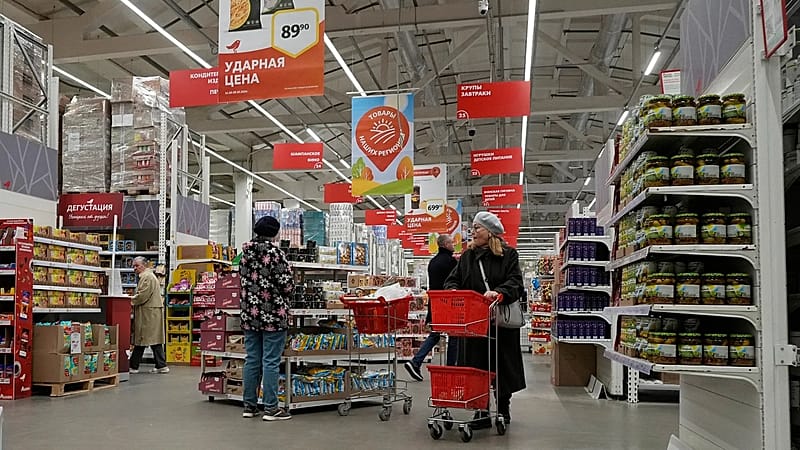
French Companies Continue to Operate in Russia Amid Ongoing Conflict
Almost four years after Russian President Vladimir Putin ordered the full-scale invasion of Ukraine, a significant number of French companies continue to operate in Russia. Despite the ongoing conflict and the global sanctions imposed on the country, 23 French firms remain active in the Russian market. This represents a decline from the 75 companies that were operating there at the beginning of 2022.
Many major French corporations, such as Société Générale, LVMH, and Safran, have withdrawn from the Russian market due to the challenges of conducting business in a heavily sanctioned environment or the potential public relations fallout of staying. However, some companies that remain are still major players, with business thriving in certain sectors.
According to a recent report by B4Ukraine, a coalition of civil society organizations, two French corporations rank among the top 20 in terms of revenue in Russia in 2024. DIY retailer Leroy Merlin ranked third with $6.8 billion (€5.9 billion) in revenue, while supermarket group Auchan was eighth with $3.3 billion (€2.9 billion).
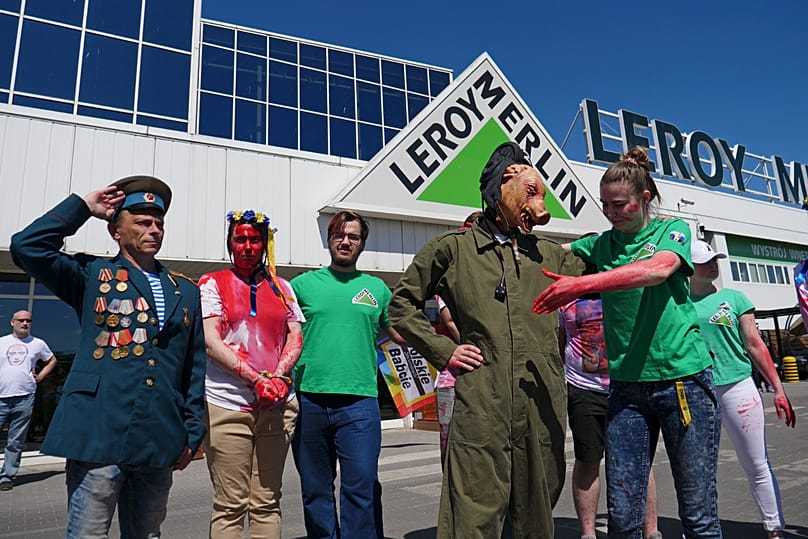
In terms of profit tax paid to Moscow, Leroy Merlin came in fifth place with $128 million (€111 million), while cosmetics giant L’Oreal was 17th with $44 million (€38 million). Although US, Chinese, and German firms contributed more to Russia’s tax revenues, French companies paid around $565 million (€492 million) to the Russian treasury in 2024, much of it from businesses that have no plans to leave.
Tax Revenue and Its Impact on Russia
A report by the Kyiv School of Economics (KSE), B4Ukraine, and the “Putting Pressure on Putin” initiative highlights the significance of this tax revenue for the Kremlin. They estimate that international companies still operating in Russia paid at least €17.2 billion in taxes to the Russian state in 2024 alone, or €51.8 billion since the start of Russia’s invasion of Ukraine.
To put this into perspective, Russia’s annual defense budget stands at roughly €125 billion, according to the International Institute for Strategic Studies.
Major Investments in Russia
Before the full-scale invasion of Ukraine, France was a major investor in Russia. In 2020, France was the top foreign employer in Russia, according to the Nord-de-France Chamber of Commerce. French companies were particularly well established in various sectors, including agri-food, finance, distribution, energy, automotive, construction/urban services, transport, aerospace, and pharmaceuticals.
Since February 2022, several of these sectors have had to leave Russia because they could no longer operate legally. The Russian aerospace industry, for example, is under sanctions from the European Union. In the automotive sector, Renault announced its departure from Russia a month after the invasion. Russia accounted for 10% of the group’s revenues, with 500,000 vehicles sold each year. The sale of its shares for a symbolic rouble cost the group €2.2 billion.
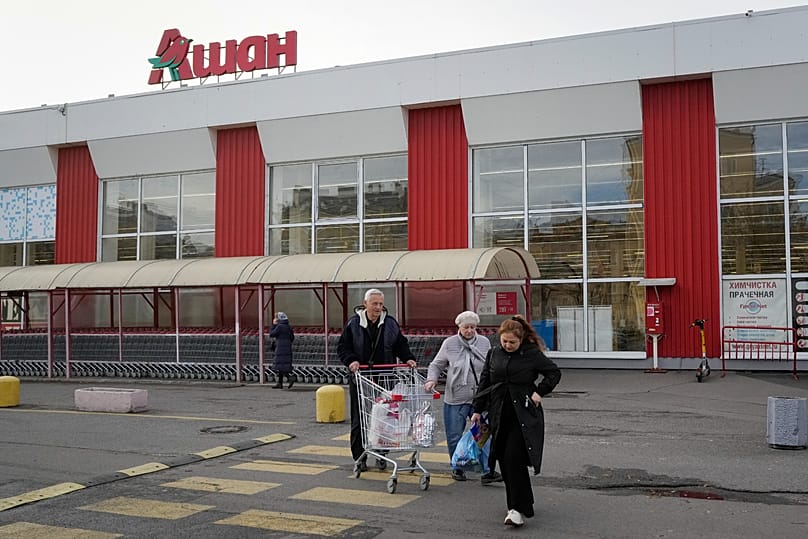
However, Auchan has not followed suit. Selling its Russian operations in 2022 would have cut roughly 10% of its sales, or €3 billion. The French retailer has invested hundreds of millions in Russia, with 94 hypermarkets and 138 supermarkets bearing the Auchan logo across the country.
Humanitarian Justifications and Controversies
French companies still active in Russia often defend their presence as a humanitarian necessity. European sanctions or Russian countermeasures do not currently target the pharmaceutical industry and agricultural and food products. For example, food producer Bonduelle defended its continued presence in Russia back in March 2022, arguing that its factories produced “basic foodstuffs such as corn, peas and beans” for 146 million Russian consumers, plus 90 million more in neighboring countries.
Of the 23 French companies that still operate in Russia, half sell non-essential consumer goods — from Clarins cosmetics and Etam lingerie to Dessange salon products and Babolat tennis racquets.
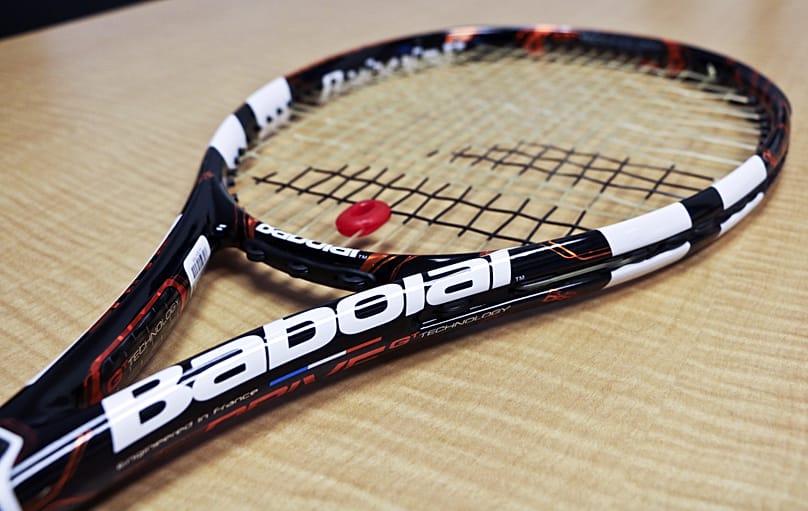
Babolat had announced that it would cease trading in Russia. However, this year it was reinstated on the list of countries still operating in the country by the Yale Chief Executive Leadership Institute. According to the institute, this is because the Russian distributor associated with the company continues to sell racquets “with a seemingly inexhaustible flow of Babolat products that appears to far exceed normal inventories.”
Mothballing Rather Than Withdrawing
Leaving Russia has proved far more complicated for some foreign businesses than staying. Of the 52 French firms that have ceased operating in Russia since February 2022, only 16, such as Renault, have entirely left. For others, the cost and risk are prohibitive.
Since 2022, the Kremlin has built a complex legal and administrative system to discourage corporate exits, requiring special authorisation from a government sub-commission for any divestment. Companies that receive permission must accept a discount of at least 60% on the value of their assets and pay an exit tax — now up to 35% of the sale price.

This tax may even be interpreted as financing the war, potentially exposing firms to sanctions from their home countries. Even companies that tried to leave before the system was introduced haven’t escaped unscathed. In August, the subsidiaries of industrial gas company Air Liquide, which had announced its withdrawal in 2022, were placed under “temporary management” by a Russian firm, following a decree signed by Putin.
Faced with these obstacles, many French companies have opted for a “mothballing” strategy or putting themselves “on standby,” shutting down most operations, laying off staff, but keeping a minimal legal presence in Russia. Firms including Kering, Decathlon, and Hermès have chosen this limbo; neither active nor entirely gone.
For Nezir Sinani, director of B4Ukraine, this is not the right solution. “Companies are supporting Russia’s war economy through the taxes they pay,” he told Euronews. Even when they are dormant, many companies still have a small turnover in Russia. “The price that companies pay is much higher than the cost of leaving the country, because it is measured in hundreds of thousands of lives.”


