US president might aim to impress during Xi’s state visit, but Chinese protocol discourages its leaders from using helicopters
US President Donald Trump has been very eager to show off to Chinese leader Xi Jinping his new US$5 million White House helipad, his latest bid to stamp his image on Washington.
While Xi might act impressed and compliment the US president on his latest building project – part of Trump’s bid to match Xi’s splendour-filled hosting four months ago in Beijing and show the Chinese that Americans can build infrastructure too – do not count on Xi actually trying it out with a chopper ride this week during his first state visit to the US in 11 years.
“I’m sure Xi will appear impressed, like, oh, this is really remarkable. I’m never getting on,” said Yun Sun, senior fellow with the Stimson Centre. “I don’t think the Chinese security protocol will allow for a helicopter take-off or landing or for Xi Jinping to take a ride.”
Do you have questions about the biggest topics and trends from around the world? Get the answers with SCMP Knowledge, our new platform of curated content with explainers, FAQs, analyses and infographics brought to you by our award-winning team.
“They know how dangerous that thing is. It’s a flying coffin.”
There is no formal published statute or civil aviation law in China explicitly barring top leaders from flying in helicopters, experts said.
But a de facto ban is enforced as part of strict internal protocol maintained by the Central Guard Bureau, which oversees security for the nation’s top leaders.
Last month, Trump gushed for several minutes during a media show-and-tell about the helipad’s “flawless” black California granite, compressive strength and “million-year life”.
From Trump’s perspective, the helipad is easy to show off. Its swift completion stands in sharp contrast to his other legally embroiled projects: the estimated US$800 million White House ballroom expansion, the US$100 million 250-foot (76.2-metre) “Arc de Trump” and the troubled US$15 million reflecting pool renovation.
The US president appears to fully expect that his Chinese counterpart will be wowed.
“We’re building a helipad, a beautiful helipad … It could be ready by the 21st [of September],” he told reporters last week, noting Xi’s coming visit. “The planned White House ballroom will not be completed in time, but the helipad will be.”
Trump has expressed his belief that Xi – a leader the US president has variously described as his “friend for life,” “central casting, brilliant guy” and “tough, smart and a great leader” – would be particularly impressed by the 100-foot-diameter “Seal of the President of the United States” insignia affixed to the helipad surface.
“It’s got the seal of the White House on it in granite, in carved granite. It’s really a beautiful thing,” he said.
During his presidency, Xi has overseen some 25,000 miles (40,000km) of high-speed railway in China; about US$1 trillion in Belt and Road Initiative projects spanning 150 countries; building of the ongoing US$580 billion Xiongan New Area smart city; and the world’s largest single-dish radio telescope, a new Beijing airport and the world’s longest bridge and tunnel sea crossing, to name a few.
Some have suggested that an added benefit of the helipad from Trump’s perspective is that it would allow foreign dignitaries to avoid street demonstrations.
“Trump had the heliport built over the Rose Garden for Xi, so he didn’t have to look at protesters en route in the motorcade from Andrews,” said Kevin Nealer, a principal with the Scowcroft Group consultancy and a former member of the President’s Intelligence Advisory Board. “Xi hates copters and avoids using them at home.”
Nealer was referring to Washington’s Joint Base Andrews, where in a highly unusual, high-honour move, the president announced that he would greet Xi in person on the tarmac, a role usually reserved for lower-level officials.
China’s Ministry of Foreign Affairs has reportedly told overseas diplomats when arranging presidential trips that its top leaders travel almost exclusively by fixed-wing aircraft for long distances and in armoured motorcades for shorter distances.
The Chinese embassy in Washington did not immediately respond to a request for comment.
Helicopters are statistically at greater risk of mechanical failure and rotor-related accidents. And China believes they are more difficult to defend against missiles or other attacks than vehicles or planes equipped with heavy armour, missile defences and secure jammer capability, according to a former US military official.
During their 2019 summit in India, Prime Minister Narendra Modi travelled to the meeting site by helicopter, while Xi drove some 35 miles in his custom Hongqi limousine, adhering to Chinese rules disallowing leaders from using helicopters, Beijing’s foreign ministry said at the time.
For the Asia-Pacific Economic Cooperation (Apec) summit in Port Moresby, Papua New Guinea in 2018, other leaders travelled by helicopter or boat owing to local crime rates and infrastructure.
In its lead-up, however, China funded and built a dedicated multi-lane highway called “Independence Boulevard” leading to the local parliament, allowing Xi to travel in a bulletproof Hongqi limousine along the pre-cleared roadway.
At the 2015 Apec summit in Manila, Xi declined a helicopter lift availed by other heads of state from Ninoy Aquino International Airport directly to coastal hotels and the summit convention centre meant to circumvent the city’s infamous traffic.
Lower-level officials and People’s Liberation Army officers use choppers. And senior officials have deployed them during inspections and disaster responses, including several flights by then-Chinese premier Wen Jiabao during the 2008 Sichuan earthquake.
But by most accounts, the unofficial ban was cemented when Xi took power in 2012.
Chinese helicopters have had a mixed record.
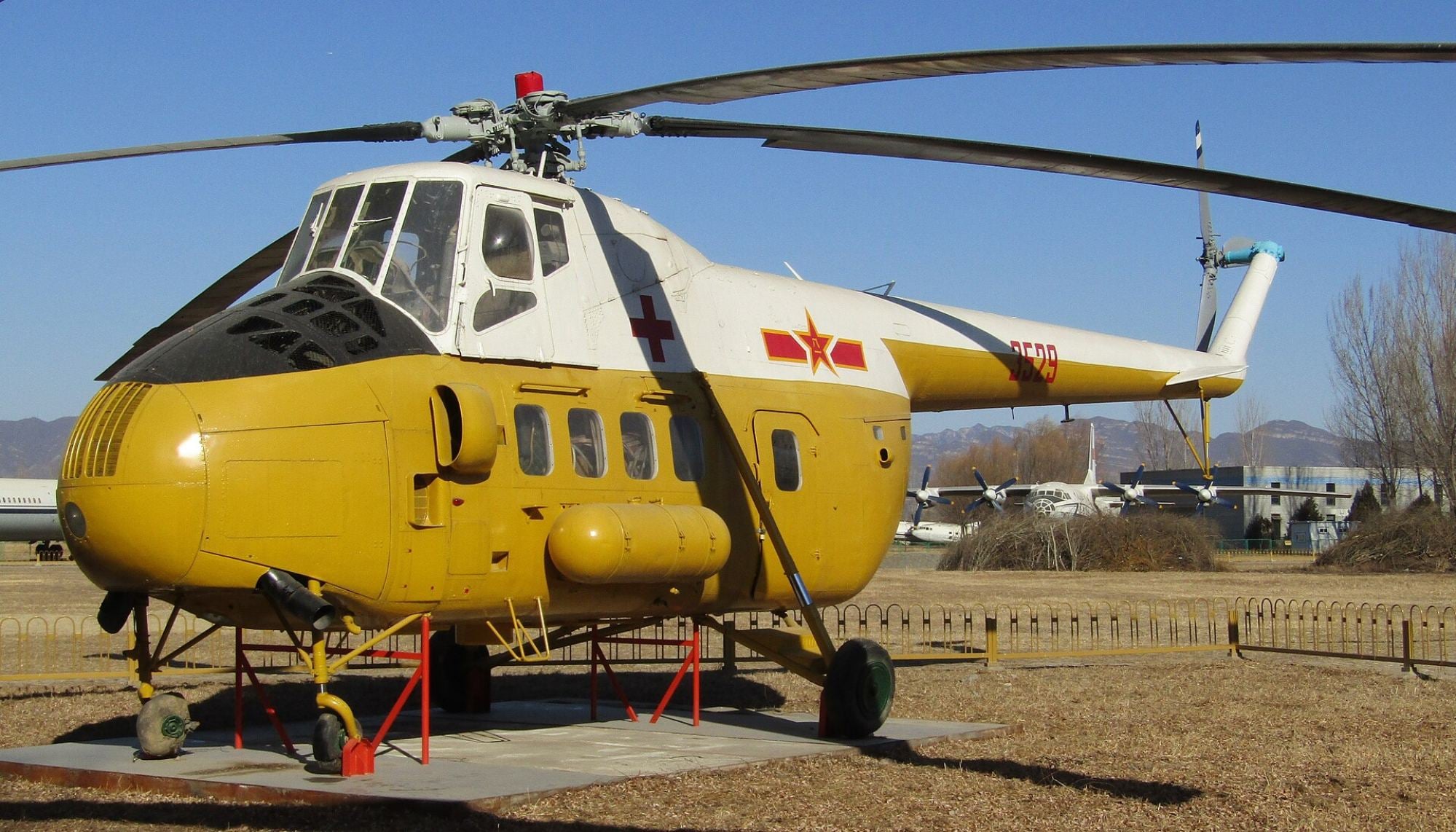
In their infancy, they relied heavily on Soviet technology. In the 1950s, Moscow provided blueprints of its Mil Mi-4 “Hound” transport chopper that formed the basis of the Harbin Z-5, China’s first serial production model.
Efforts to ramp up production coincided with the Great Leap Forward and the Sino-Soviet split, however, and early models saw severe manufacturing defects, including rotor-blade metal fatigue, structural vibrations and substandard metallurgical quality in engine and transmission parts.
“China’s record of engine maintenance is not great,” said Dennis Wilder, a senior fellow at Georgetown University and former CIA officer. “I did once fly to the Great Wall on an old Soviet helicopter. Never again.”
But quality has improved significantly, and its Z-20 multi-role platform, seen as resembling the Sikorsky Black Hawk, and Z-10 and Z-19 attack helicopters are credited with significantly upgrading the PLA Army’s air assault capabilities.
Along with greater reliability, China has built an export market. Its selling points include a lower price tag and deals largely free of human rights or other political stipulations relative to Western suppliers, although some countries including Cameroon and Pakistan have reported operational and maintenance issues.
In the nearly unimaginable eventuality that Xi did agree to fly on a US helicopter in Washington, he might well insist that another very special passenger tag along, analysts said.
“If Xi Jinping really takes a ride, Trump will have to be on the plane with him. But I think the Chinese default answer is going to be no,” Sun said. “He’s only here for one day. It’s a very short trip.”
More Articles from SCMP
Presley Gerber remembered, in the words of his exes Lexi Wood and Charlotte D’Alessio
From moongazing to bus tours: how to celebrate Mid-Autumn Festival in Hong Kong
Xi’s US visit begins with rare airport welcome from Trump, trade truce extension
Bessent and He meet again to tackle ‘some unfinished business’ as Xi summit nears
This article originally appeared on the South China Morning Post (www.scmp.com), the leading news media reporting on China and Asia.
Copyright (c) 2026. South China Morning Post Publishers Ltd. All rights reserved.