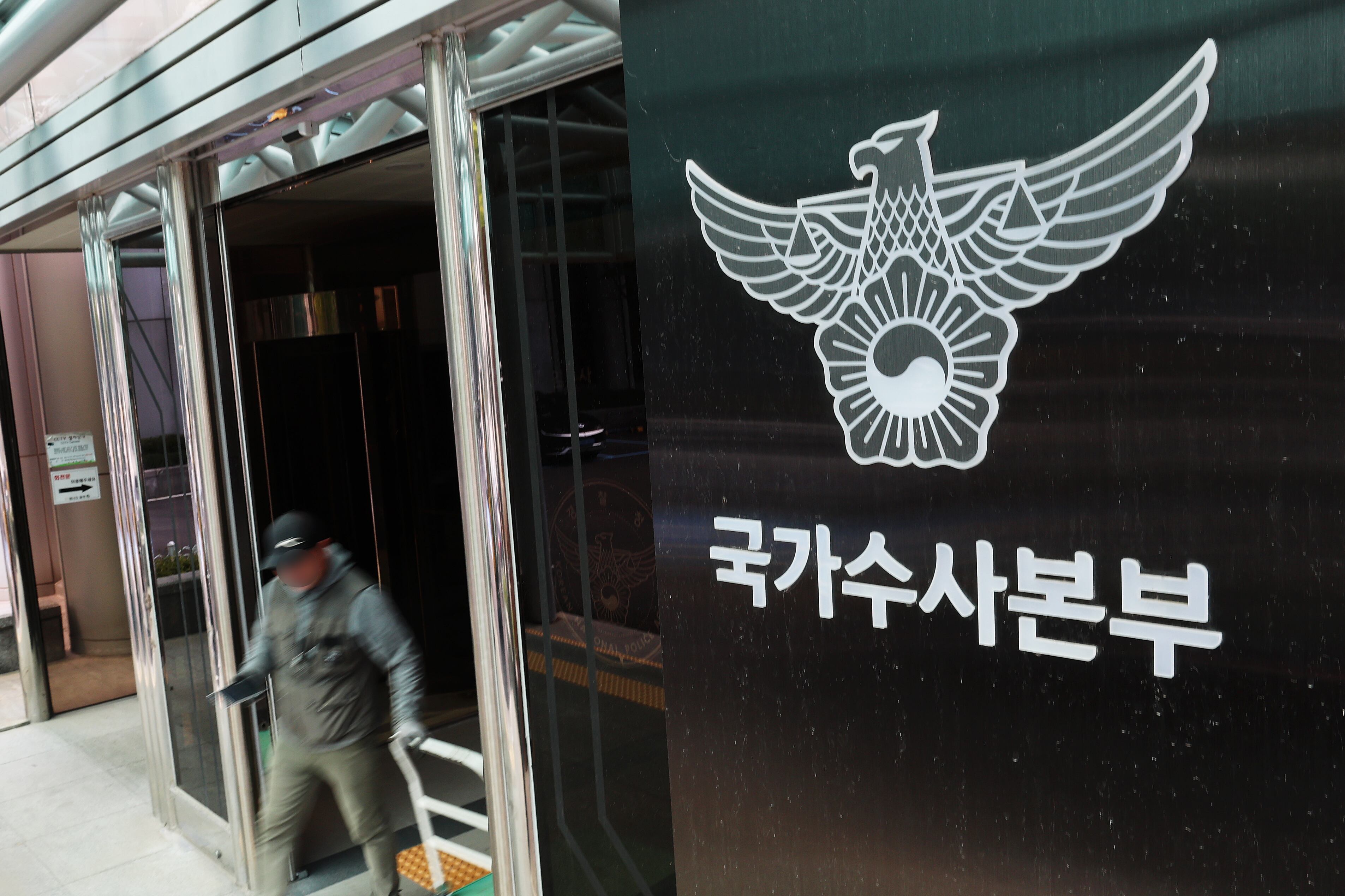
The police have rarely investigated government corruption in power. Beyond their investigative capabilities, they have always been suspected of merely watching the government’s reactions. There was a rare opportunity to dispel that suspicion 7 years ago: the so-called “Druking case.” The case began when the Democratic Party filed a complaint with the police, alleging opinion manipulation, after many critical comments were posted online opposing the push for a unified South-North team during the Pyeongchang Olympics.
The Seoul Metropolitan Police Agency arrested the Druking group as suspects. However, they turned out to be rights-holding members of the Democratic Party. Eventually, evidence and testimonies emerged that they had manipulated comments around the 2017 presidential election, implicating then-influential figure Kim Kyung-soo, the Gyeongnam Governor. This shocking twist was a major opportunity for the police to change their image. However, the police, intimidated by the name “Kim Kyung-soo,” squandered that opportunity.
Forty-four days after the Druking group’s arrest, the police summoned Governor Kim as a “witness” for questioning and publicly broadcast his statement that he was “not involved,” as if it were a live broadcast. They even failed to seize his mobile phone. The head of the Seoul Metropolitan Police Agency went as far as to suggest that Governor Kim had no connection to the comment manipulation scheme. The investigation was hardly worthy of being called one. This flawed investigation was overturned by Special Counsel Heo Ik-pyeom, and Governor Kim’s 2-year prison sentence was finalized.
The Druking case was a painful lesson for the police. It showed they were incapable of conducting neutral investigations. Nevertheless, the Moon Jae-in administration abolished the prosecution’s investigative command authority under the pretext of weakening the prosecution’s power and granted the police the authority to conclude investigations. The result is the current weakening of investigative capabilities and delays in investigations—an absurd outcome.
The police recently had another opportunity. A civic group filed a complaint with the Seoul Metropolitan Police Agency against Justice Minister Jung Sung-ho and others regarding the “Daejang-dong case appeal abandonment” incident. This is a critical case that must determine whether there was “undue pressure” from higher-ups, including the minister and the presidential office, in the process of the prosecution deciding and then reversing its appeal. However, they are squandering this opportunity as well.
The case should have been transferred to the National Police Agency’s National Office of Investigation, but it was instead handed to the under-resourced Seocho Police Station in Seoul. This indicates they have no intention to investigate. When criticism arose, they quietly moved the case to the Seoul Metropolitan Police Agency’s Metropolitan Investigation Unit. It’s a comedic situation. So far, they have only investigated the complainants, with no word on any actual investigation. If the Corruption Investigation Office for High-ranking Officials, which has received a similar complaint, requests a transfer, they will likely send it immediately. It’s hardly a credible investigative agency.
The investigation into Democratic Party lawmakers who raised suspicions of a secret meeting between Chief Justice Jo Hee-de and former Prime Minister Han Duck-soo is no different. Representatives Seo Young-kyo and Boo Seung-chan of the Democratic Party were accused of defamation after alleging that following the impeachment of former President Yoon Suk-yeol, Chief Justice Jo met with former Prime Minister Han and others to say, “The Supreme Court will handle President Lee Jae-myung’s election law case on its own.” If untrue, this is a serious matter of character assassination against the Chief Justice through fake news.
The parties involved in the meeting allegations deny the encounter, and the Democratic Party has presented no evidence. Whether the meeting actually occurred could be confirmed simply by checking the parties’ whereabouts. However, three months after the complaint was filed, the Seoul Metropolitan Police Agency’s Public Crime Investigation Unit, which is handling the case, has offered no updates. It can only be seen as refraining from investigating due to watching the government’s reactions. In contrast, when the president ordered an investigation into the Unification Church’s alleged lobbying of political circles, they rushed to act.
The police today are not much different from how they were 7 years ago during the Druking investigation. While the prosecution was called the regime’s servant, the police are moving as if they are one with the regime. If the prosecution office is abolished next year, the police will almost monopolize investigative authority. It is already worrying what such a police force might do.