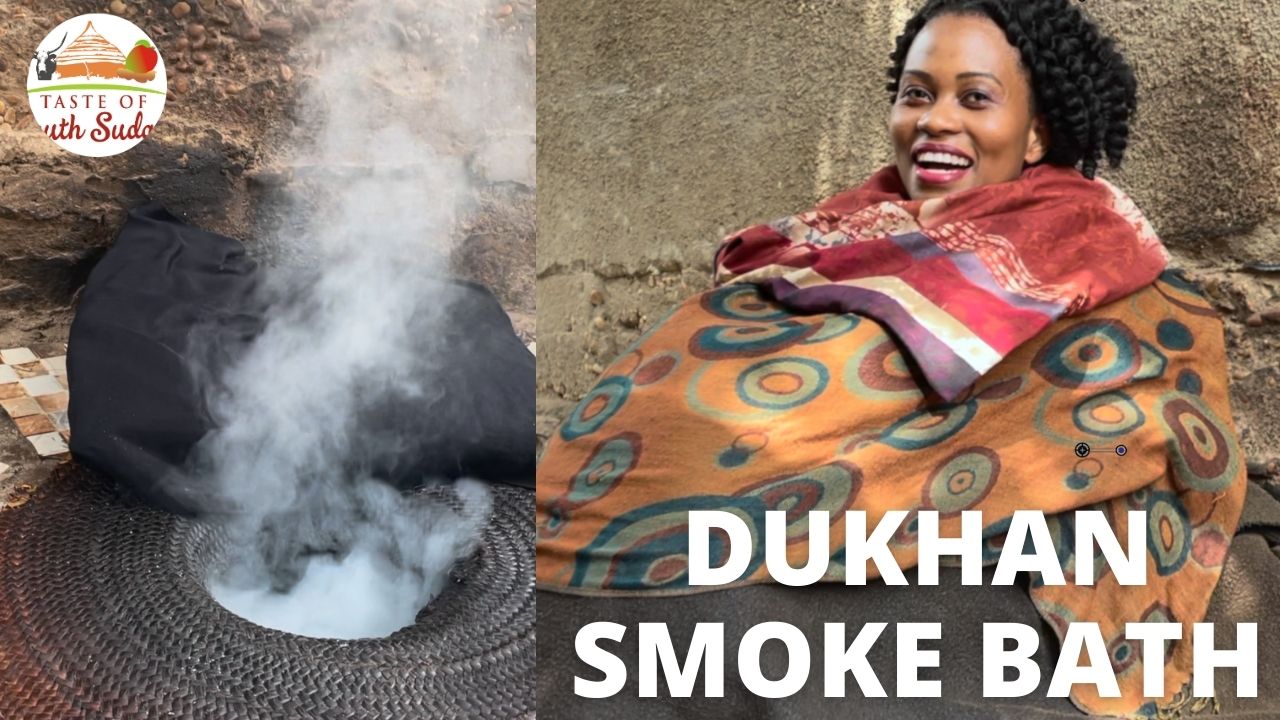
The Traditional Practice of Dukhan: A Cultural Ritual in Sudan and Beyond
In Sudan, one of the oldest and most unique beauty and health rituals known as Dukhan or smoke bath is a traditional practice where the body is exposed to scented smoke from burning wood. This ritual has deep cultural roots and is particularly significant in northern Sudanese communities.
Dukhan is popular among married women and soon-to-be-brides. It is considered an integral part of the marriage process for brides, believed to beautify the skin, make the body firmer, and add a lasting fragrance on the skin of the bride-to-be. While some men also use it to relieve body pains, especially joint pain, the practice is generally considered a women’s ritual in northern Sudanese culture.
In some instances, it is believed to be able to treat sexually transmitted infections, such as syphilis and gonorrhea, but in these cases, various medicinal plants are used instead. One such plant is tundub (with its botanical name as capparis decidua), a desert plant whose seeds and oil have traditional medicinal and nutritional uses.
Although the ritual is Sudanese in origin, it has also spread into Nigeria, particularly the northern part of the country, where it has been adopted by women across different communities. In many parts of the North, Dukhan has become part of bridal preparation and married life, valued for its beauty effects, fragrance, and role in enhancing intimacy. For brides in particular, the smoke bath is seen as a way of preparing the body and skin for marriage.
The Process of Dukhan
The process begins with the woman applying karkar, a special oil made by mixing sesame oil with various local herbs and perfumes. She then covers herself with a thick wool blanket and sits on a stool with a hole in the middle. Underneath the stool, a fire is lit in a small pit, and special woods are placed on it. The most common are talh (acacia wood) and shaff (a locally grown scented wood). These woods produce a rich, sweet-smelling smoke that surrounds the body.
The woman remains seated until the smoke becomes too hot to handle. The heat opens the pores of the skin, while the perfumed smoke is believed to smoothen and soften the skin, tighten the body, particularly the private area, and leave a natural fragrance. After the smoke bath, women often receive a dilka massage (a body scrub made from turmeric, honey, and other ingredients), which leaves the skin glowing.
Health Concerns and Medical Perspectives
Despite its popularity, questions remain about whether the smoke bath is truly healthy. Medical experts have expressed concerns about its safety. Dr Naima Idris of the Girl Talk Series on an Instagram live described the practice bluntly: ‘It is like a barbecue for a woman’s private part.’
To understand why the practice continues to hold such meaning despite the concerns, Weekend Trust spoke with women who have experienced Dukhan firsthand.
Mariya Ibrahim, a bride-to-be, explained that the practice is a part of marriage preparation. ‘To be honest, it is a tradition that has always been done. Young girls and brides-to-be are excited at the thought of that aspect of wedding preparation. It is painful and time-taking, but once it is finished, you smell so nice and look better. I do it because all my sisters that are married did it. I cannot imagine a bride not having to do Dukhan or the whole gyaran jiki process.’
Zainab Musa, who has been married for four years, told Weekend Trust that she still maintains Dukhan as part of her beauty routine. ‘I began Dukhan as part of my wedding preparations, just like every other bride. My mother is from Borno State, so I grew up around the burning of turaren wuta for cloths. I often saw her and my aunties practise Dukhan without negative effects. Over time, I personally began to enjoy the fragrance it leaves behind. For me, it is not only a tradition but also a form of self-care.’
The Role of Practitioners
For those who provide the service, Dukhan is seen as an essential part of women’s beauty and self-care. Jamila Yakubu, who runs a spa in Abuja and Kaduna since 2019, said she first encountered the smoke bath as part of everyday life in northern Nigeria. ‘As a northerner who has spent all her life in the North, I would say I first learnt about Dukhan from my environment since it is common here. Then I made research about it online before attending classes on it.’
Jamila, who studied botany, blends cultural practice with scientific knowledge. She said, ‘During a Dukhan session, body scrubs of different types are prepared from natural ingredients; and these scrubs are applied all over the body, then the scrubbing begins. Afterwards, the steaming session is next. The client sits in a sauna body steamer for about 20 minutes. The dorut wood is also burnt, allowing the smoke to trap in the sauna bag. Cloves and date seeds are also burnt, and women are told to sit on the smoke for a few minutes. This allows the steam to tighten the private part after childbirth.’
She listed some of the natural materials she uses: turmeric, qasil, henna, moringa, dorot wood, palm oil, olive oil, coconut oil, carrot oil, among others. ‘The turmeric is known for instant skin glow and lightening, the qasil, henna and moringa plants are good for exfoliation, acne treatment and skin repair. The dorut wood brightens the skin, while all the oils I use naturally give it a radiant glow,’ Jamila explained.
Medical Warnings and Alternative Practices
Despite her belief in the practice, Jamila also urges moderation. ‘My overall thought about the smoke bath is that women shouldn’t do it too frequently to avoid skin burns and possible inhalation of smoke, except they are having the Dukhan session at a well-equipped space, like I use a sauna bag for mine. I recommend women to do it at least twice monthly and on special occasions.’
However, while women who practise it and those who provide the service often describe smoke bath as cleansing and relaxing, medical experts continue to warn against it. Dr Nonye Okoye, a consultant obstetrician and gynecologist, told Weekend Trust that the claimed benefits were not supported by science.
She said, ‘There is no scientific evidence that it tightens the private part. We actually try to speak against women using scented herbs, fragrances or lotions to create a ‘better’ scent because the private part is not meant to have such floral smells. What those things do is distort the normal microorganisms, the natural bacteria that help maintain wellness. Naturally, the private part has different smells, depending on the individual, but it is meant to be musky, like fresh soil, not floral or perfumed.’
Dr Okoye explained that organisations such as the World Health Organisation and many OBGYN associations had openly discouraged steaming and smoke baths. ‘The risks completely outweigh the benefits. Exposing the private part to hot smoke can cause burns. The skin there is very fragile and the heat can lead to thermal injury and damage delicate tissues,’ she stressed.
She warned that the smoke also disrupts the natural balance of the private part, saying, ‘There are bacterial bugs that are meant to be there. The smoke can alter the pH (a measurement of the acidity or alkalinity of the environment of the private part), which normally protects women. When that pH is disturbed, it increases the risk of recurrent yeast infections and bacterial vaginosis. It also creates micro-injuries and dryness that make women more vulnerable to HIV and other STIs.’
The dangers, she added, are not only gynecological. ‘Inhaling wood smoke, especially in poorly ventilated rooms, can irritate the lungs, trigger asthma and even cause long-term respiratory disease. Depending on what is burnt, women could also be exposed to toxins, such as carbon monoxide and polycyclic aromatic hydrocarbons. These toxins can be absorbed into the body and increase susceptibility to infections. And with long-term exposure around the reproductive areas, we also have concerns about fertility.’
The safer, evidence-based alternative is pelvic floor muscle exercises. Women can learn how to do this from a pelvic floor therapist. These exercises, recommended especially from age 30 onward and for women who have given birth through the private part, strengthen the muscles that support it and other structures. Done consistently, they improve tightness and sexual satisfaction without any risk.
Good hygiene, avoiding perfumes or scented washes, and seeing a gynecologist when necessary, are the safe ways to maintain vaginal health. Dukhan is not recommended. It is not evidence-based. What women need is education to make informed, medically sound choices.
Weekend Trust reports that although doctors advise against the Dukhan smoke bath, many women still follow the traditional practice because they believe it enhances sexual intimacy and improves their beauty. Health workers stress that women need education to make informed, medically sound choices, but for now, many continue to trust and follow the Dukhan practice passed down through generations.


