Understanding Squints in Children
Kemi Haruna, a mother of one, first noticed something unusual about her two-year-old daughter. While her daughter’s head was turned in a different direction, her eyes seemed to follow Kemi’s movements. This observation led her to realize that her daughter could look at her with one eye closed, which alarmed her. She began closely observing her daughter’s eye movements and eventually took her to an eye clinic.
At the clinic, Kemi learned that her daughter had a divergent eye squint. A squint, also known as strabismus, is a condition where the eyes do not align properly. For Kemi, this was a revelation, as she had never considered the possibility of such a condition in her child.
In contrast, Mrs. Charity Ahmed, a mother of a sixteen-year-old son, had noticed a squint in her son but did not initially see it as a significant issue. “I didn’t think it could greatly affect his life,” she said. However, as her son grew older, he faced challenges due to his condition. He often became a target for ridicule and abuse from classmates, leading to frequent fights and a decline in his self-confidence both at school and at home.
Mrs. Ahmed recounted how her son would come home crying after being taunted by friends. “He said he was tired of the constant name-calling,” she explained. Initially, she thought he was just being stubborn, but it soon became clear that the problem was deeper than she had anticipated.
Dr. Mary Ugalahi, a pediatric ophthalmologist at the University College Hospital (UCH) in Ibadan, emphasized that squints are common in children. She noted that at least one in every 20 children may develop a squint within the first three years of life. Some children are born with the condition, while others may develop it within the first six months.
Squints can have various causes, including hereditary factors. If there is a family history of squints, the likelihood of a child developing one increases. Additionally, children with conditions like cerebral palsy or hydrocephalus are more prone to developing squints.
When a child has a squint, their eyes do not appear to look in the same direction. This misalignment can lead to difficulties in focusing. In many cases, one eye becomes dominant, while the other squinted eye is ignored by the brain. This can result in poor vision, blurred or double vision, and the child may try to cope by covering or closing the affected eye.
Other symptoms of squints may include headaches, eye strain, difficulty reading, and clumsiness. These signs can sometimes be subtle, making early detection challenging. However, squints can often be identified through simple tests, such as shining a light on the eyes from a distance.
One of the most concerning complications of squints is amblyopia, commonly known as lazy eye. If left untreated, amblyopia can lead to permanent visual impairment. Dr. Ugalahi stressed the importance of early detection and treatment, noting that if a child has poor vision, it can significantly impact their ability to develop full vision later in life.
Environmental risk factors, such as prematurity, low birth weight, and smoking during pregnancy, have been linked to conditions like esotropia (eyes turning inward) or exotropia (eyes turning outward). These factors can contribute to the development of squints in children.
Eye conditions in children are diverse and include amblyopia, strabismus, binocular vision issues, childhood cataracts, myopia, color vision problems, hyperopia, and glaucoma. Many of these conditions may go unnoticed in their early stages, as they often lack obvious symptoms.
Possible signs of eye problems in children may include complaints of headaches, eye strain, difficulty reading, unusual clumsiness, frequent eye rubbing, or sitting too close to the TV. Early detection and intervention are crucial for effective treatment.
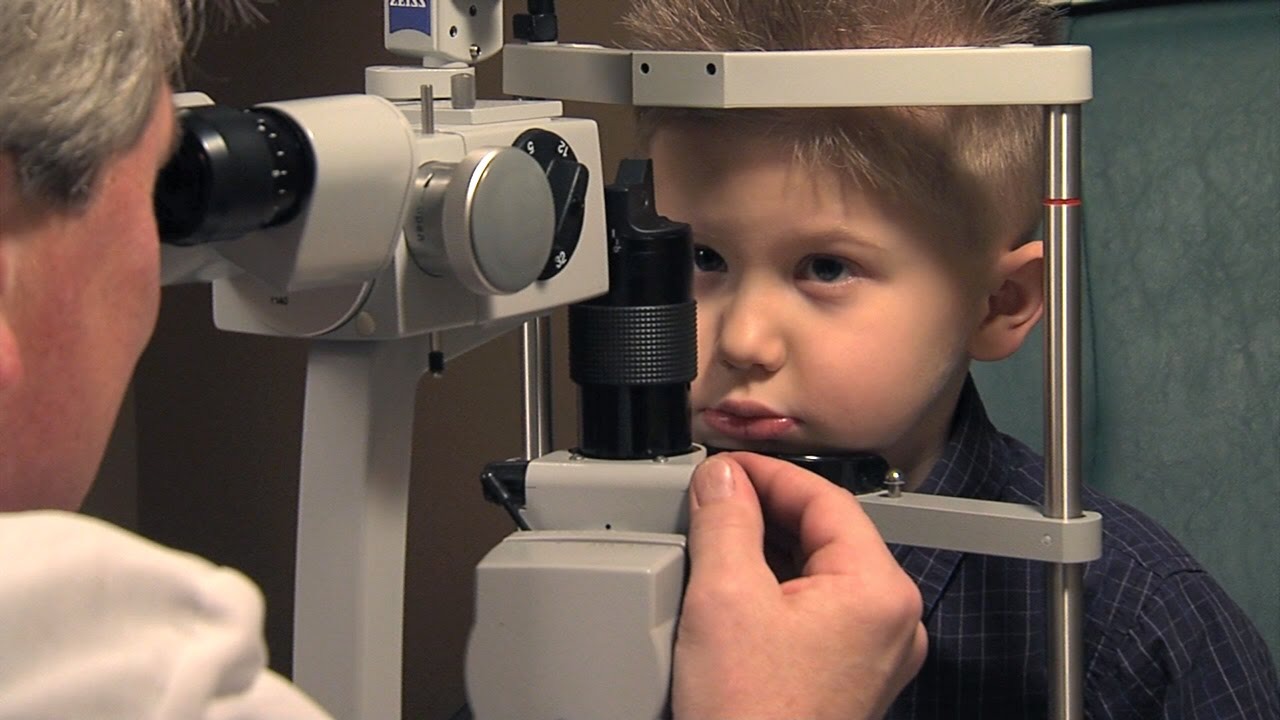
Dr. Ugalahi emphasized that when eye problems like squints are detected and treated early in childhood, the outcomes are usually much better. She highlighted the importance of regular eye examinations, which should begin in infancy. At birth, a baby’s eyes are examined using an ophthalmoscope, a tool that allows for a detailed view of the eyes.
Regular eye check-ups are essential for all ages, especially for children, as early detection can prevent long-term complications. With timely intervention, many children can achieve good visual outcomes and lead healthy, active lives.


