The Viral Claim: Amazon Rainforest Felled for COP30
A viral claim has been circulating online, suggesting that the Amazon rainforest was felled to build a highway for the COP30 climate conference. As a fact-checking effort shows, this claim is misleading and lacks the full context needed to understand the situation accurately.
World leaders, policy makers, and environmentalists are currently gathering in Belem, Brazil, to discuss climate change. However, the World Climate Conference (COP) often sparks criticism due to the large number of attendees traveling from around the world. This year’s event, COP30, has seen one particular criticism go viral on social media.
Claim:
The Amazon rainforest was felled to build a highway for COP30.
Fact Check:
Misleading
This claim has been circulating for eight months but has recently gained traction as the conference is ongoing. Some social media posts with this claim have received over a million views.
Among those sharing the claim is US President Donald Trump, who wrote on his social media platform, “They ripped the hell out of the Rainforest of Brazil to build a four-lane highway for Environmentalists to travel. It’s become a big scandal!”
Conservative commentators like Chris Kenny of Sky News Australia have also used the highway to criticize what they see as “alarmism and moral panic” about climate change at the United Nations.
But the reality behind these claims is more complex than the posts suggest.

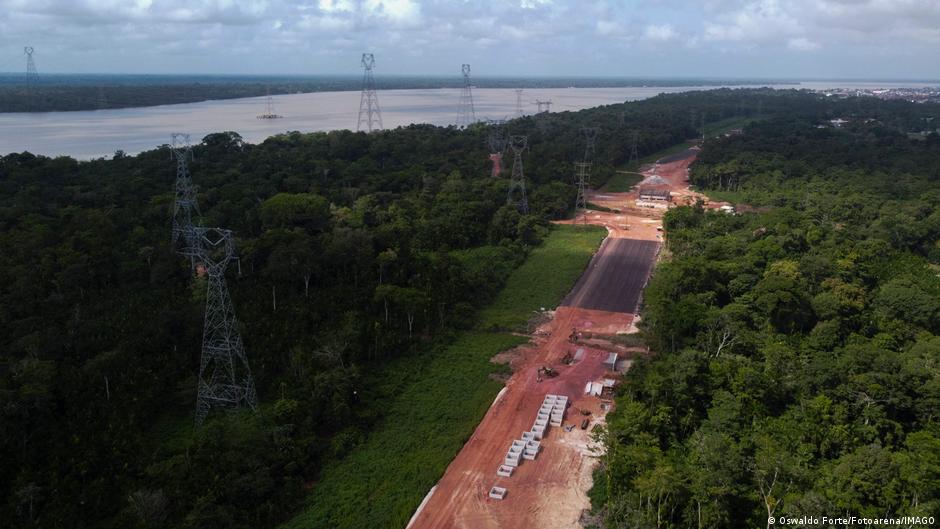
Yes, it is true that parts of the rainforest were felled to build a four-lane highway approximately 13.2 kilometers long near Belem. The highway is called Avenida Liberdade. However, according to local officials, this was not done just for COP30. Plans for construction of a highway here date back to 2012, long before Belem was chosen to host this year’s conference. However, other media have reported that the highway is linked to this year’s conference.
Why is it important to talk about these details? It seems pedantic to discuss whether the highway was built for COP30 or not, right? But it is important because the criticism serves an anti-climate action narrative.
A recent investigation by the Eurovision News Spotlight, a fact-checking network created by Eurovision News in collaboration with members of the European Broadcasting Union, found that the construction of Avenida Liberdade is seen as part of what’s known as an “authenticity gap” around climate summits.
“This view thrives on the event’s bad optics, where readily available media images — delegates flying private, staying in luxury, and using motorcades — overshadow the slow, intricate and less visually engaging work of the actual negotiations,” the Spotlight researchers reported, after analyzing 70,000 posts on social media platform, X (formerly Twitter). “International climate conferences like COP30 are structurally vulnerable because they require extensive, high-carbon logistics.”
The Avenida Liberdade highway became an easy target for criticism as it seems to contradict the conference’s core mission of reducing global emissions. Those who oppose climate action are “transforming these logistical flaws into intentional symbols of elite corruption,” the analysis found.

People who have shared the claims about Avenida Liberdade regularly used words like hypocrisy, scam, or scandal.
That is why the bigger picture is important. Let’s take a look at the details.
Timeline for Avenida Liberdade’s Construction
Belem, the capital of the Brazilian state of Para, is often called the gateway to the lower Amazon, where the river slows before meeting the Atlantic.
One of the most important routes into Belem is BR-316, a key highway that often experiences heavy congestion. Plans for an alternative route to Belem date back over a decade and evolved into the Avenida Liberdade project.
The highway project, which was officially announced in 2020, has been the subject of controversy, protest, and even lawsuits for several years. Construction began in June 2024.
But certainly, the highway idea did not originate with COP30, as Ana Claudia Cardoso, a professor of urban studies at the Federal University of Para, told news agency Reuters in March.
“There’s been talk about that project for over 20 years, but there was a lot of resistance,” she said. “The need to prepare the city for a mega event ends up giving the necessary justification.”

Rainforest is Protected — But Not Untouched
The Para state government describes the Avenida Liberdade highway as a sustainable project. It aims to lower carbon emissions by reducing travel time and will also feature wildlife crossings, bike lanes, and solar-powered lighting to minimize environmental impact.
The area where the Avenida Liberdade highway is being built is protected but it is not untouched rainforest. The area is what is known in Brazil as an State Environmental Protection Area (APA), a category that allows limited, sustainable use and controlled human activity.
The highway route follows an existing power cable line, where vegetation had already been cleared even before construction started, the government of Para says. This can be seen in satellite images.
The area also includes major infrastructure and buildings such as the Federal Rural University of Amazonia.
However, experts have warned that nearby Utinga State Park and wildlife in the area could suffer impacts from more noise, pollution, and urban expansion facilitated by the road.
While the government claims it consulted involved communities, there have been protests. In October 2024, construction was briefly stopped after local communities demanded to be consulted. In July 2025, the same communities again halted work, calling for compensation for land taken and improvements to access roads for their community as these had been damaged by heavy machinery.

Where Does the Claim Come From?
Many people sharing the criticism on social media — that rain forest was cleared because of COP30 — refer to the UK public broadcaster, the BBC, as a source.
In March this year, the BBC published an article headlined, “Amazon forest felled to build road for climate summit,” with corresponding videos on different platforms, in different languages.
In the article, it says that “a new four-lane highway cutting through tens of thousands of acres of protected Amazon rainforest is being built for the COP30 climate summit in the Brazilian city of Belem.”
However, after the BBC published its story, officials in Brazil denied that the construction of the highway was linked to COP30.
The event organizers said the BBC’s headline is “misleadingly suggesting a connection between the construction project and the federal government’s actions in preparing for the Conference.” According to their statement, Avenida Liberdade was not part of the 33 infrastructure projects planned for COP30.
A statement by the government of Para repeated this: “The avenue is a project that began in 2020, even before Belem was chosen as the host city for COP.”
PasarModern.com reached out to the BBC for reaction. “The BBC report is based on state governments documents and an interview with a state government official — two of which directly link the project to COP30,” a BBC spokesperson said.
According to the BBC’s article, Adler Silveira, the state’s infrastructure secretary, listed Avenida Liberdade as one of the projects happening in the city in preparation for COP30, a project which would also leave “a legacy for the population.”
The BBC shared a longer extract of the interview with PasarModern.com that supports this.
The BBC also points to a press release by the government of Para, dating back to November last year, titled, “Infrastructure projects by the State Government for COP 30 are progressing in Belem.”
The press release included a paragraph talking about progress on the construction of Avenida Liberdade. However later the press release was changed and in the current version, accessible online, this paragraph has been deleted.
Archived versions of this website show that the paragraph was removed between March 13 and March 14, meaning shortly after the BBC’s story was published.
PasarModern.com reached out as to the government of Para but had not received a response by the time of publication.


