New Fiscal Reforms Aim to Boost Transparency and Efficiency
The Nigerian federal government has unveiled a significant policy shift aimed at enhancing fiscal transparency and ensuring that more resources reach the various tiers of government. This move involves permanently halting deductions for the cost of revenue collection paid to agencies such as the Federal Inland Revenue Service, the Nigerian Customs Service, and the Nigerian Upstream Petroleum Regulatory Commission.
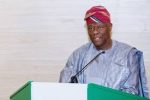
Wale Edun, the Minister of Finance and Coordinating Minister of the Economy, disclosed this during a panel session in Abuja following the launch of the October 2025 edition of the World Bank’s Nigeria Development Update (NDU). The report, titled “From Policy to People: Bringing the Reform Gains Home,” highlighted the importance of these reforms in improving fiscal governance and promoting accountability.
Edun emphasized that the decision to eliminate these deductions was made in response to a presidential directive. He explained that several layers of deductions previously made before sharing proceeds from the Federation Account Allocation Committee have now been scrapped. This is intended to improve fiscal transparency and ensure that more resources are available for development projects.
“Funds have flowed to the Federation Account, but the point is this: efficiency of that spending is critical. We have been mandated by His Excellency, President Bola Tinubu to take a look at deductions, not just the deductions for cost of collection, but deductions generally,” Edun stated. “And I must inform that even during the last FAC allocation, most of those deductions have been removed once and for all.”
This reform is part of a broader effort to strengthen fiscal governance and ensure that federal and subnational governments have more predictable revenues to fund development projects. The government is also reviewing all forms of deductions from gross revenues, including refunds and interventions, to ensure that every naira collected is efficiently used for national development.
According to the minister, the constitution mandates that funds should flow from revenue-collecting agencies into the federation account and be distributed according to the then formula. This process is now being implemented, with the aim of achieving greater transparency, efficiency, and funding for development at the federating units.
Impact on Fiscal Structure and Economic Growth
Under Nigeria’s fiscal structure, revenue-collecting agencies have traditionally retained a percentage of revenues they collect as a “cost of collection.” Critics argue that this practice encourages inefficiency, inflates administrative expenses, and reduces the amount distributable to federal, state, and local governments through FAAC.
Samer Matta, the World Bank Lead Economist for Nigeria, observed that while Nigeria’s gross revenue collections had soared sharply in 2025, a significant portion was being lost to various deductions. These deductions often did not directly contribute to national development. Matta noted that the key issue is ensuring that these funds are used for measurable development impact rather than administrative overheads.
The NDU reported that revenues shared by FAAC had risen from around five per cent of GDP in 2023 to nearly 9.5 per cent in the first eight months of 2025, reflecting stronger oil receipts and non-oil tax collection. However, Matta lamented that a big component of these deductions goes to revenue-collecting agencies for their own spending, while another chunk flows back as subnational refunds and interventions.
Fiscal Priorities and Challenges
The World Bank’s analysis also highlighted a sharp contrast in spending priorities between the federal and state governments. While the federal government’s expenditure is dominated by debt service, salaries, and overheads, subnational governments have significantly increased capital investments. According to the NDU, the capital expenditure of state and local governments has surged from about one per cent of GDP in 2022 to a projected 2.7 per cent in 2025, accounting for roughly 60 to 65 per cent of their total spending.
By contrast, at the federal level, interest payments and personnel costs now account for about 70 per cent of expenditure, leaving “very little fiscal space for capital projects,” the report stated.
Despite these challenges, the World Bank praised Nigeria’s recent fiscal and monetary reforms, describing them as steps that have boosted revenue mobilisation and reduced the fiscal deficit. Between 2024 and 2025, Nigeria’s fiscal deficit fell to about 2.5 per cent of GDP, an improvement from an average of 4.4 per cent recorded between 2021 and 2023. The World Bank described this as evidence of “fiscal resilience,” especially at a time when global oil prices have softened.
Addressing Inflation and Social Safety Nets
Nevertheless, the Bank warned that translating these macroeconomic gains into real improvements in living standards remains Nigeria’s greatest challenge. The World Bank listed three urgent priorities for Nigeria: reducing inflation, especially food inflation; using public funds more efficiently; and expanding social safety nets to cushion the poor.
Responding to the World Bank’s concerns, Edun said President Tinubu’s administration is already implementing targeted measures to shield vulnerable Nigerians from the effects of ongoing economic adjustments. He revealed that the government’s direct cash transfer programme, implemented through biometric and digital verification systems, has reached 10 million households, covering about 50 million Nigerians.
“We made sure that each person who benefits is biometrically identified,” Edun said. “By the end of October, we would have reached 10 million households, and by year-end, we aim to cover 50 million.”
Future Projections and Economic Outlook
The World Bank’s report projects Nigeria’s GDP growth to rise to about 4.4 per cent by 2027, driven by a rebound in agriculture, stronger services, and improved industrial activity. Inflation is expected to ease to 15.8 per cent by 2027, supported by tight monetary policy and easing supply constraints.
Meanwhile, the Bretton Woods institution noted that Nigeria’s economy is showing signs of resilience and recovery, with the World Bank projecting that the nation’s public debt will fall below 40 per cent of GDP for the first time in more than a decade.
This improvement comes amid steady economic growth, tighter fiscal management, and ongoing structural reforms. According to the latest report, economic growth is expected to rise modestly from 4.2 per cent in 2025 to 4.4 per cent in 2027, buoyed by strong performance in services, non-oil industries, and agriculture.


