A new survey shows Marcos’ satisfaction ratings at only 21 per cent – his lowest since taking office in 2022
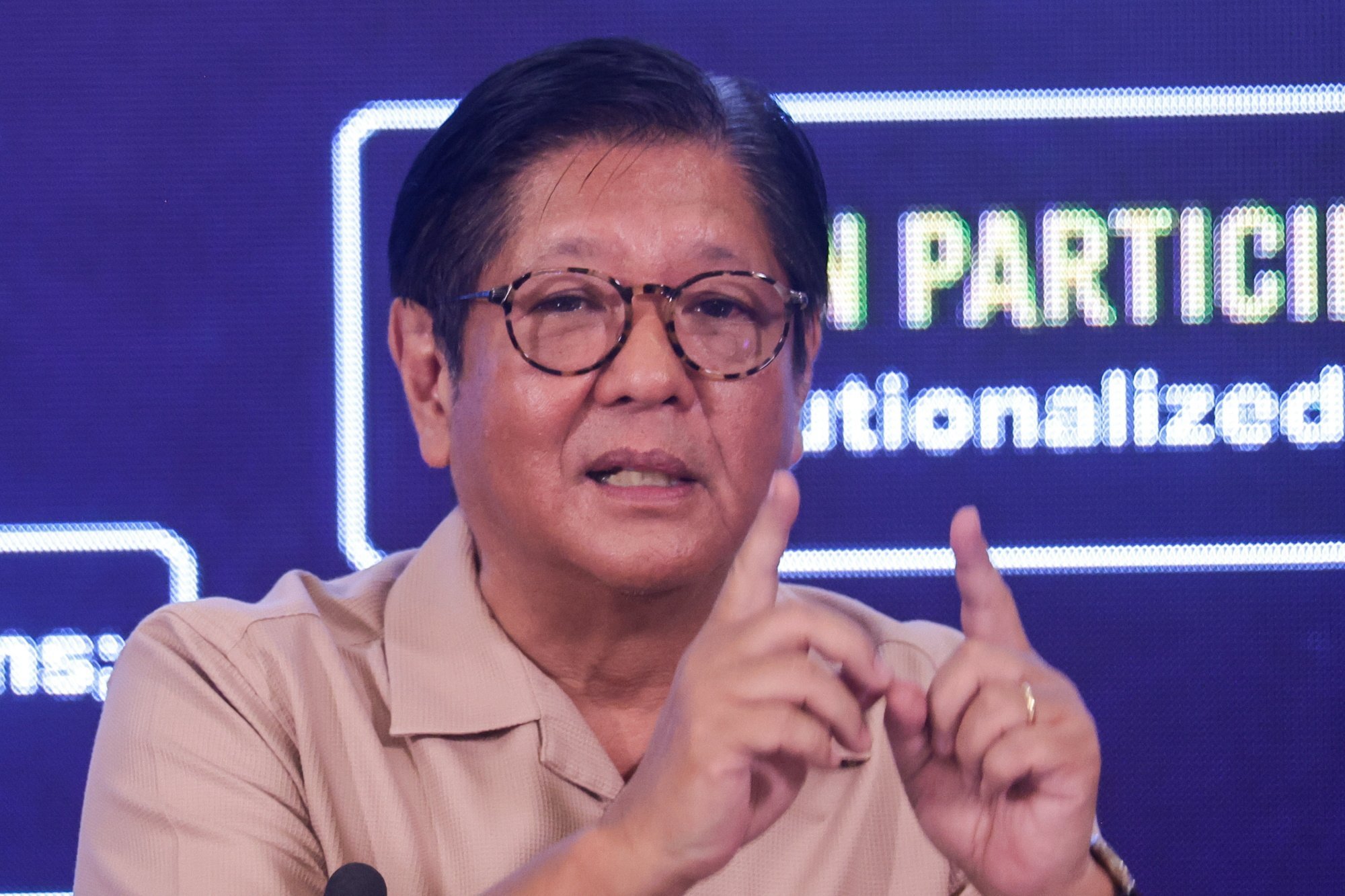
Philippine President Ferdinand Marcos Jnr is facing his lowest ratings yet since taking office in 2022, a trend observers warn could be a signal that his efforts to quell the spiralling corruption scandal around the country’s flood control projects are backfiring.
Marcos’ satisfaction ratings fell to 21 per cent in November – a drop of 14 percentage points from August, and his steepest decline since February this year, according to findings released by independent public opinion firm WR Numero last Wednesday.
Meanwhile, Vice-President Sara Duterte-Carpio saw only a minor dip in her satisfaction ratings at 43 per cent, dropping just four points from 47 per cent in August.
Do you have questions about the biggest topics and trends from around the world? Get the answers with SCMP Knowledge, our new platform of curated content with explainers, FAQs, analyses and infographics brought to you by our award-winning team.
The survey marks Marcos’ lowest numbers since the pollster began tracking ratings in December 2023.
Nearly half of Filipinos, or 47 per cent, said they were dissatisfied with the president’s performance, a 15-point increase from August, while 32 per cent said they were unsure of their assessment of Marcos.
The findings were part of WR Numero’s latest Public Opinion Monitor, which surveyed 1,412 Filipinos across the country from November 21 to 28.
“Marcos’ 21 per cent satisfaction rating, his lowest since he took office in 2022, shows that his anti-corruption crusade has backfired,” Cleve Arguelles, president and CEO of WR Numero, told This Week in Asia.
The president’s efforts to launch investigations into the multibillion-peso flood control scandal had left the public blaming him for the controversy “instead of restoring trust after a dismal performance of the administration’s ticket in the midterm elections this year”, Arguelles said.
Matthew David Ordonez, a political-science lecturer at De La Salle University, said the survey indicated that Filipinos were “losing patience” amid what was perceived to be a slow and selective delivery of justice.
In November, eight officials from the Philippines’ Department of Public Works and Highways (DPWH) were arrested, mostly from the DPWH regional office responsible for an anomalous 289-billion-peso (US$4.9 billion) flood control project in Oriental Mindoro.
But critics say the arrests skirted around “big fish” implicated in the scheme, particularly high-profile lawmakers and contractors said to be behind the scandal.
“Though he is trying to look proactive, his actual progress has yet to produce results or the prosecution of big fish,” Ordonez said, adding that Marcos’ ratings were the sharpest decline of approval recorded since former president Gloria Macapagal Arroyo’s 22 per cent in 2008.
The president “will need more decisive moves soon” as the suspect list grew, and the administration promised more arrests.
Arguelles noted that Marcos’ declining ratings showed Filipinos remained unconvinced about his anti-corruption efforts, with the investigations viewed as “slow, the major players untouched, and the process itself lacking transparency”.
“Instead of building confidence, the government’s response has reinforced doubts about whether President Marcos can address corruption sincerely and impartially.”
Most unpopular president?
Analysts say the latest findings place Marcos among some of the Philippines’ most unpopular leaders since the return of democratic elections in 1992 after his father’s dictatorship.
Arroyo, who became president in 2001 and won a full six-year term in 2004, had her administration rocked by high rice and oil prices, and allegations of election rigging, causing her ratings to plummet to 16 per cent in 2010.
Meanwhile, rival Duterte-Carpio’s ratings have remained resilient despite marginal dips, a showing which can be attributed to her core base of supporters who remain loyal to her father, former president Rodrigo Duterte.
Partisan opinions are heavily divided between Duterte supporters and those who root for Marcos, according to WR Numero. While 72 per cent who align with the Duterte family and their allies are dissatisfied with the president’ performance, 66 per cent of Marcos supporters remain satisfied.
Meanwhile, Duterte loyalists show overwhelming approval for the vice-president, with 79 per cent satisfied with her performance. By contrast, dissatisfaction is high among Marcos supporters at 52 per cent, and opposition backers at 43 per cent, while over half of independents remain unsure.
Duterte-Carpio’s lack of an administrative role after her resignation from Marcos’ cabinet last year also served as a “double-edged sword”, Ordonez said.
“Though she cannot influence or implement policy, she has little basis for people to judge her performance besides caring for her father and criticising the president at every turn. This partially insulates her from further decline, but her current approval ratings may be her core base,” he told This Week in Asia.
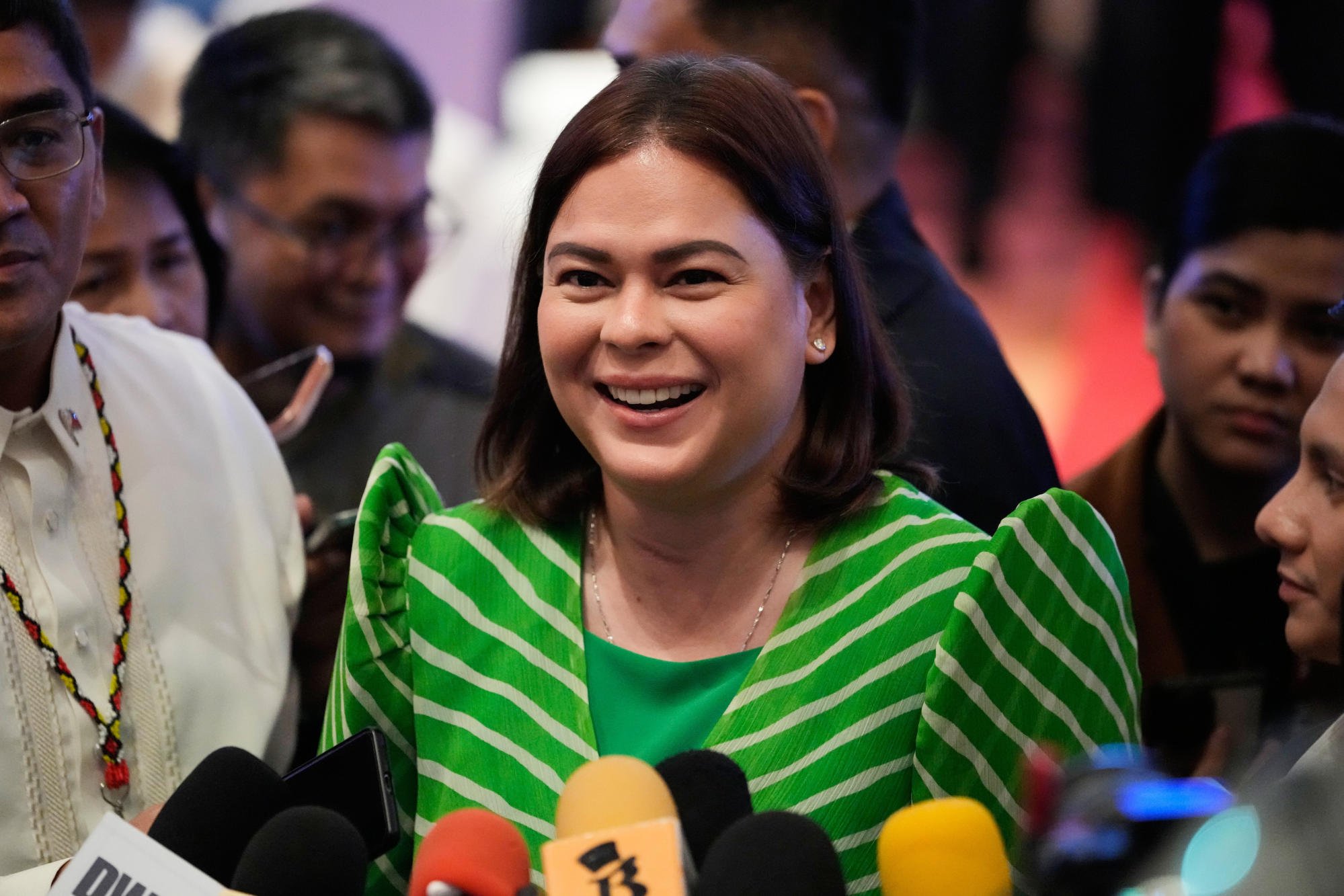
Arguelles said Duterte-Carpio’s persistent satisfaction ratings came from her “deep, inherited base in Mindanao and among lower-income households, where the Dutertes’ law-and-order populism still resonates”, as well as her positioning as the leading opponent of the Marcos administration.
Her followers may also see her as a “culturally resonant expression of family solidarity”, analysts say, as Duterte-Carpio has spent the past months rallying overseas Filipino workers (OFW) to support her father Rodrigo, who is detained in the Netherlands.
“For many, it is natural for a daughter to defend her father, and this aligns with strong family-centred norms in Filipino life. By standing with her father and engaging OFW communities, she reinforces an image of loyalty and consistency,” Arguelles said.
Analysts also noted that 37 per cent of the Philippines’ lower socioeconomic classes were “highly dissatisfied” with Marcos, compared with 20 per cent for Duterte-Carpio in the latest survey.
“Marcos’ technocratic and diplomatic approach in general may have earned some patience from the educated middle classes, but [it is] too technical for the lower classes,” Ordonez said.
In contrast, Duterte-Carpio’s “emotional narrative” appealed to the lower classes, who viewed Marcos’ anti-corruption investigations “as a political witch hunt rather than a necessary process”.
Arguelles said Marcos’ unpopularity among the lower classes was fuelled by economic frustration and a sense of injustice.
“These households feel the daily effects of inflation and poor public services most intensely, and when they see corruption touching trillions meant for flood protection and other government services, the anger is immediate,” he said.
The vice-president, however, “still benefits from the durable Duterte brand that projects toughness, empathy for ‘ordinary people,’ and a willingness to confront elites”.
More Articles from SCMP
Hong Kong fencers must ‘fix something’ to get 2028 Olympic ambition back on track
US defence chief touts ‘flexible realism’ with China ahead of strategy document’s release
Meet the couple who just had a ‘billionaire wedding’, Netra Mantena and Vamsi Gadiraju – J.Lo and Donald Trump Jr were present too
5 of the most extravagant celebrity Christmas decorations, by Kylie Jenner, Mariah Carey and more
This article originally appeared on the South China Morning Post (www.scmp.com), the leading news media reporting on China and Asia.
Copyright (c) 2025. South China Morning Post Publishers Ltd. All rights reserved.