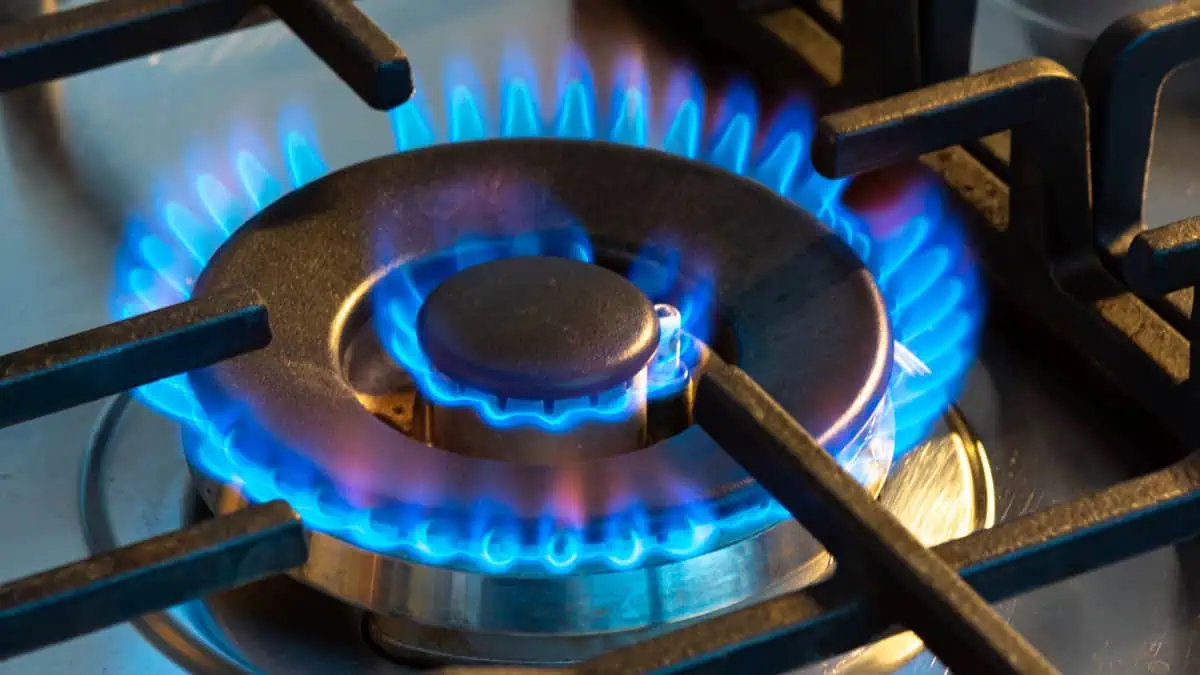
Rising Cooking Gas Prices Force Nigerians to Return to Charcoal and Firewood
The sharp increase in the price of cooking gas across Nigeria has led many households to revert to using charcoal and firewood for cooking. This shift, while cost-effective, raises significant concerns about health and environmental impacts.
According to findings by PUNCH Healthwise, the price of Liquefied Petroleum Gas (LPG), commonly known as cooking gas, has surged from around N1,200 per kilogram in early 2025 to between N2,000 and N3,000 in various regions of the country. A full 12 kg cylinder now costs between N20,000 and N27,000, depending on location, compared to an average of N15,000 to N16,000 just a month ago.
This price hike follows disruptions in the domestic supply chain due to industrial action by the Petroleum and Natural Gas Senior Staff Association of Nigeria. The strike was initiated over allegations that the Dangote refinery sacked 800 workers who joined the union. However, the Dangote refinery denied these claims, stating that only a few workers were dismissed for sabotaging the facility as part of a company reorganisation.
The strike caused significant losses in oil and gas production and a drop in power generation. The Federal Government intervened, leading to the suspension of the strike by PENGASSAN after the Dangote Group agreed to redeploy the sacked workers to other business units. Despite this resolution, the price of cooking gas has not returned to its previous levels, with prices still above N2,000 per kilogram in several areas, including Lagos.
As a result, many households have turned to cheaper alternatives like charcoal and firewood, despite their well-documented health and environmental risks.
Impact on Daily Lives
Food vendor Kemi Adegboyega from Ajegunle, Lagos, shared her experience: “Gas is too expensive now. I used to fill my 12.5 kg cylinder for around N15,000. Now, I was told it’s over N23,000. I can’t afford that every two weeks. I have gone back to charcoal.”
Similarly, elderly woman Sikirat Olutunde stated, “I was quoted N2,500 for one kilogram of gas last weekend. I walked away. I now cook with charcoal. It takes longer, but I don’t have the money for gas anymore.”
Civil servant Tunde Akinwale from Ibadan criticized what he called poor planning and regulatory failure, noting that price increases persist even after disruptions are resolved.
Health and Environmental Risks
Annually, 98,000 Nigerian women reportedly die from the use of firewood and charcoal, with about 21,000 deaths recorded in the Niger Delta. In 2024, Emmanuel Uwandu, Managing Director of Gas 360, highlighted that cooking with firewood and charcoal is equivalent to smoking 20 packages of cigarettes daily, a risk that disproportionately affects women.
The International Energy Agency (IEA) reported that one billion Africans are at risk from cooking pollution. According to the IEA, two billion people globally still cook on open fires or with rudimentary stoves fueled by wood, charcoal, agricultural waste, or manure. These fuels release fine particles that cause respiratory and cardiovascular problems and contribute to deforestation.
The IEA estimated that 815,000 premature deaths occur annually in Africa due to poor indoor air quality from traditional cooking methods. Women and children suffer the most, spending hours searching for fuel and tending fires, which limits opportunities for education and employment.
Health Experts Warn of Long-Term Consequences
Health experts warn that the return to solid fuels like charcoal and firewood poses serious health risks. Dr Abiona Odeyemi, a consultant pulmonologist at Osun State University Teaching Hospital, explained that long-term exposure to firewood smoke could lead to chronic obstructive pulmonary disease (COPD). He noted that COPD is often caused by long-term exposure to irritating smoke, fumes, dust, or chemicals, with cigarette smoke being the most common cause.
Dr Odeyemi emphasized that firewood smoke is a significant risk factor, particularly in environments where it is widely used. He warned that nursing mothers and children exposed to such fumes may develop respiratory tract infections.
Paediatric pulmonologist Peter Ubuane added that firewood smoke releases harmful pollutants that endanger human health, especially for children whose lungs are still developing. He explained that tiny particles from firewood smoke can enter the lungs and bloodstream, increasing susceptibility to lung infections like pneumonia.
Continued Use of Firewood and Charcoal
Despite the risks, accessibility and affordability of firewood, high electricity costs, and rising gas prices continue to drive many households to use solid fuels. A 2024 report by the National Bureau of Statistics revealed that 67.8% of Nigerian households rely on firewood.
While some may see it as a temporary solution, the long-term health consequences of using firewood and charcoal remain a pressing concern for public health officials and environmental advocates alike.


