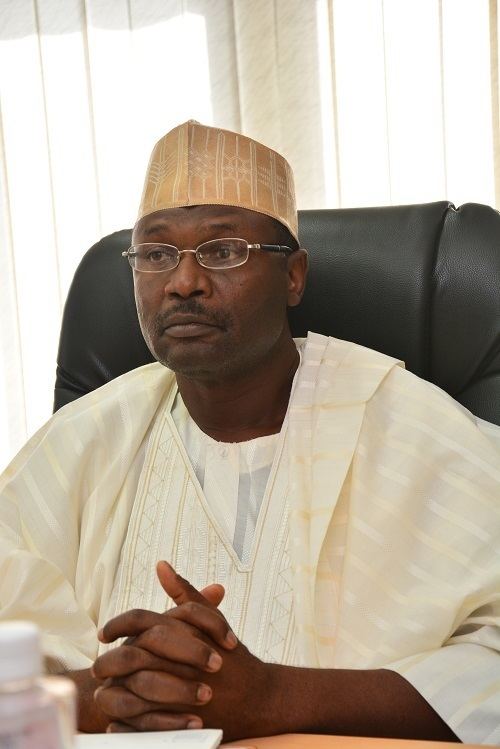
The Significance of Public Service and the Legacy of Mahmood Yakubu
Public service, defined as working for the government or in the public sector at any level, carries a moral and cultural significance that transcends financial gain or fame. It involves deploying one’s talent and labor in the service of something greater than oneself—the common good. This ethos is particularly evident in the careers of those who choose to work in the public sector, even when they could earn significantly more elsewhere. In the United States, for instance, many public sector lawyers could earn several times more working for Wall Street firms but opt for public service due to its intrinsic value.
In Nigeria, the ethos of placing the public interest above personal gain is rapidly fading, but it can still be seen in the careers of a few individuals. One such individual is Mahmood Yakubu, whose career exemplifies the true spirit of public service. His work has had a long-term impact on the nation, not for personal gain, but for the national good.
The Creation of Nigeria’s Current University System
It is no exaggeration to say that the current public university system in Nigeria is largely the result of Yakubu’s efforts. While not entirely his creation, the most consequential developments in our federal and state universities over the past 15 years owe their funding, if not their ideation, to TETFUND. However, before Yakubu’s reforms, the Educational Tax Fund (ETF) struggled to make a strategic impact on the education sector due to its broad mandate and limited resources.
Yakubu argued that the ETF should focus exclusively on tertiary education, where infrastructure, research, and staff development were critical needs. This shift in focus was enshrined in law through the TETFUND Act 2011. This change allowed Yakubu to implement policies that remain central to the fund’s interventions today, including the expansion of campus infrastructure, human capital development, research funding, and increased transparency in funding allocation.
The Academic Staff Training and Development Program
One of the most successful policies under Yakubu’s leadership is the Academic Staff Training and Development (AST and D) program. Since its inception in 2009/2010, this program has sponsored over 41,600 lecturers for PhD and master’s degrees across all levels of Nigerian tertiary institutions. A key metric for assessing public officials in Nigeria is whether they have done something that benefits others without personal gain. The AST and D program fits this criterion perfectly.
The enduring impact of Yakubu’s TETFUND reforms is that they cover approximately 85% of the costs for infrastructure, academic staff training, research, and other non-salary expenses in Nigerian universities. This has enabled both federal and state governments to establish over 60 additional universities since 2011.
Contributions to Electoral Reforms
Beyond his work at TETFUND, Yakubu also made significant contributions during his tenure at INEC. His leadership played a crucial role in shaping the Electoral Act 2022, which has been a game changer for Nigerian elections. The act addressed several longstanding issues, including the legal status of election technology, the implementation of new technologies like BVAS, IVED, and IREV, and the establishment of clear timelines for party primaries and elections.
These changes led to improved election management outcomes, as evidenced by the performance of opposition parties in the 2023 general elections. For the first time in Nigeria’s 100-year election history, opposition parties performed exceptionally well against an incumbent party. This was largely due to the strict timelines for party primaries, which gave opposition candidates ample time to campaign and build strong movements.
The Long-Term Impact of Electoral Reforms
The Electoral Act 2022 is a law designed for all political parties and future generations. It has the potential to transform Nigeria’s political culture by ensuring that all actors—politicians, parties, and voters—adhere to the rules consistently. With INEC’s 143 new recommendations for election management, the law is expected to strengthen further over time.
As Yakubu exits the stage, his legacy is clear: the world of Nigerian elections will continue to improve because of his contributions. His work has laid the foundation for a more transparent, fair, and effective electoral process that will benefit the nation for years to come.


