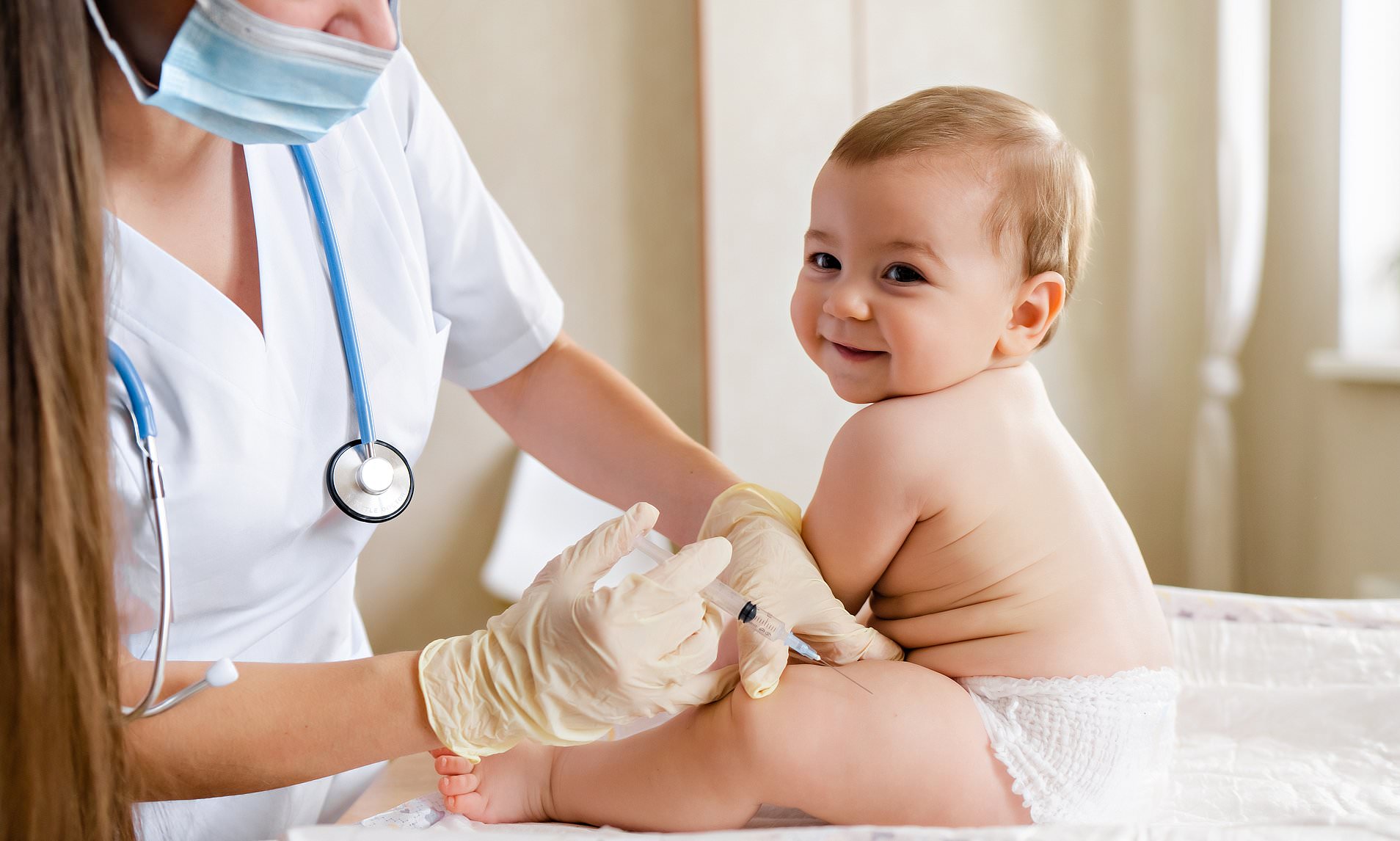
Health officials have reassured British parents that the hepatitis B vaccine, which protects against a life-threatening liver infection, is safe after US counterparts changed its status.
The US vaccine panel voted to remove the recommendation that the shot be given to all newborns within 24 hours of birth, unless their mother has, or could have, the virus.
In a recent statement, the UK Medicines and Healthcare products Regulatory Agency (MHRA) said: ‘All babies in the UK get the hepatitis B vaccine.
‘It has a well-established safety record and ensures long term protection against the virus.’
Last week, decision-makers in the US recommended that the Hepatitis B jab only be recommended for babies with mothers who have tested positive for the virus, or whose infection status is unknown.
Following the vote, Dr Alison Cave Chief Safety Officer at the MHRA said: ‘Patient safety is our top priority, which is why all vaccines authorised for use in the UK undergo rigorous assessment for safety, quality and effectiveness.
‘The UK has been providing universal hepatitis B vaccination for all babies since August 2017.
‘It has a well-established safety record and ensures long-term protection against the virus.’
Dr Cave continued: ‘All pregnant women in the UK are routinely tested for hepatitis B during the very early stages of pregnancy.
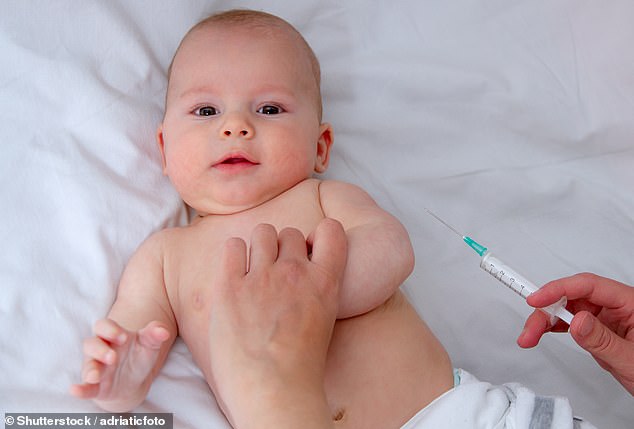
‘Any babies born to mothers who are found to be infected with hepatitis B, who are considered to be at high-risk of contracting the virus, will be vaccinated within 24 hours of birth. All other babies will be routinely vaccinated from eight weeks of age.
‘Extensive safety monitoring in the UK and internationally continues to show that the benefits of these vaccinations outweigh any risks.
‘We continue to monitor the safety of all vaccines through robust surveillance, including the Yellow Card scheme, and encourage anyone to report any suspected side effects so that we can investigate them and act where necessary.’
Since 1991, the US has vaccinated against the disease using a three-dose vaccine administered within 24 hours of birth for newborns, regardless of the mother’s hepatitis status, and at one month and at six months of age.
But the recommendation, which members of the US Centers for Disease Control and Prevention’s (CDC’s) Advisory Committee of Immunization Practices (ACIP) voted eight to three for, will end this.
Instead, they recommend that mothers who do not test positive for hepatitis B should consult with their doctor on whether or not to vaccinate their newborn against the disease.
The decision-makers in the states also voted to recommend that the initial dose of the hepatitis B vaccine should not be administered earlier than two months of age.
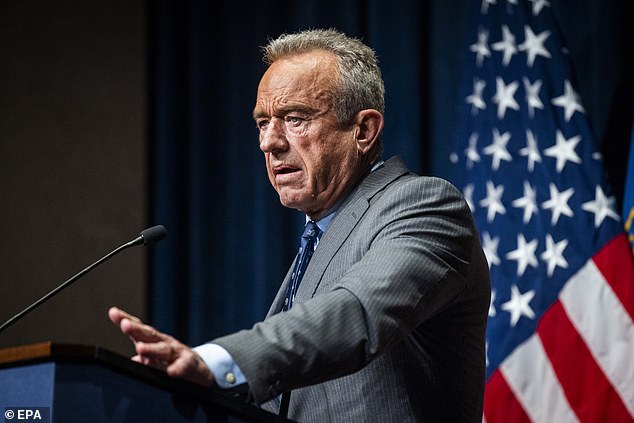
The recommendation is not binding, but the US committee’s guidance typically carries significant influence and is historically followed by doctors, hospitals and major medical organisations.
Hepatitis B is a viral infection that attacks the liver, potentially causing lifelong scarring, liver failure and cancer. It is incurable.
The virus is spread via contact with infected blood and body fluids and is able to survive on surfaces for up to a week.
In infants, up to 90 per cent of those who are infected develop chronic hepatitis B, which can lead to severe complications and death later in life.
Research has shown the vaccine is up to 90 per cent effective at preventing mother-to-child transmission if administered within the first 24 hours after birth.
The new recommendation may move back the second and third doses by at least two months.
In the UK, the NHS says all babies should be given three doses of the 6-in-1 vaccine at eight weeks old, 12 weeks old and 16 weeks old.
Meanwhile, the NHS says if a mother has hepatitis B while pregnant, the baby is given extra doses of the vaccine.
This includes within 24 hours of being born, at four weeks old, and 12 months old (if they were born on or before June 30, 2025, while babies born on or after July 1, 2024, will get a new fourth dose when they’re 18 months instead).
Last year it was revealed that more than a quarter of a million people in England could be living with hepatitis B; previously it was thought to only affect around 206,000 adults nationwide.
Officials at the UK Health Security Agency (UKHSA) found the figure is almost a third higher at an estimated 268,767 — or one in 200 people in England, with majority undiagnosed.
The US’ decision on the hep B inoculation comes just months after members of the panel handpicked by the US health secretary Robert F Kennedy, many of whom share his vaccine scepticism, voted to overhaul another key childhood jab.
They opted to restrict access to a combined MMRV vaccine for measles, mumps, rubella and varicella—chicken pox—for children under four.
Instead, it recommended that children should be offered separate MMR and chickenpox vaccines, over fears the MMRV jab carried a small risk of causing temporary, non-life-threatening seizures.
The move came less than a month after the NHS announced it would begin vaccinating all babies with the MMRV jab, in the biggest expansion of the childhood immunisation programme for a decade.
British health experts claimed the US panel’s decision on the MMRV vaccine risked a surge in cases of serious infection and would instill vaccine fear and distrust among parents.
Read more
- Could the CDC’s controversial hepatitis B vaccine decision risk a surge in newborn infections?
- What are the potential implications of the CDC’s game-changing vote on Hepatitis B vaccinations for newborns?
- Could a game-changing hepatitis B vaccination policy alter infant health across the US?
- Why has Kennedy’s vaccine panel shaken up the MMRV vaccine recommendations for kids under four?
- Are UK parents overlooking crucial MenB vaccinations despite the country nearing victory over meningitis C?