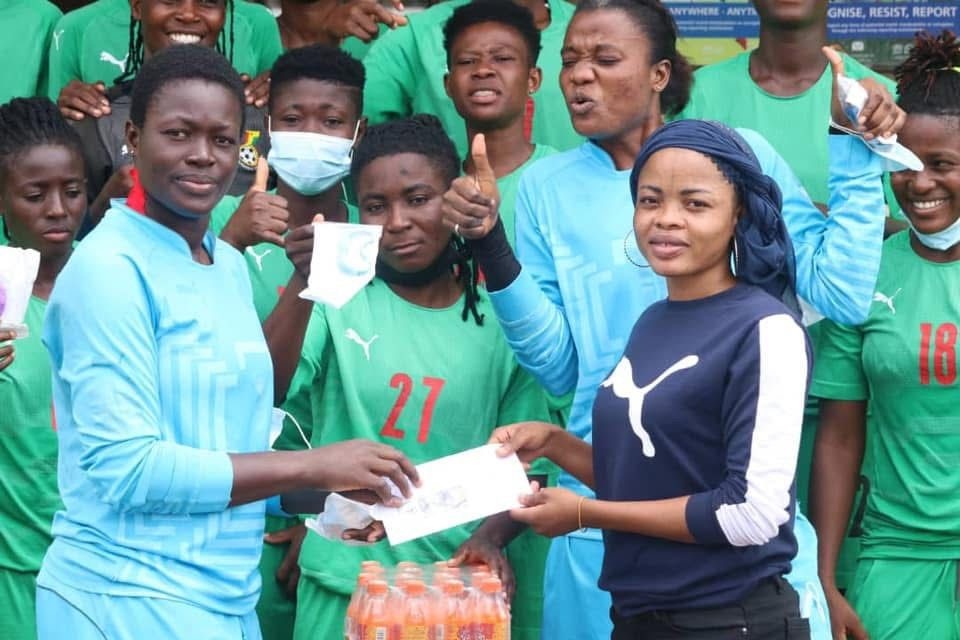
Ayishatu Zakaria Ali has become a beacon of hope for countless female athletes in Ghana, often receiving late-night calls from those who feel desperate and unheard. These calls have become as routine as her morning prayers, yet they carry a weight that she carries with unwavering determination. “They call me because they feel hopeless,” she says. “These athletes give their best to lift the flag of Ghana high, but when it comes time to pay them, they have to fight for it. Their male counterparts do not even need to ask.”
In a media landscape where women’s sports are often overlooked and female journalists are considered rare, Ayishatu has carved out a unique space for herself. She is one of Africa’s most influential voices in sports journalism, unapologetically wearing her hijab and challenging authority at every turn. Her recognition as one of the 50 Most Influential African Women in Sports for 2025 is a testament to the battles she has fought in silence and the victories she has earned through relentless advocacy.
Growing up in Bawku, northern Ghana, Ayishatu was expected to follow traditional paths. However, she was the child who would sneak out to play football with boys, defying expectations. Her father, a devoted Hearts of Oak supporter, unknowingly planted seeds of passion in her. While she loved football and excelled at athletics, she never imagined these passions could lead to a career.
The path to journalism was unexpected. After secondary school, financial difficulties forced her to work as a receptionist. An advertisement for ETV Ghana’s media studies programme changed everything. When ETV discontinued its news programme mid-internship, mentor Sintim Koree-Chaskele advised her to continue in sports, a department with no female presence. Within her first week, Chaskele nicknamed her “the queen of the wailers” and began mentioning “Aisha the goddess” on air. Her name became known before her face.
“I became quite popular before fully understanding the industry,” she admits. “I did not know that as a female, it was prohibited to walk on the pitch because they believed you brought bad luck, especially if you were menstruating.”
During the 2017 WAFU tournament, where she worked for Fox Sports Africa, she witnessed then GFA President Kwesi Nyantakyi and his vice George Afriyie refusing to acknowledge each other. She reported it. George Afriyie’s supporters confronted her at the stadium. But fear was just another obstacle. By September 2017, less than eight months into her career, she had secured the Fox Sports gig. At the tournament launch, she approached the head of production directly. “I told him point blank, you need someone who knows the terrain. I will do a good job, then you will pay me a good amount of money.”
They paid her in dollars, her first time holding that currency. Yet the story Ayishatu tells most passionately is about the women she fights for daily. In 2017, striker Mukarama Abdulai became a household name, but nobody knew her story. Ayishatu detailed how Mukarama would sneak out to play football, hiding her jersey beneath a large abaya to avoid her mother’s disapproval. “After releasing those stories, her fanbase grew,” she explains. “People could relate.”
She repeated this with weightlifter Winnifred Ntumi, boxer Faruza Osman and countless female athletes whose achievements were ignored while their male counterparts received automatic adulation. The pattern became clear: Ghanaian media would cover women’s sports only when they won something, never during the preparation. “The Black Queens will be in camp being maltreated while the Black Stars are pampered,” she says. “Compare their performances, and you realise the Black Queens perform better, but because they are female, they are neglected.”
This advocacy work has made her both celebrated and controversial. Male journalists have questioned her credentials. Fellow Muslims have accused her of being too outspoken for a woman wearing hijab. Her response is theological and unapologetic. “People believe as a Muslim lady, your voice is not meant to be heard when men are speaking. I am very respectful, but I do not cover up the truth. If that thing is blue, it is blue.”
She invokes Khadija, the Prophet Muhammad’s first wife, a successful entrepreneur. “If the wife of the Prophet was successful as such, I have no excuse.” This conviction has cost her. She has turned down lucrative alcohol brand sponsorships and refused to publish fabricated stories. “There have been times where I have been contacted to pull down stories, and I never do,” she states firmly. “If it is the truth, the world deserves to know.”
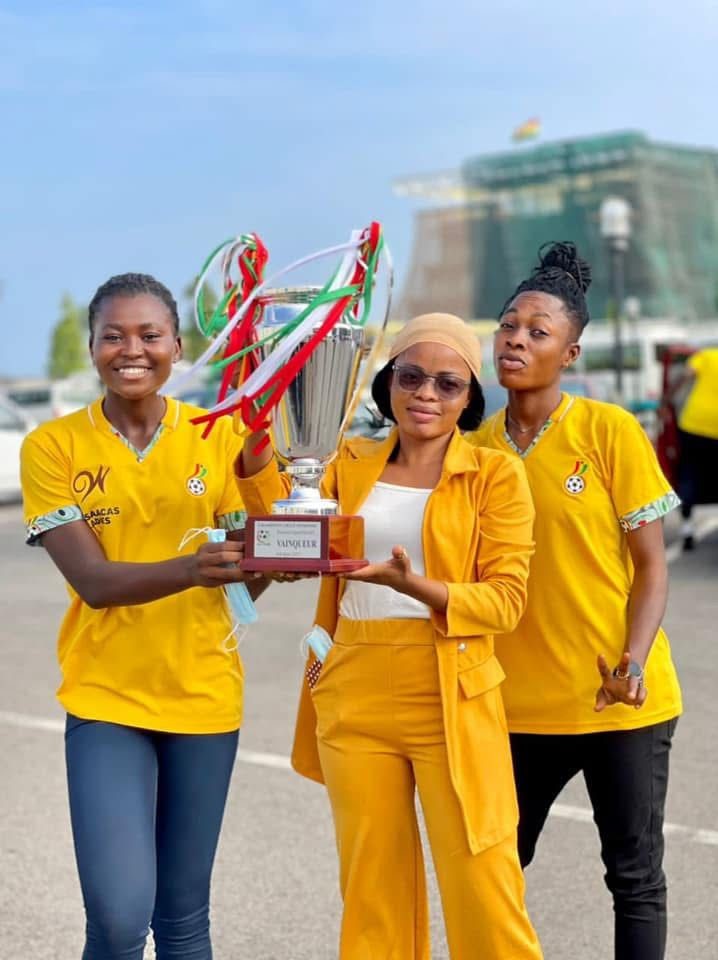
Such integrity is rare in journalism. Yet it has opened doors. Her profile of boxer Faruza Osman for the International Sports Press Association earned her a world ranking, which led to writing for 90 Minutes, her Guardian judge position and ultimately to her selection among the 50 Most Influential African Women in Sports for 2025.
In 2023, she moved to the United States, pursuing a sports management degree while building Aisha Report, her media outlet dedicated to amplifying female athletes’ voices. “Sports journalism in Ghana does not pay. Even those who have made names for themselves will tell you it is for the passion.”
Now based in North America, she balances studies, freelance journalism and managing a team of “incredible Gen Zs” who understand her vision. The 2026 World Cup, hosted partly in the United States, represents both opportunity and test. Ghana’s Black Stars have qualified, and Ayishatu is planning coverage with deeper ambition: making Aisha Report “the go-to platform” for female athlete stories globally. “In the next five years, Aisha Report will be a global name,” she declares.
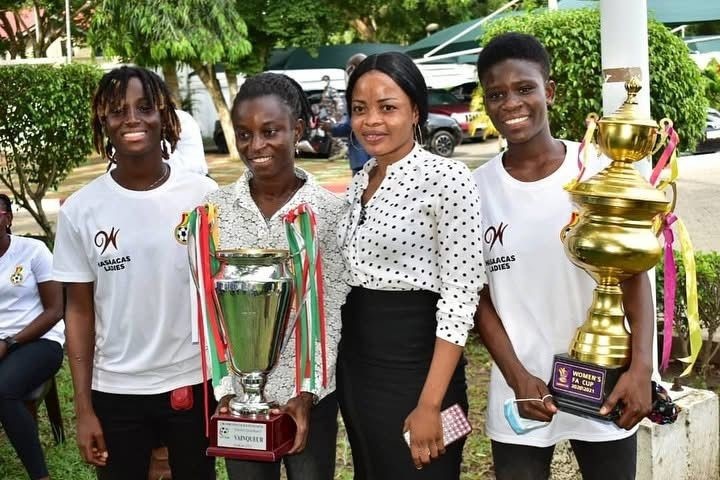
This is a woman who started with nothing but passion, who faced down superstition and sexism, who now mentors young Muslim girls in Nima and Bawku, showing them that their dreams are not forbidden, merely difficult. Her perfect day would involve morning prayers, checking on Aisha Report and staying in bed. “I am an introvert. People see me being loud on social media. No. I like being in my bed.”
Revolutionaries are not mythical creatures. They are coffee addicts who prefer Jollof rice, who find strength in the Quranic promise that “after every hardship comes ease. I always tell any young female journalist that you need to start with the mentality that you are passionate about the job,” she advises. “Once you know your career does not go against your religion, forget about what people will say. People are going to talk anyway.”
They certainly talk about her. Some call her controversial. The 50 Most Influential African Women in Sports Awards committee calls her influential. But labels matter less than legacy, and Ayishatu is building one that will outlast her career.
The goddess nickname Chaskele gave her in 2017 was meant to be catchy radio content. Instead, it became prophetic; not because she is divine, but because she has inspired devotion to a cause: that female athletes deserve the same respect, resources and recognition as their male counterparts. “What I do matters,” she insists, “because these athletes feel hopeless without someone fighting for them. I cannot withstand injustice.”
Until acceptance of women’s sports becomes universal, she will continue taking midnight calls from desperate athletes. She will continue publishing stories that make administrators uncomfortable. She will continue being too loud, too persistent, too unwilling to accept that some battles are not worth fighting because for Ayishatu Zakaria Ali, recognised among Africa’s 50 most influential women in sports, there is no such thing as a battle not worth fighting if it means another girl somewhere believes she too can be a goddess who dares.


