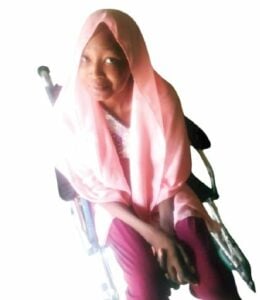
A Journey of Survival and Loss
For countless Nigerians who embark on irregular migration, the dream of a better life abroad often collides with brutal reality. Traumatised returnees evacuated from various African countries recount moments of fleeing for their lives amid gunfire and bomb blasts, abandoning homes, dreams, and years of hard-earned livelihood. Now back in Nigeria, they face a new battle, rebuilding lives that have been fractured beyond recognition.
The life of Halima Muhammad, a widow, bears the scars of war, displacement, and irreplaceable loss, wounds so deep that few can truly comprehend them. Her greatest trauma began 14 years ago when Boko Haram insurgents stormed her community in the Hostel area of Jere Local Government, Maiduguri, Borno State, shattering her world in a single moment of violence.
She recalled the day painfully, fighting back tears. “Fourteen years ago, tragedy struck when Boko Haram terrorists attacked. They killed my husband right in front of me, before the eyes of his children,” she said, her voice trembling beneath the weight of memory.
After the attack, Halima fled, not just for herself, but for the survival of her children. What followed was a perilous journey across borders, driven by desperation and fuelled by a mother’s resolve.
“We fled from Maiduguri to Gamboru, then to Kusri in Borno. From there, we crossed into Chad, first to N’Djamena, then to Abéché, and finally to Adare, a border town near Darfur in Sudan,” she recounted. But safety remained elusive.
For 11 days, Halima and her children moved from town to town, sleeping in strange places and surviving on little food or rest. They eventually reached Khartoum, the capital of Sudan, where they lived for years, trying to build a life in a land that was never truly home.
“We passed through Kakkabe and Al-Fashir before finally reaching Khartoum. The entire journey took 11 days, and we ended up living there for nine years,” she said. In Khartoum, she took on whatever menial job she could find, washing plates, scrubbing clothes, and later, selling food in one of the local communities.
“Every bowl I washed, every cloth I scrubbed was not just work, it was survival,” she said. “With every job, I felt a piece of my dignity fade, yet I held onto the little pride I had left. At least I was feeding my children.”
Every decision Halima made in Sudan was influenced by her children’s fragile health. “Two of my children, Aisha and Muhammad, have sickle cell, and I had to do everything to keep them healthy.” But that stability was short-lived. Caught in the violent battle for control of Khartoum between the paramilitary Rapid Support Forces and the Sudanese Armed Forces, Halima was once again forced to flee.
“Raising two children with sickle cell in a conflict zone was like walking on burning coals,” she said quietly. “Every attack, every displacement came with the fear that they wouldn’t survive the harsh conditions. Strangers became family. We carried each other’s burdens, shared the little food we had, and leaned on one another for courage. Without them, I don’t think I would have survived.”
“When the fighting became severe, we had to run almost 50 kilometres on foot. At one point, I was so weak that I dropped my last-born, Muhammad. My heart shattered in that moment because I couldn’t carry him any longer. By God’s grace, someone came to help carry him. Without that person, I might have lost my son forever. The weapons were so loud it felt as though the earth itself was shaking. Dust filled our eyes; we could barely see or hear. Those moments are etched in my memory. They still haunt me.”
Homecoming without Hope
Halima and her children were eventually evacuated alongside 148 other Nigerians by the Federal Government on Friday, September 19, 2025. They arrived at Malam Aminu Kano International Airport aboard a chartered Tarco Aviation flight at about 2:30 p.m. For her, it was no triumphant homecoming as she returned with nothing but her children and was met with a life devoid of government reintegration or support.
“It is not easy to start all over again at this age,” the mother of two told Sunday PUNCH, sounding weary. “But I told myself, it is better to be alive and broke in Nigeria than to be buried in Sudan. That was the hardest decision of my life. What I left behind wasn’t just material things; it was a piece of me. But nothing is worth more than the safety of my children.”
“After surviving war, I expected more support. Starting over is another kind of battle. Surviving conflict is one thing, surviving neglect at home is another.” Still clinging to hope, Halima added, “All I pray for is peace, good health for my children, and a dignified life. I dream of a day when my children will never again run from war; when I will no longer cry in despair. I want to plant my roots in Nigeria and never be forced to leave again.”
Evacuation Efforts and Challenges
Nigeria’s evacuation efforts have included thousands of stranded citizens from across the globe: from Ukraine and Libya to the Niger Republic, Mali, and Chad. The National Emergency Management Agency has coordinated several rescue operations from conflict zones and dangerous migration routes. Sudan is the latest entry on that growing list.
Among the 148 evacuees were 25 men, 27 women, 39 boys, and 57 girls, exhausted from conflict but united by hope. They were transported to Chilla Luxury Suites on Audu Bako Way, about six kilometres from Kano city centre, for documentation and profiling. However, unlike previous evacuations where reintegration programmes and temporary support were provided, these returnees received no structured post-arrival assistance. Instead, they were given ATM transport stipends, discharged, and left to navigate their futures alone.
NEMA described the exercise as “well-coordinated and successfully executed,” highlighting the agency’s experience in handling repeated waves of returnees. But for many of those flown back to safety, the real journey begins after touchdown; a journey of rebuilding from nothing, often without institutional support.
Crisis Beyond Borders
The global humanitarian community has continued to raise alarm over worsening conditions for women and children trapped in war zones, particularly in Sudan. Filippo Grandi, the United Nations High Commissioner for Refugees, warned that displaced women and girls face “horrific ordeals” while fleeing conflict, stressing that “this shocking array of human rights violations must stop.”
The World Health Organisation and the United Nations Population Fund reported that three-quarters of health facilities in Sudan are no longer functional, leaving millions, including Nigerians, without access to basic care. “Pregnant women are hardest hit,” the agencies noted, as cholera, measles, and malaria spread unchecked. UNICEF has described Sudan as “the world’s largest child displacement crisis,” with over 30 million people in need of humanitarian aid.
Abandoned in the Wilderness
For 30-year-old Aliyu Haruna from Kano State, the search for greener pastures in Chad began on Saturday, November 2, 2024. What started as a hopeful journey quickly descended into a nightmare of abandonment, hunger, and near-death. “We left Kano for Adamawa, then proceeded to the Concord border between Nigeria and Cameroon,” he narrated.
From Concord, traffickers led them through thick forests and across rivers, moving through Garwa, then Gondere, before finally arriving in Bertoua, a city in Cameroon. It was there, at a police checkpoint, that everything fell apart. “While they were checking my papers, the driver who promised to take me across the border zoomed off,” Haruna recalled.
He waited from 8 a.m. till nightfall, hoping the driver would return, but he never did. Left alone in a foreign land with no food, water, or sense of direction, Haruna made a desperate decision: he continued on foot. “I spent 24 hours wandering in the bush without food or water. I tried to stop vehicles, but no one stopped because no one expected to see a human being in that kind of place.”
By dawn, he encountered a Fulani herder and asked how long it would take to reach Bertoua. “He told me it would take three days,” Haruna said, his voice fading. The response shattered whatever resolve he had left. Fatigue overwhelmed him, and his legs gave way. “After about 36 hours, I was completely exhausted and gave up hope. I lay on the road, waiting for any vehicle to run over me. The hardship was unbearable, all because I wanted to leave the country and make it big abroad.”
Between life and death, he prayed it would come quickly. But fate intervened. “Suddenly, I heard the faint sound of an approaching vehicle,” he recounted. “With the last strength in me, I staggered to the middle of the road and waved desperately. The driver slowed down and stopped. He said he would help me for the sake of God.”
Desert of Broken Dreams
For 37-year-old Sani Said from Nasarawa Local Government Area in Kano State, irregular migration was supposed to be a path to prosperity. Instead, it became a story of hunger, fear, loss, and the stubborn will to survive. He left Nigeria in 2019, full of hope, but returned barely a year later through deportation, his dreams buried under the scorching sands of the Sahara and the harsh streets of Algeria.
Speaking with Sunday PUNCH, his voice wavered between pain and pride. “I am 37 years old. At this age, many of my peers have settled down, but my life has been full of hurdles. Alhamdulillah, because sometimes I feel older than my years. Crossing deserts, living in constant fear of deportation, watching people die beside you, it ages your soul. But it has also made me wiser, stronger, and determined to start again.”
Today, he says, his true wealth is not in distant lands, but at home. “Yes, I am married with two children. They are my strength. Whenever I remember that dangerous journey and how close I came to dying, I feel grateful. All I want is to provide for my children and watch them smile. Family is the greatest gift of surviving.”
The Myth of ‘Greener Pastures’
Minister of State for Foreign Affairs, Bianca Odumegwu-Ojukwu, attributed the rise in irregular migration among Nigerian youths to the persistent illusion of “greener pastures” abroad. She said the Federal Government had sustained a nationwide sensitisation campaign aimed at dismantling the myth and discouraging dangerous journeys through unsafe routes.
“The increasing spate of irregular migration is fueled by the belief in greener pastures overseas. The government remains committed to correcting this perception,” Odumegwu-Ojukwu told Sunday PUNCH. She reaffirmed the government’s commitment to strengthening collaboration with the IOM in tackling irregular migration and supporting returnees.
Nigerians Dying in the Desert
Chairman of the Nigerians in Diaspora Commission, Abike Dabiri-Erewa, revealed that an estimated 7,000 Nigerian migrants are currently stranded in Libya. “As we speak, 7,000 Nigerians are stranded in Libya. In 2025, people still travel through the desert to die,” she lamented. She also raised concerns over reports of rape, assault, and forced drugging of Nigerian girls allegedly held in deportation camps in New Delhi, India.
“The alleged acts of sexual violence, physical abuse, and intimidation are both heartbreaking and unacceptable. Nigerian citizens, wherever they are in the world, must not be treated as less than human, nor should their vulnerability be exploited under immigration procedures,” she warned.
Returnees Struggling to Survive
The Chairman of the Kano State Returnee Association, Idris Gambo, has raised the alarm over the dire condition of Nigerians returning from conflict zones abroad, noting that most arrive traumatised and without proper accommodation. He said many returnees land in the country visibly shaken, having narrowly escaped life-threatening situations.
“When returnees arrive, many of them appear deeply distressed and emotionally broken, even though they’ve managed to escape from conflict zones. One of their biggest challenges is securing accommodation, as most cannot afford a place of their own,” he said. Gambo disclosed that some returnees had spent more than two decades abroad, only to return empty-handed.
“Some left Nigeria over 20 years ago, but because of the war, they came back with nothing. Many couldn’t bring back their belongings because survival came first. Others sold everything they owned just to fund their escape, only to return home with nothing,” he explained. According to him, the experience has left many returnees heartbroken and ashamed as they struggle to rebuild their lives.
“For many, this reality is both heartbreaking and humiliating. That is why whenever we receive them, we prioritise counselling, we encourage them to stay calm and offer support in whatever little way we can.”


