City leader John Lee will seek to prioritise youth home ownership and position Hong Kong as global mediation capital in his address, SCMP learns
Hong Kong’s leader will unveil two bold initiatives on housing and mediation in his policy address, the South China Morning Post has learned, with the government planning to boost home ownership rates among young couples and prioritise settling official commercial disputes through the city’s mediation body.
The new measures, to be unveiled by Chief Executive John Lee Ka-chiu on Wednesday, aimed to strengthen the city’s status as a global mediation capital while improving livelihoods, government sources said.
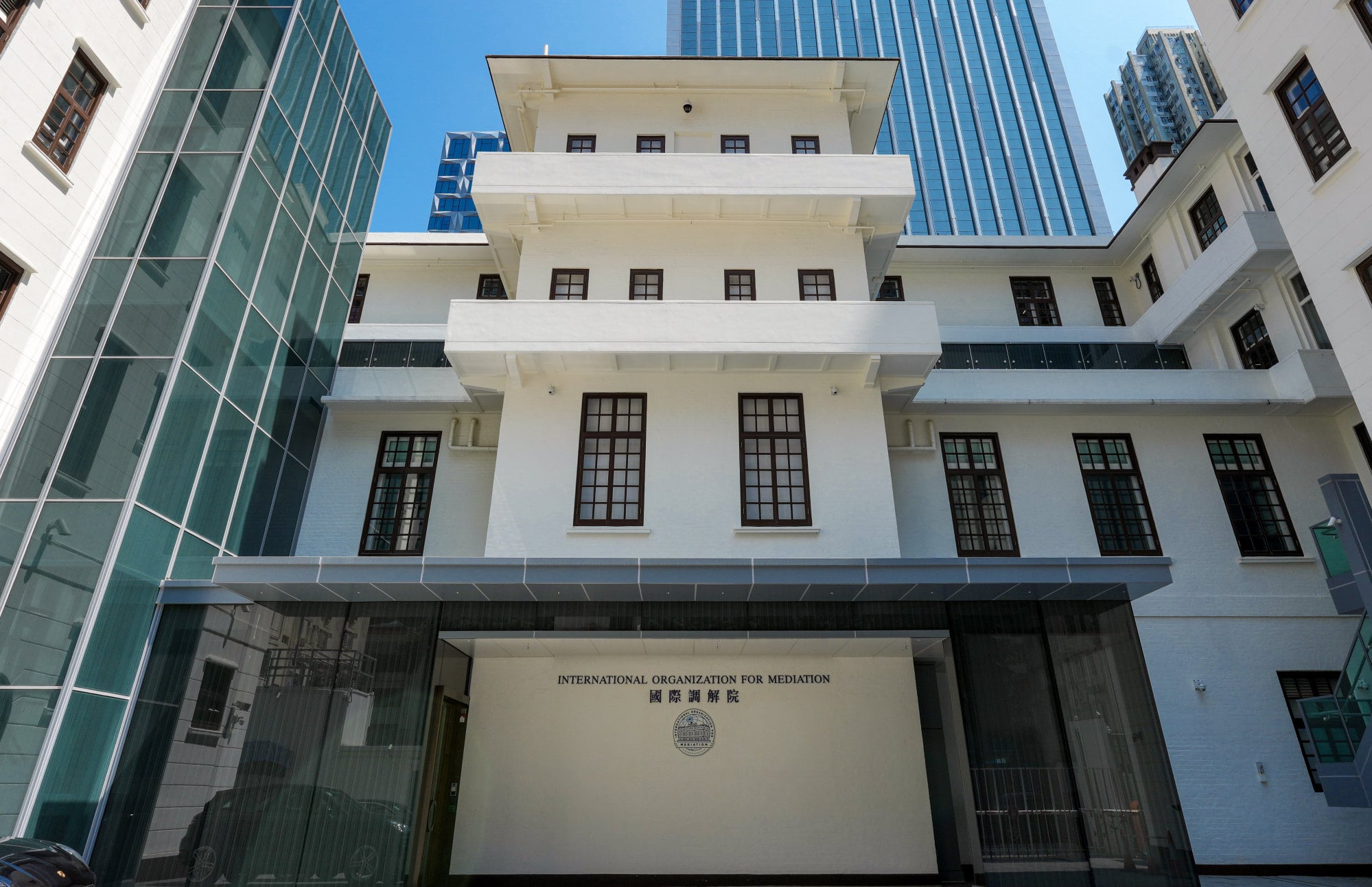
“Hong Kong is actively building itself into a capital of mediation. Hence, authorities will prioritise including the International Organisation for Mediation (IOMed) as a dispute resolution option in government contracts involving international commercial matters, as well as in international agreements signed by the Hong Kong government,” an insider said.
Do you have questions about the biggest topics and trends from around the world? Get the answers with SCMP Knowledge, our new platform of curated content with explainers, FAQs, analyses and infographics brought to you by our award-winning team.
According to the source, authorities will also encourage the IOMed to handle disputes in emerging industries such as commodity trading and the space economy, and explore setting up a dedicated panel of mediators for commodity trading to lower cross-border transaction risks and attract overseas businesses to the city.
The move is intended to deepen Hong Kong’s development as a global dispute resolution centre under Beijing’s national plan.
Teresa Cheng Yeuk-wah, secretary general of the IOMed, told the SCMP last month that the mediation body was ready to handle state-to-state disputes, with six countries having nominated more than 100 mediators from the legal, diplomatic and academic fields.
She added that the organisation had already received a “not insignificant” number of inquiries and expressions of interest in its services.
On the livelihood front, Lee is expected to boost subsidised home ownership among young couples by lowering the minimum down payment level for families with newborns.
According to a second insider, one option under consideration is to lower the minimum down payment for a Home Ownership Scheme (HOS) flat for families with newborns under “white form” status, as part of broader efforts to boost the city’s birth rate.
The minimum down payment could be cut to 5 per cent from the current 10 per cent of the property value, the second source said.
The government currently sells subsidised housing under two major programmes: the HOS and the Green Form Subsidised Home Ownership Scheme (GSH).
“Green form” applicants – families living in public rental housing – are eligible for both schemes and can buy a subsidised home with a minimum down payment of 5 per cent of the property price.
White form applicants – families renting private homes – can only join the HOS provided that their initial down payment currently costs at least 10 per cent of the property price.
HOS flats are priced based on affordability and sold at a discount on market values. The latest batch of flats, announced last December, was sold at 30 per cent off assessed market values.
The batch of 7,000 HOS homes was 14 times oversubscribed, attracting 104,400 applications, 72,300 of which came from white form candidates.
About 50 per cent of HOS buyers were below the age of 40, according to housing authorities, which estimated in July that more than 30,000 young families would benefit from the expanded supply of subsidised sales flats.
The government is under mounting pressure to tackle demographic challenges, including declining birth numbers and a rapidly ageing society that threatens to shrink the city’s workforce.
Hong Kong recorded a historic low of 29,700 births between mid-2025 and mid-2026, a drop that continued despite a HK$20,000 (US$2,550) baby bonus, tax relief and public housing perks for families with newborns.
Experts have warned that increasing financial incentives alone are unlikely to reverse the slump in births, even as some point to Singapore’s recent push for more generous pro-family measures.
Anthony Chiu Kwok-wai, executive director of the Federation of Public Housing Estates, said a reduced down payment would be of immense help to young parents.
“This provides them with extra funds for home decoration or further studies, offering substantial financial relief,” he said, noting that families with children aged below three faced heavy financial pressures across all aspects of daily life, from food and clothing to housing and transport.
Legal sector lawmaker Nick Chan Hiu-fung welcomed the new mediation initiatives.
“Incorporating mediation into local procurement contracts previously was just a start. It’s natural to expand it to cover international contracts. Mediation is about achieving win-win solutions, which will benefit both parties in the contracts tremendously,” he said.
He added that Hong Kong’s mediation talent and institutional neutrality were highly valued globally.
With additional resources, along with the city’s safety and stability amid growing geopolitical tension, Hong Kong was well positioned to “take international mediation to the next level”, he said.
More Articles from SCMP
Southeast Asian buyers emerge as top non-local investors in Hong Kong commercial property
Viral ‘then and now’ photos of Chinese woman reunited with family spark trafficking debate
Singapore ministers earn millions. What do other Asian leaders make?
China launches new canal, first of its kind since 1949, giving inland access to sea lanes
This article originally appeared on the South China Morning Post (www.scmp.com), the leading news media reporting on China and Asia.
Copyright (c) 2026. South China Morning Post Publishers Ltd. All rights reserved.