Hong Kong’s Growing Role as the Offshore Yuan Hub
Hong Kong has solidified its position as the largest offshore yuan market globally, with 76 per cent of offshore yuan payments in August conducted within the city. This development marks a significant shift in how international businesses and investors engage with the Chinese currency.
Sunny Yip Yuk-chik, a Hong Kong businessman, recently learned about a new initiative that would make borrowing Chinese yuan easier and more cost-effective. Upon hearing the news, he immediately reached out to his team on the mainland to share the opportunity. The initiative, launched by the Hong Kong Monetary Authority (HKMA), is called the Renminbi Business Facility (RBF). It allows business owners like Yip to borrow yuan from Hong Kong banks for up to 12 months at the onshore yuan interest rate, which helps ease trade settlements.
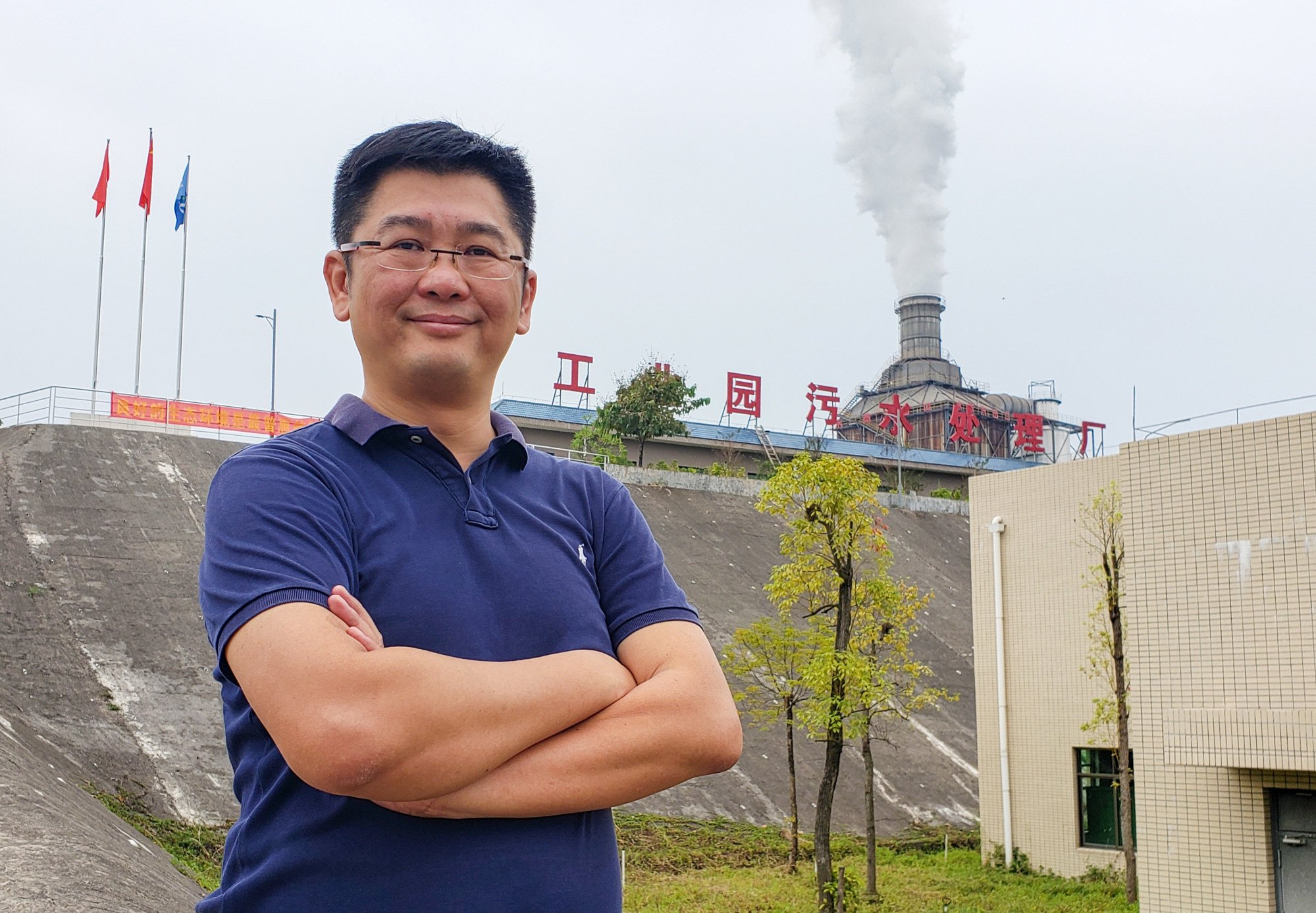
Yip, who runs a sewage treatment plant in Zhaoqing, part of the Greater Bay Area, sees the benefits of this facility. “I would consider a yuan loan to expand my business on the mainland because it avoids exchange rate risks and the cost is cheaper than loans in Hong Kong dollars,” he said.
The RBF is one of several measures introduced by Hong Kong and mainland regulators to promote the city as a leading offshore yuan trading center. These efforts aim to encourage more international investors and companies to use the Chinese currency, thereby enhancing its global presence.
By December, the scheme will be expanded to include direct investments for mainland firms to secure yuan loans for overseas investments or for foreign firms to obtain yuan funding to grow their operations on the mainland. Although the yuan is not fully convertible, Beijing has allowed international investors to use it for trade settlement since 2009. Since then, the yuan has made significant strides in global trade finance.
As of August this year, the yuan was the second most-used currency in global trade finance, with a 7.6 per cent share, trailing only the US dollar at 81.4 per cent. Its share has grown from 6 per cent in December to 2.1 per cent four years ago.
Over the years, various projects and reforms have aimed to boost the international use of the yuan. The Stock Connect scheme, launched in 2014, enabled cross-border stock trading between Hong Kong and Shanghai. A Shenzhen leg was added two years later, and the scheme later expanded to include products such as bonds, swaps, and exchange-traded funds. The latest addition is a cross-boundary bond repo arrangement launched last month.
Hong Kong’s role as the largest offshore yuan market is underscored by data from Swift, which shows that 76 per cent of offshore yuan payments in August were conducted in the city. As of August, Hong Kong’s banks held 968 billion yuan in yuan deposits, a 16 per cent increase from the 837 billion yuan recorded in January 2023 when the city reopened after the pandemic.
Yuan remittances via Hong Kong for trade settlements rose by 62 per cent during the same period, reaching 997 billion yuan in August, according to HKMA data.
The new bond repo scheme allows over 800 international institutional investors participating in the northbound Bond Connect scheme to use onshore holdings sub-custodied at the Central Moneymarkets Unit of HKMA as collateral to secure funding from the onshore repo market. They can then use the onshore yuan in offshore markets such as Hong Kong.
“All these measures were aimed at promoting three directions in the yuan businesses, namely to create an ecosystem for investment, financing, and hedging the currency,” said Charles Lam, Citi’s Hong Kong head of markets.

This initiative would substantially boost the supply of yuan for international investors, leading to greater stability in the offshore yuan interest rate market, Lam said. “The pricing differentials between the onshore yuan and offshore yuan would also be narrowed,” he added.
Regulators are pushing reforms to promote the yuan business amid decreasing demand for US dollar assets, according to Cusson Leung, chief investment officer of KGI, a Hong Kong and Singapore-based financial firm. “Global investors are losing confidence in putting all their assets in the US dollar after President Donald Trump started the trade war in April,” Leung said. “Investors want to invest in gold, China, and Hong Kong stocks, as well as assets in other currencies, including the yuan.”
“This would encourage more investors to buy yuan-denominated dim sum bonds, while other business sectors would be more willing to use the yuan to settle trade and make investments,” Leung said, adding that it was positive for Hong Kong as it would strengthen the city as an offshore yuan trading center.
HSBC and Standard Chartered were among the first lenders to participate in the cross-border bond repo market. “The new repo arrangement is a ‘win-win’ for both foreign institutional investors and mainland lenders,” said Wong Tsz-Cheuk, head of markets and securities services at HSBC Hong Kong.

Wong explained that the repo arrangement is a typical way for mainland banks to lend yuan to other banks or investors, relying on collateral such as government bonds and other high-quality bonds as risk mitigation. Asset management companies, insurers, and banks investing through bond connect were qualified to tap funds from the repo under the new scheme.
It would also lower the cost of yuan funding for international investors because the offshore yuan interest rate was higher during times of stress, and the pool was smaller than the onshore yuan, Wong said. The offshore yuan’s implied interest rate reached 8 per cent at the start of this year compared with the onshore rate of 1.5 per cent to 1.9 per cent.
While banks can get their yuan funding easier and cheaper, it would also encourage them to introduce more yuan loans and other yuan products, Wong said. “For mainland banks, it would create new business opportunities for them as they can lend out their yuan to international investors to earn more interest income.”
Citi’s Lam suggested that the next step would be to develop a central clearing agency to settle all repo lending among investors and lenders, as this would reduce counterparty risks and documentation, and standardize the current bilateral repo arrangement between banks.

Europe and the US had their own central clearing agencies for bonds and repo arrangements, so Hong Kong should push to take the lead as a regional clearing center, Lam said.
Last month, the HKMA and Securities and Futures Commission announced a road map to further promote the city’s fixed income and other yuan-based businesses. It included plans for a central clearing agency to replace the bilateral lending agreement between banks, but the timeline was not yet fixed.
Philippe Dirckx, managing director and head of fixed income at the Asia Securities Industry and Financial Markets Association (Asifma), supported the move. “The next step is to connect mainland China and Hong Kong’s market infrastructure with international systems such as Euroclear, Clearstream and global custodians, enabling Chinese government bonds held in Hong Kong to be used as collateral globally,” Dirckx said.
“This cross-border triparty connectivity is crucial for the full internationalisation of Chinese bonds, allowing assets under Bond Connect to serve financing and margin needs not just in mainland China and Hong Kong, but across major global markets,” he said.
Dirckx added that the new measures highlighted the commitment by Chinese regulators to make Hong Kong a “true regional liquidity hub, not just for RMB cash clearing, but also as an issuance, secondary market and collateral centre.”
The measures have proved popular. Sewage treatment businessman Yip is not alone in finding the RMB Business Facility useful. Industrial and Commercial Bank of China (Asia), the Hong Kong arm of the nation’s biggest bank, conducted a number of transactions for clients using the facility on the first day of its launch on October 9.
They included companies in energy, metals and papermaking, as well as institutional clients of key domestic and overseas ICBC branches in Guangdong, Singapore and Dubai.
“The introduction of the RMB Business Facility will further optimise the offshore RMB liquidity supply mechanism in response to market demand, effectively alleviating liquidity constraints and interest rate fluctuations in the offshore RMB market,” said Duan Mengche, assistant chief executive of ICBC (Asia). She noted that the bank had provided nearly 120 billion yuan in trade financing for its customers since 2024.
“Our clients have expressed that this enhancement provides a more stable, preferential and flexible source of RMB funding,” she said.
The new measures would also help Hong Kong to further develop its foreign exchange and bond markets, according to analysts.
When veteran foreign currency trader Jasper Lo Cho-yan started trading in 1987, the currencies he dealt with included the pound, Japanese yen, Australian dollar and Deutsche mark; the yuan was not among them.
“But now, the yuan is among the most actively traded foreign currencies in Hong Kong,” Lo said. “While Singapore and London are bigger than Hong Kong in terms of overall foreign currency [trading], they cannot compete with Hong Kong in terms of yuan trading.”
The internationalisation of the yuan is why Hong Kong was able to keep its position as the fourth largest foreign currency trading market worldwide last year, up from the seventh in the early 2000s, according to Lo.
David Yim Sau-king, head of debt capital markets for Greater China and North Asia at Standard Chartered, pointed out that in July Beijing allowed non-bank financial institutions, such as insurance companies and asset managers, to invest in bonds in Hong Kong via the southbound route of the Bond Connect, boosting liquidity in the market.
“This can potentially provide a huge amount of liquidity in the dim sum bond markets,” Yim said.
When Yip set up his treatment plant in China in 2016, he borrowed about HK$20 million (US$2.6 million) from banks in Hong Kong but had to exchange it into yuan to invest on the mainland.
With the new RMB facility, Yip has been arranging meetings with his bankers in Hong Kong to explore opportunities for a yuan loan.
“Although we can get bank loans in China nowadays after operating there for a decade, we would still like to get loans in Hong Kong as the local bankers understand the needs of Hong Kong enterprises,” he said.


