Challenges and Successes in Plateau State’s Electoral Process
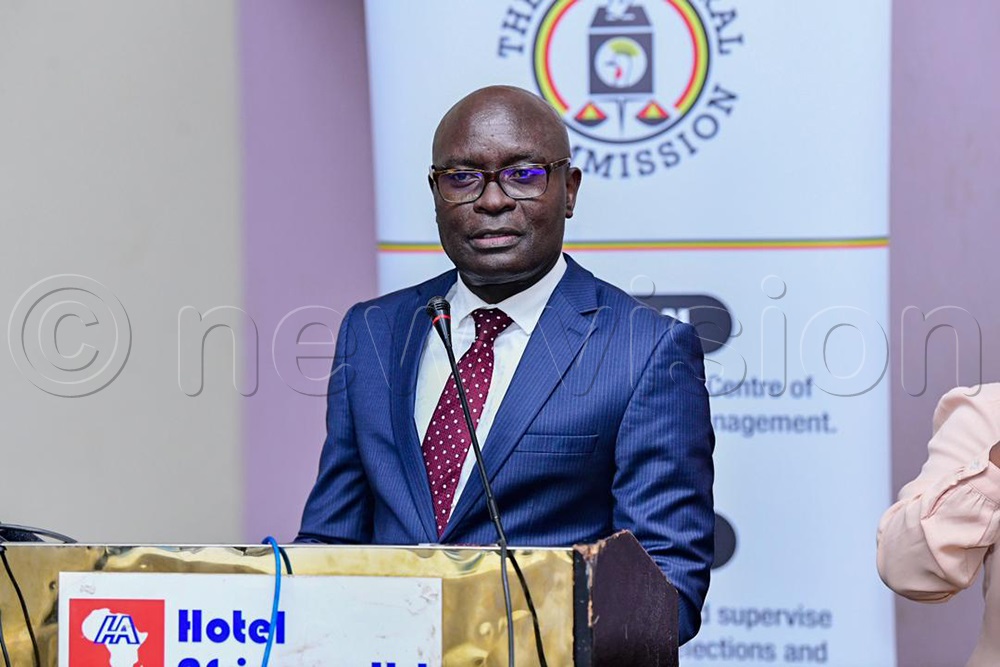
Chairman of the Plateau State Independent Electoral Commission (PLASIEC), Honourable Plangji Daniel Cishak, shared insights with Isaac Shobayo on the challenges confronting state electoral commissions, issues of political interference, funding, and extant laws. Excerpts from their discussion include:
Before assuming office as the chairman of PLASIEC, local government elections in Plateau State were often a source of crisis. How did you manage the last election without the usual turmoil, especially in some volatile council areas?
I may not claim to know all the reasons why the process went peacefully, but to my mind, one major reason is the level of transparency and openness. An election is not an activity of one institution alone. The election management body only coordinates the activities toward the election. In doing that, it must identify and engage critical stakeholders.
First, you must look at the political parties, because in Nigeria, you cannot contest an election unless you belong to a political party. Therefore, the election management body exists primarily for political parties. So, we made sure to carry them along. We said right from the beginning, we should not hide anything. Sometimes you may be doing the right thing, but if you are not open about it, people will suspect foul play. So, for everything we did, we carried everyone along.
Of course, security was another major aspect. In this part of the world, security agencies are deeply involved in elections. In some other places, they’re not so involved, but here you can’t do without them. We therefore constituted what we called the Plateau State Advisory Committee on Election Security, chaired by the Commissioner of Police. This structure was replicated at the local government levels so that as activities progressed, we reviewed the security situation and addressed any emerging issues. We also worked closely with the Peace Building Agency, which supported us by identifying flashpoints and engaging local stakeholders.
Another critical factor was the transparency in making the law for the election — the Plateau State Independent Electoral Commission (PLASIEC) Law 2024. The amendment process was open. The House of Assembly examined it thoroughly. Initially, people suspected we were trying to hide something, but thank God, the entire House is made up of members of the opposition party. That made the process more transparent. They saw that we had nothing to hide.
I must also give credit to the government of Plateau State. We belong to the Forum of State Independent Electoral Commissions of Nigeria, and I hear from my colleagues in other states about the challenges they face, particularly direct interference or negligence. But here in Plateau, we received hundred percent support from His Excellency, Governor Caleb Mutfwang, with zero interference. Never at any point did the governor ask us to do anything improper. That gave us the freedom to discharge our duties without suspicion.
Will I say the election was perfect? No, it wasn’t. After the exercise, we conducted a postmortem and invited all the relevant stakeholders — civil society organisations, security agencies, political parties, and the media. The civil society organisations were excellent in their support. We were always on the radio, always on television, and every activity we carried out was transparent. Political parties were carried along. To me, that’s why the process went smoothly.
Restoring Public Trust in State Electoral Commissions
Many people don’t have much confidence in state independent electoral commissions. What do you think should be done to restore public trust and change the stereotype?
Yes, that’s true. In Nigeria, people don’t always examine issues beyond the surface. I’m from INEC, and I used to share that same perspective until I came here. After seeing how things actually work, I realised there’s more to it. Let me ask you as a journalist: how much attention has been given to state independent electoral commissions? From the very laws that created them, it seems they were set up to fail.
Since their creation, no serious effort has been made to review or strengthen them. Look at the civil society organisations. What real interest have they shown in strengthening state electoral systems? What about journalists? How much attention have they given to the workings of these commissions? If you give something proper attention, you will get results.
One major issue is how independent these commissions really are. In my own case here, if you have a good governor, then the commission will function well. But if you have a bad governor, the commission suffers — which shouldn’t be so. The institution should be structured to function independently, regardless of who occupies political office.
For example, when the International Foundation for Electoral Systems (IFES) came to assess what we were doing, they decided to give us support in training and technical assistance. Unfortunately, IFES is no longer in Nigeria because of U.S. foreign policy changes under the Trump administration. Also, look at the kind of international funding INEC receives; you can’t compare that with what state commissions get.
So, when people criticise state commissions, I ask: how much has been done to review their laws and strengthen their independence, including how their leadership is appointed and funded? It’s a case of “garbage in, garbage out.”
Federalism and the Role of State Electoral Commissions
What is your view on the suggestion by certain groups and individuals that the state electoral commission should be scrapped and its operations transferred to the centre, specifically the INEC, in order to improve the reliability of local government elections?
That would also defeat the essence of federalism. The real issue is that power is too concentrated at the centre. When you see how governors even defect from one party to another just to align with the centre, you’ll understand that the imbalance of power is the root of many of our political problems.
If we truly practice federalism, we should allow the states to function within that system. The same Federal Government that insists local governments should have autonomy should also respect the autonomy of the states. If the state House of Assembly has the constitutional function to make laws for the administrative and financial affairs of institutions like the state electoral commission, why should the Federal Government want to take over those responsibilities?
It’s like taking everything to the centre; it’s not enough that power is already concentrated there; now they also want to control this. That, to me, is like throwing the baby out with the bathwater. It should be reconsidered.
Most of those calling for the scrapping of State Electoral Commissions are people who currently have issues with their state leadership. They forget that one day they could be in power, and others might do the same to them. INEC already has too much responsibility. I know this because I came from INEC. Even while I was there, we used to question some of our own activities. INEC’s workload is enormous, from registration to election management.
For instance, when we collected the register from INEC, we still discovered issues such as multiple registrations, duplicate numbers, and replication in the voter database. Now imagine extending that to cover all 774 local governments in the country — it’s too much. Federalism should be practiced in reality, not just in theory.
Guarding Against Political Interference
How do we guard against political interference in this context because that’s the major fear of Nigerians when it comes to local government elections?
Yes, political interference is a valid concern, especially from ruling parties at the state level. In our own case, I did not experience any interference. However, I believe the opposition parties initially felt threatened, assuming that what had happened in the past would happen again.
But sincerely, you were in Jos; you saw how things went. I kept saying on the media, “I’ve been listening, and I’m not even seeing campaigns going on.” If only one party campaigns and then wins, can you say the election wasn’t fair? In Plateau State alone, 36 councillors emerged from opposition parties — NPP, YPP, Labour Party, and APC. If you check the records, those candidates genuinely won their elections.
So once you institutionalise the process, you reduce the influence of political actors. Look at INEC’s journey. In 2007, the late President Umaru Musa Yar’Adua admitted that the election that brought him in was flawed due to political interference. But over time, through consistent legislation and reforms, INEC was strengthened. Today, it is not perfect, but it is far more independent than it used to be.
If we approach the State Independent Electoral Commissions (SIECs) in the same way, by strengthening them legally and structurally, we will see improvement. As I’ve said, I’m part of the Forum of State Electoral Commission Chairmen, and I can tell you that many of my colleagues are passionate about integrity and reform.
Strengthening State Electoral Commissions
In what areas do you think the state electoral commissions can be strengthened now?
First, the appointment process of those who manage the affairs of the commission must be reviewed to ensure true independence. Secondly, the commission’s structure should be separated from the civil service system.
WATCH TOP VIDEOS FROM NIGERIAN TRIBUNE TV
Back to School, Back to Business A Fresh Start
Relationship Hangout: Public vs Private Proposals – Which Truly Wins in Love?
“No” Is a Complete Sentence: Why You Should Stop Feeling Guilty
Relationship Hangout: Friendship Talk 2025 – How to Be a Good Friend & Big Questions on Friendship
Police Overpower Armed Robbers in Ibadan After Fierce Struggle
Provided by SyndiGate Media Inc. (Syndigate.info).


