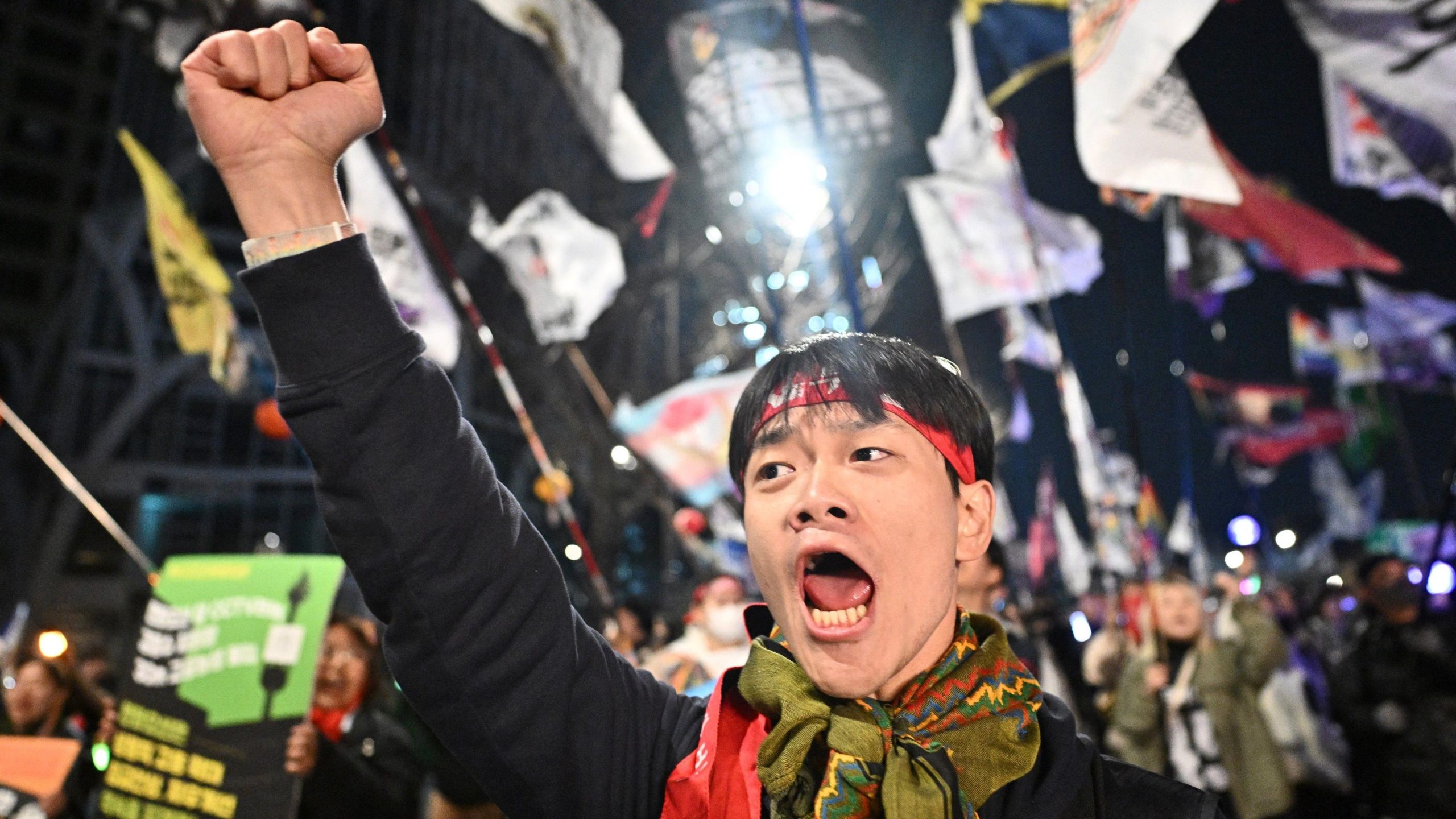
South Korea’s former president, Yoon Suk Yeol, has been found guilty of orchestrating an insurrection and sentenced to life in prison. His journey from the presidential residence to a jail cell took just over 14 months, but the events that led to his downfall unfolded in less than six hours on December 4, 2024.
On that day, Yoon announced the declaration of martial law, claiming “anti-state forces” had infiltrated the country. This move plunged South Korea into chaos, triggering a wave of protests and ultimately leading to his impeachment and arrest.
The 443 days following this incident were marked by intense political turmoil. Months of demonstrations, legal battles, and public outrage culminated in Yoon’s conviction for masterminding an insurrection. Prosecutors had sought the death penalty, which would have effectively meant a life sentence, as South Korea has not executed anyone since 1997.
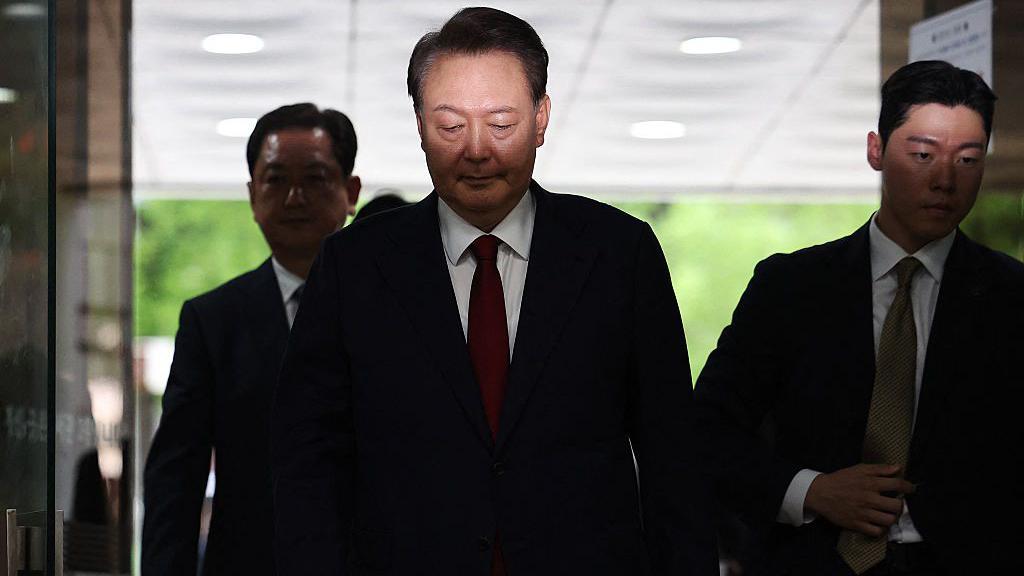
The swift response from South Koreans, including citizens, lawmakers, and institutions, sent a strong message about the resilience of democracy. Gi-Wook Shin, director of the Korea program at Stanford University, emphasized that this case highlights the importance of democratic values being defended by both institutions and citizens.
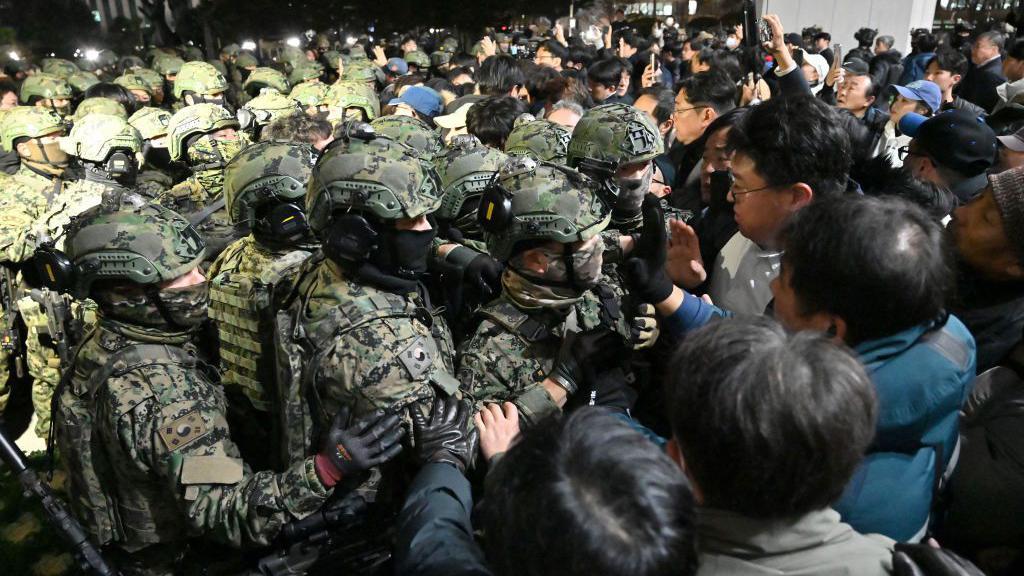
The night of the insurrection was chaotic. As Yoon made his announcement, thousands gathered outside the National Assembly in Seoul, braving the cold to protest against his decree. The crowd grew rapidly, with protesters defying the new laws and demanding accountability. Lawmakers also joined the resistance, breaking through police lines to vote against the martial law attempt.
By early morning, the assembly had successfully rejected the martial law bid, and Yoon was forced to back down within three hours. The event marked a turning point, leading to Yoon’s impeachment and eventual arrest after he confined himself to the presidential residence for two and a half weeks.
In the months that followed, South Koreans took further action at the ballot box, electing opposition candidate Lee Jae Myung as their new president. This outcome demonstrated that democracy in South Korea is not only procedural but actively defended by its citizens and institutions.
Protest has become a significant part of South Korean culture, especially in a young democracy that has experienced periods of dictatorship and military rule. The protests against Yoon included songs, chants, and open mic sessions, reflecting the passionate spirit of the people.
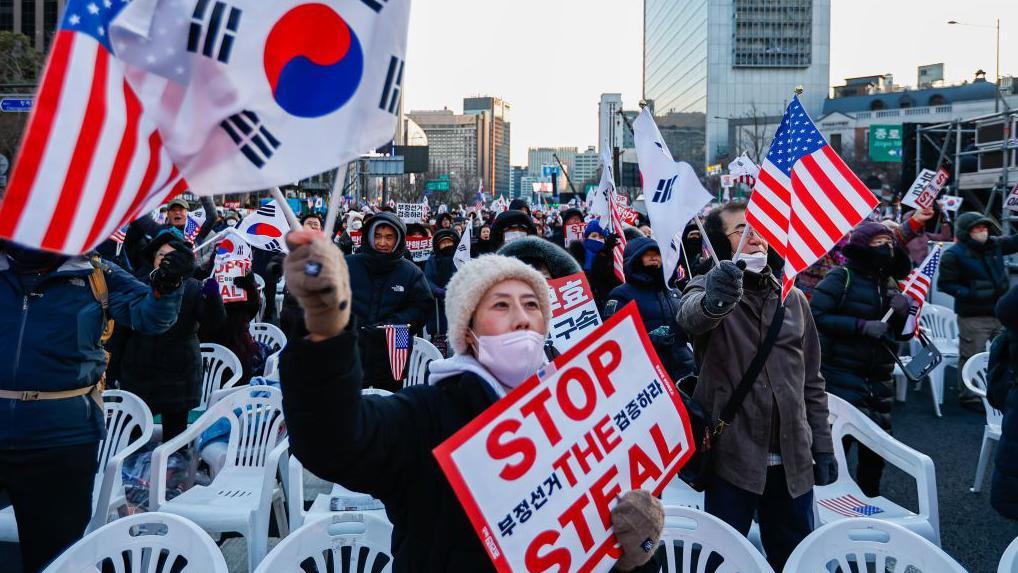
While there were protests supporting Yoon, they were smaller in scale compared to those opposing the martial law. These demonstrations, however, showed the deep divide in the country and the strong emotions surrounding the issue.
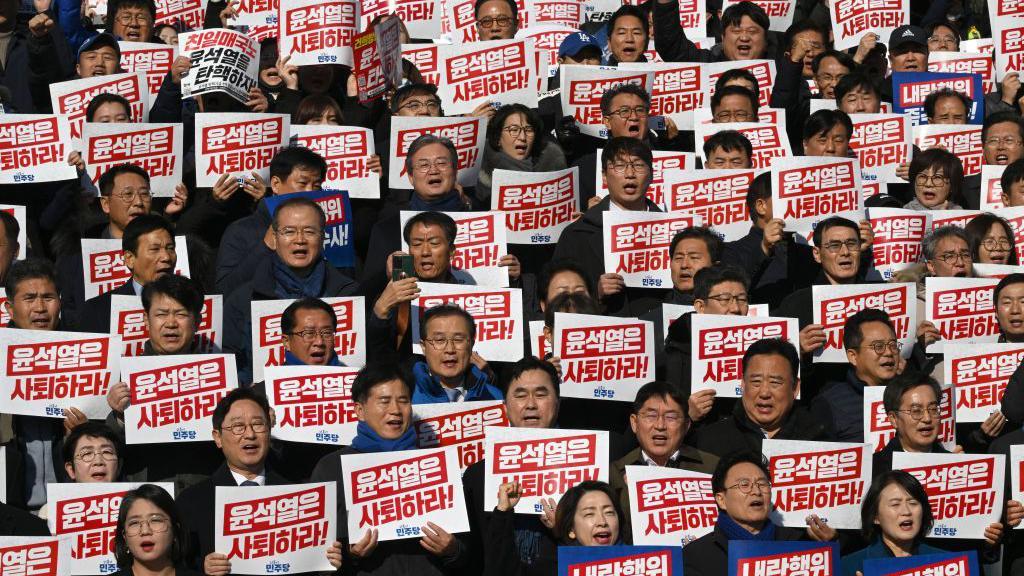
The emotional reactions to Yoon’s actions were divided along generational lines. Younger South Koreans expressed confusion and disbelief, while older generations felt fear, recalling the oppressive regimes of the past. Memories of martial law and military rule still linger, influencing how people responded to Yoon’s actions.
Su-kyoung Hwang, a senior lecturer in Korean studies at the University of Sydney, noted that the ferocity of the civilian response may have surprised global audiences. However, for South Koreans, it reflected a long historical lesson learned through struggle and resilience.
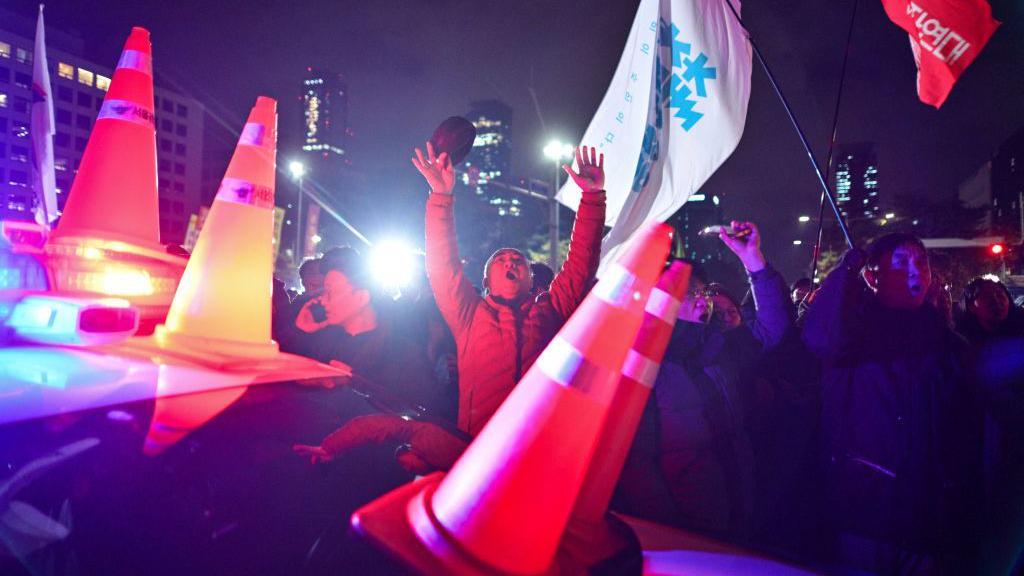
Despite the triumph of democracy, the saga of Yoon’s failed martial law bid has left deep scars on the nation. The attempt, though unsuccessful, created a polarized society, with many feeling disillusioned and divided.
Yoon’s supporters continue to believe in his innocence, echoing narratives promoted by right-wing media. About 27% of voters still believe he is not guilty, and some remain hopeful for a change in his sentencing.
Yoon’s legal battles are far from over. He faces multiple trials related to the failed martial law bid and corruption charges. Although he can appeal for a presidential pardon, the ruling party is working on legislation to prevent this.
Observers believe the outcome of Yoon’s case is a testament to the strength of South Korean democracy. Despite its flaws and divisions, the system has shown its ability to constrain authoritarian ambitions when institutional and societal actors act.
The story of Yoon’s downfall serves as a reminder that democratic erosion is not inevitable. It highlights the importance of vigilance, civic engagement, and the power of collective action in defending democratic values.
On the night of the attempted insurrection, an elderly man who had lived through the military rule era felt compelled to protest. “It was a terrifying time,” he said. “It cannot happen here again.” His words reflect the enduring commitment of South Koreans to protect their democracy and ensure that such a dark chapter never repeats itself.


