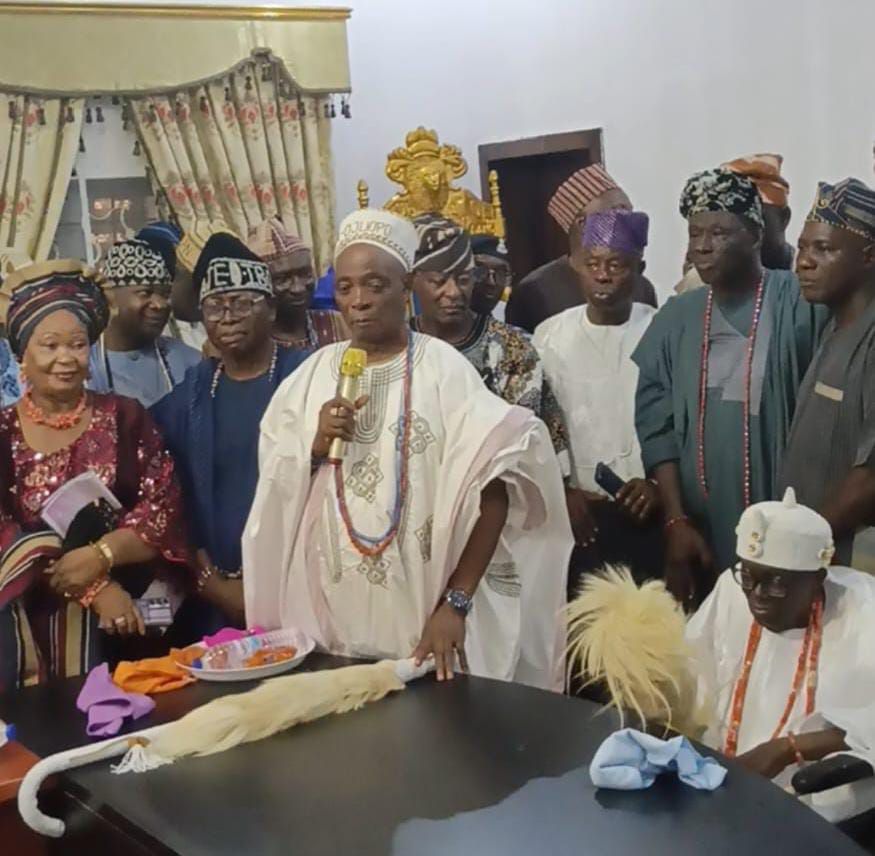
Ibadan Celebrates the Coronation of the 44th Olubadan
Ibadan, Oyo State, was filled with excitement on Friday as business mogul, engineer, former governor, and senator Rashidi Adewolu Ladoja ascended the throne as the 44th Olubadan of Ibadan. His coronation marked a significant moment in the city’s rich cultural heritage.
Ladoja succeeded Oba Owolabi Olakulehin, the 43rd Olubadan, who passed away on July 7, 2025, after a year of reign. The transition took place 81 days after his predecessor’s death. The coronation ceremony, which was attended by many, took place at Mapo Hall, a colonial-style building located on top of Mapo Hill in the Oyo State capital.
Mapo Hall, commissioned by Captain Ross in 1929 during the colonial era, has been a hub for major political and social events over the years. It houses a mini museum featuring relics of chains used to hold tax evaders during the colonial period. Mapo Hill, where the hall is situated, is one of the oldest parts of Ibadan, predominantly inhabited by the city’s indigenes.
The event was highlighted by Ladoja, who arrived at Mapo Hall wearing a white crown given to him at the Ose Meji Temple in Ibadan South-East Local Government Area. Prior to that, he had received the traditional Akoko leaf at the Labosinde Compound in Oja’ba, Ibadan.
At exactly 3:06 pm, Governor Seyi Makinde presented the staff of office to Ladoja, officially confirming his status as the 44th Olubadan. In his remarks, Makinde expressed pride in Ladoja’s emergence and noted that it brought an end to challenges associated with Ibadan’s traditional institutions.
“The succession process is now sacrosanct,” Makinde said. “We know everything about that succession, and so, no more dispute over the throne.”
The coronation also marked the continuation of Ibadan’s centuries-old succession tradition, which follows a well-defined chieftaincy ladder. Unlike many other Yoruba monarchies, the Olubadan’s succession is based on two main ruling lines: the Balogun (military) and Otun (civil) lines. The late Oba Olakulehin came from the military line, while Ladoja hailed from the Otun chieftaincy line.
Ladoja’s journey to the throne began in the 1980s when he became the Mogaji of the Ladoja family of Arusa Compound, Isale-Osi, Ibadan. He later became Jagun Olubadan on October 1, 1993, and climbed the 22 steps to reach the Olubadan throne.
A Call for Ibadan State
In his address, the newly crowned 44th Olubadan called on President Bola Tinubu to create Ibadan as an independent state out of the current Oyo State. He urged Tinubu to make this a reality before 2027, stating that this was the priority of his people. Ladoja emphasized that the National Assembly supports this initiative and promised to focus on job creation for youths and urban renewal.
Honoring the New Monarch
Major markets across Ibadan were shut down by traders in honor of the coronation. Except for those selling drinks to commercial motorcyclists, most economic activities were suspended. This directive was issued by the Babaloja-General of Oyo State, Asiwaju Yekeen Abass, who encouraged traders to attend the ceremony and show support for the new monarch.
The coronation witnessed massive turnout, with Ibadan residents organizing street parties to honor the monarch. Cultural displays, drumming, and processions filled the city, while colorful posters and banners adorned major streets and roundabouts. Hotels were fully booked, with visitors from across the country and beyond.
Presidential Remarks
President Bola Tinubu addressed the gathering, expressing hope that Nigeria’s economy would recover from its crisis. He described the economic hardships as a “painful surgery” but noted that growth and prosperity were on the horizon. Tinubu praised Ladoja as a rare gem who had ascended the throne of his forefathers and wished him long and successful reign.
Notable Attendees
The coronation attracted several high-profile figures, including President Bola Tinubu, host governor Seyi Makinde, and governors from neighboring states such as Lucky Ayedatiwa (Ondo), Demola Adeleke (Osun), and Biodun Oyebanji (Ekiti). Traditional rulers from various regions, including the Sultan of Sokoto, Alhaji Muhammadu Sa’ad Abubakar III, and the Alaafin of Oyo, Oba Akeem Owoade, were also present.
Other notable attendees included former governors, federal and state lawmakers, and officials from various government agencies.


