Overview of the Earthquake and Its Impact
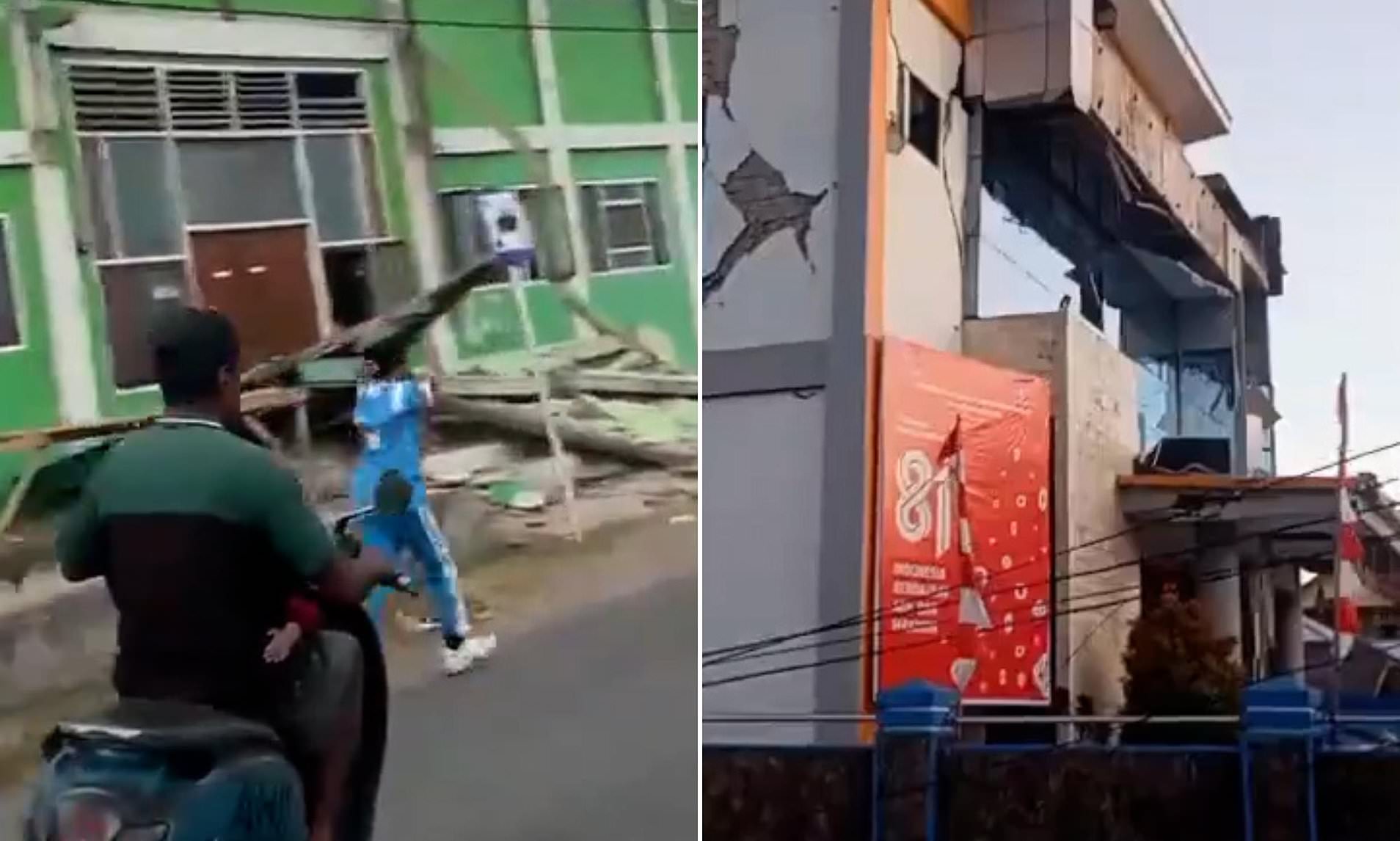
At least 47 people have died and thousands have fled their homes after a powerful earthquake hit Indonesia early on Saturday, causing buildings and homes to collapse. The 7.7 magnitude earthquake struck off the Indonesian coast around 5:58 am local time, which corresponds to 11 pm in the UK. It was followed by two aftershocks, one with a magnitude of 6.1.
Indonesia’s Flores Island was hit by the quake, with a depth of 10 km (six miles), and the epicenter located 68 km (42 miles) from Ende, on the southern coast of the island, in East Nusa Tenggara province. According to the national management agency (BNPB), at least 47 people have died and 50 people are injured from the impact of the powerful earthquake. Around 2,000 people have fled their homes.
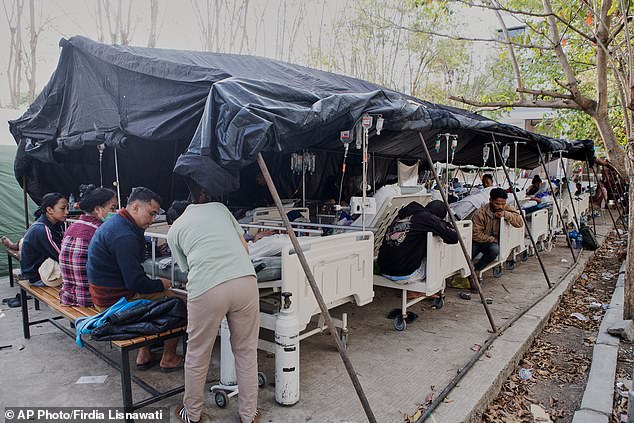
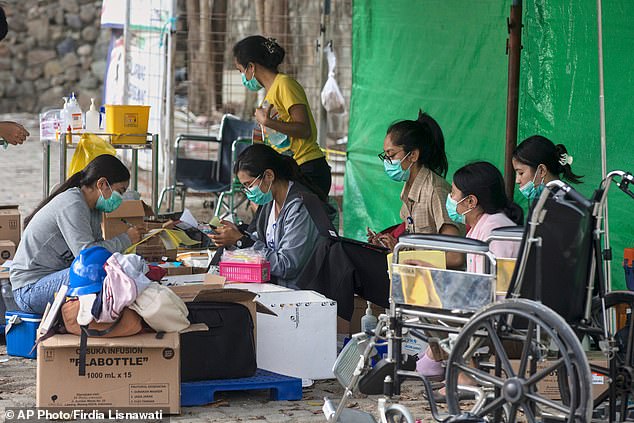
Hospitals in Flores Island’s port town of Maumere, approximately 2,500 km (1,553 miles) east of Jakarta, were evacuated as rescuers scrambled to find survivors under collapsed buildings. In Labuan Bajo, makeshift tents have been set up to treat patients outside of collapsed medical facilities in Indonesia’s southernmost province, East Nusa Tenggara.
A second strong quake was recorded thousands of kilometers away on Sumatra island in the west of the archipelago 12 hours later, but there were no initial reports of damage or casualties. The epicenter of the tremor was 7 km (4.35 miles) northwest of the city of Pemantangsiantar, in the north of the island, according to the Euro-Mediterranean Seismological Centre (EMSC). However, it was measured at a depth of 180 km (112 miles). There is no risk of a tsunami, EMSC added.
Emergency Response and Challenges
Parts of the Indonesian National Armed Forces and national police have since been called in for the emergency response to the earthquake off the coast of Flores island. Around 2,000 locals were evacuated, and damage was reported to 160 houses, dozens of schools and hospitals, warehouses, and government facilities, BNPB said. The International Federation of Red Cross and Red Crescent Societies said preparations were underway to bring aid to thousands of people in temporary shelters.
Authorities also reported traffic congestion and power outages affecting parts of the region. Yulian Juita Ekalia, who lives in Ruteng city more than 100 km (60 miles) west of the epicentre, described the experience: “I have never felt an earthquake this big.” She said, “It felt like we were on a trampoline; it was really scary.”
As she rushed to get outside, everything in the house fell down: the television, her son’s trophies, the dish racks, suitcases on top of the wardrobes. When she got outside, her son and neighbors were already there, screaming in fear.
Rescue official Fathur Rahman said the focus was on locating victims who may be buried under rubble, but rescue efforts have been complicated by landslides cutting off roads. Many Flores inhabitants were left without electricity and telecommunications, while hundreds remained outside hours later as dozens of aftershocks shook the island.
Yohanes Babo, 55, described being at a market in Nagekeo, the region closest to the epicentre of the quake, when he started to feel the earth shake. “The shaking was strong. Thankfully, we were already outside the house,” he said. “People were panicking, running here and there. We’re evacuating for the time being… and trying to get to the hills,” he added, stating that his family is safe and no one was harmed.
Regional Effects and Public Reactions
Locals in Nagekeo were forced to race for higher ground as the sea retreated earlier on Saturday – prompting concerns about a tsunami. Tsunami waves of less than 1 meter (3 feet) were recorded in several areas of the Southeast Asian nation after the early morning tremor. The tsunami warning was lifted about three hours after the quake.
Lukas Lotar, a resident of Maumere, described how the earth “suddenly started to shake” which caused him to “panic.” “Patients also fled the hospital, the jolt was big. I saw some walls were cracked,” the customer service official said. A hospital near Ende was filmed moving its patients outside by local media, though it is unclear whether this was in the same place Mr. Lotar described.
The governor of East Nusa Tenggara Province, Emanuel Melkiades Laka Lena, told media at least five people died from collapsing rubble as they slept. Parts of a building collapsed into dust and rubble as people screamed and ran in the street, a video on Facebook at a port in Maumere showed.
“The quake was massive, the shock was so strong, we were resting at home with family,” said Nona, a 51-year-old resident of Talibura, a village in East Nusa Tenggara. “There were 13 of us inside the house and we all ran to save ourselves.”
Historical Context and Future Concerns
Strong shaking was felt across East Nusa Tenggara, West Nusa Tenggara, and parts of South Sulawesi, and residents in several areas reported shaking lasting about one minute, BNPB said in a statement. “Most of the people felt the shock and scattered out of their homes,” it said.
A hospital in the district of Ende in East Nusa Tenggara Province was moving patients outside, Kompas TV footage showed, and Kompas.com reported at least one landslide. The earthquake hit off Indonesia’s Flores island with a depth of 10 km (six miles) at 5:58 am local time (10:58 pm UK time), according to the US Geological Survey.
In 1992, the same area was hit by a magnitude-7.5 quake, causing extensive destruction at that time, the agency said. Authorities initially urged Flores residents to move to higher ground as tsunamis threatened the coastline but later lifted the warning.
Indonesia’s meteorology, climatology and geophysics agency (BKMG) said: “Tsunami modelling results indicate that this earthquake has the potential to generate a tsunami in the provinces of East Nusa Tenggara, South Sulawesi, and West Nusa Tenggara.” It warned residents to stay away from beaches and riverbanks as waves from 0.5 meters to 3 meters high were predicted and residents in Maumere evacuated to higher ground.
According to witnesses, the sea around the island had washed out, a common sign of a coming tsunami. Video appearing to be of the Port of Maumere on Flores captured crumbling buildings and shattered windows as people screamed and ran through the streets.
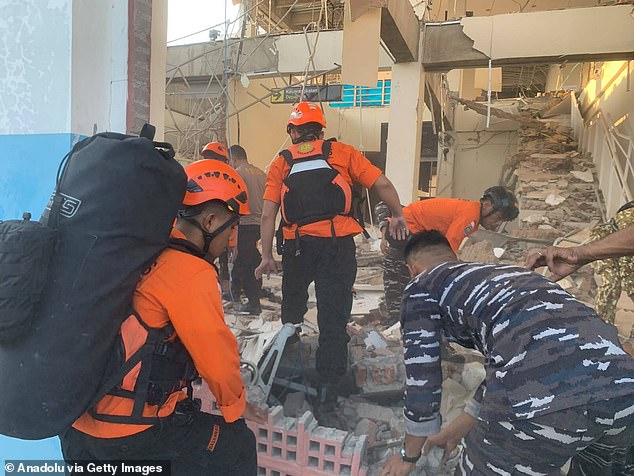
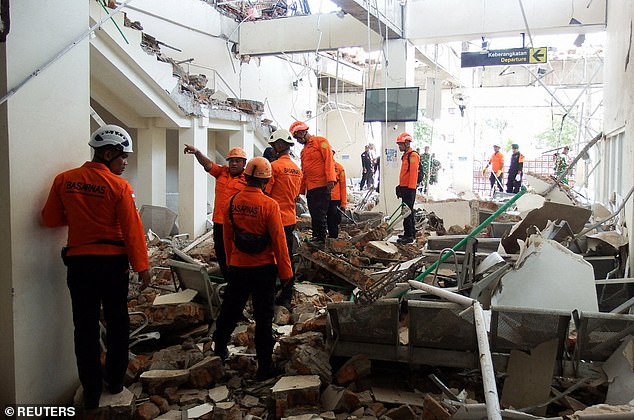
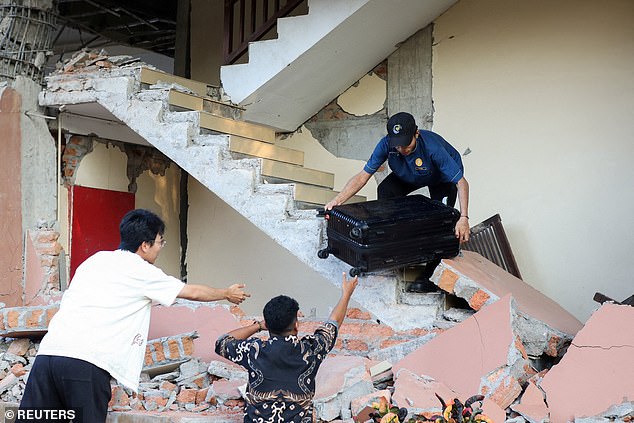
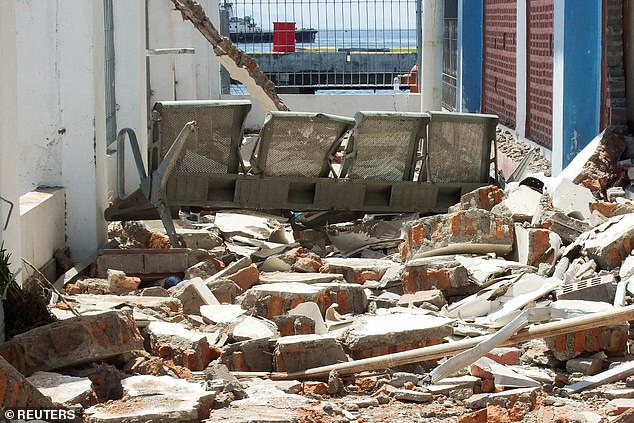
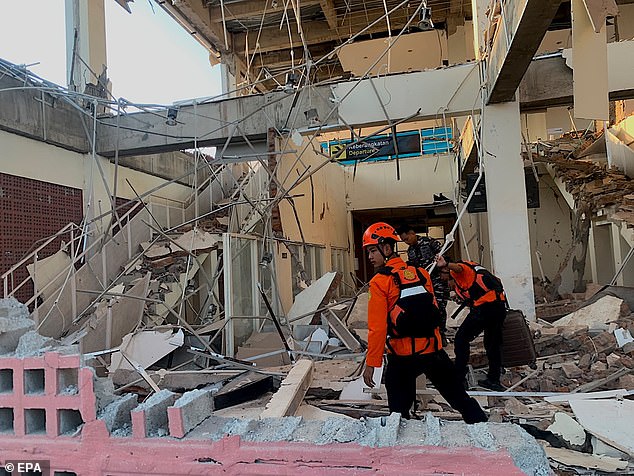


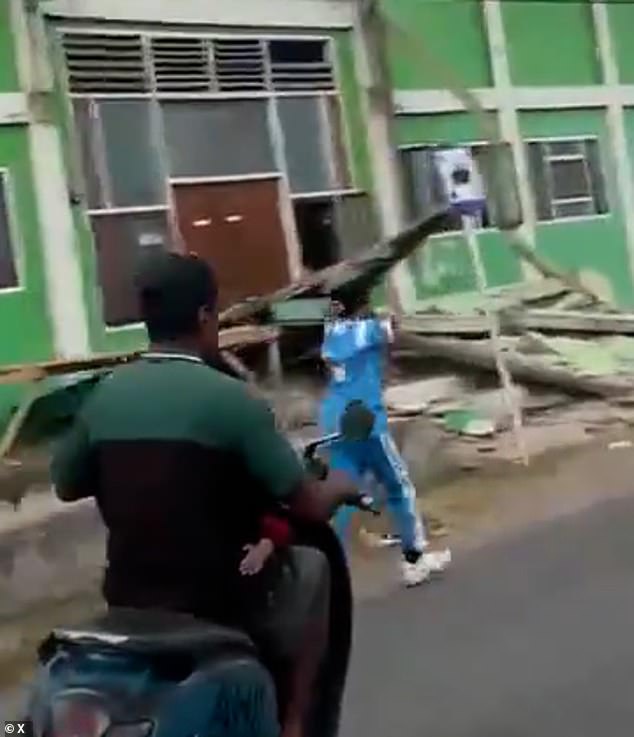
Comprising 17,000 islands, Indonesia is vulnerable to earthquakes because of its position on the Pacific ‘Ring of Fire’, a series of volcanoes and fault lines around the ocean. Yohanna Embu, a resident of Sikka, which lies within East Nusa Tenggara province, said strong shaking had damaged buildings as people ran to higher ground. “Many buildings here were damaged. I saw that the waiting room at the Pelni port terminal in Maumere had collapsed,” she said.
A spokesman for the country’s national disaster mitigation agency said the quake struck strongly for around one minute in regions such as Nagekeo and Bima. The Indonesian quake was of a higher magnitude than that which hit Colombia earlier this week. That earthquake was a magnitude 7.4 and buried people across the country as buildings collapsed.
At least 111 were killed in Colombia and 87 were injured as the country declared a state of emergency and a race to find survivors began. Also on the so-called Ring of Fire, the Colombian quake was felt as far away as Ecuador, Panama, and Venezuela.
Indonesia has a history of deadly earthquakes, including the 2004 Boxing Day quake, a 9.1 magnitude event that struck off the coast of Sumatra. One of the deadliest natural disasters ever recorded, it killed 170,000 in Indonesia and a further 52,000 in the surrounding region. In 2018, a powerful earthquake shook the island of Lombok and more tremors followed during the following weeks, killing more than 550 people on the holiday island and neighboring Sumbawa. Later that year, a 7.5 magnitude quake and a subsequent tsunami in Palu on Sulawesi island left more than 4,300 people dead or missing.
Flores has also seen recent volcanic activity after the Lewotobi Laki-Laki volcano erupted last year, spewing ash high into the air.