Key Players in Kampala Central Election
Kampala Central, a parliamentary constituency that has seen a shift in political representation, has become a battleground for numerous candidates from various political parties and independent groups. This change comes after the incumbent, Muhammad Nsereko, attempted to run for the presidency but was denied due to failing to secure enough supporter signatures.
The main contenders in the Kampala Central race include David Lewis Rubongoya, the Secretary General of the National Unity Platform (NUP) party, Ms Minsa Kabanda, the Minister for Kampala from the National Resistance Movement (NRM), and businessman Abraham Luzzi.
The 2026 General Election Campaigns
With the 2026 General Election campaigns now officially underway, there are 83,597 candidates competing for 45,505 elective positions ranging from President to Sub-County Councilor. Parliamentary candidates in Kampala have adopted various strategies such as door-to-door campaigning, mini and massive rallies, and leveraging both digital and mainstream media to reach voters.
According to records from the Electoral Commission (EC), 113 candidates were nominated between October 23 and 24 to compete for 10 Parliamentary seats in Kampala. These seats include Makindye East, Makindye West, Nakawa East, Nakawa West, Kampala Central, Lubaga South, Lubaga North, Kawempe South, Kawempe North, and the Kampala City Woman Representative.
Poll Results and Candidate Strategies
A November 12 poll conducted by the Daily Monitor, titled “Who is your preferred candidate for Kampala Central MP?”, was shared on its official X-platform and Facebook. The poll, which received at least 8,112 participants in 24 hours, placed Mr. Rubongoya in the lead with 75.3 percent of the votes, followed by Mr. Luzzi with 20 percent, and Ms. Kabanda in third place with four percent.
Abraham Luzzi, an independent candidate, has gained attention for his unique approach to campaigning. Unlike other candidates who have focused on physical rallies and door-to-door efforts, Luzzi has chosen to campaign through mainstream and digital media. He believes that traditional methods like rallies are inefficient and disruptive to daily life.
“I completely object to the ordinary, loitering kind of campaigns,” Luzzi stated. “I want to set a new yardstick and benchmark with this campaign. I believe I am currently the most popular candidate not only in Kampala, but in the whole of Uganda and beyond.”
Luzzi’s Campaign Manifesto
Luzzi’s campaign manifesto, titled “A Better Tomorrow for Every Ugandan,” outlines several key priorities, including fighting corruption, reducing the size of the House from 556 to 80 MPs, limiting the Cabinet to 50 members, and decongesting prisons. His plan also includes introducing the death penalty by hanging for those found guilty of causing gross public financial loss or embezzlement of public funds.
Among his political reforms, Luzzi proposes:
- Reducing Parliament to 80 MPs, saving Shs415 billion annually.
- Limiting the Cabinet to 50 Ministers, appointed on merit and not drawn from Parliament.
- Abolishing by-elections, saving between Shs10 billion and Shs20 billion per year.
- Shifting to digital and video-based campaigns, cutting election costs by 70–80 percent.
- Setting qualifications for MPs, including a bachelor’s degree, a minimum net worth of Shs500 million, and an annual business turnover of Shs1.5B billion.
His justice reforms include replacing jail terms with fines for minor offenses, reducing prison overcrowding by 40 percent through alternative punishments, introducing blood money as an option for murder cases, and establishing express 24-hour courts as a paid service for urgent justice.
Rubongoya’s Campaign Focus
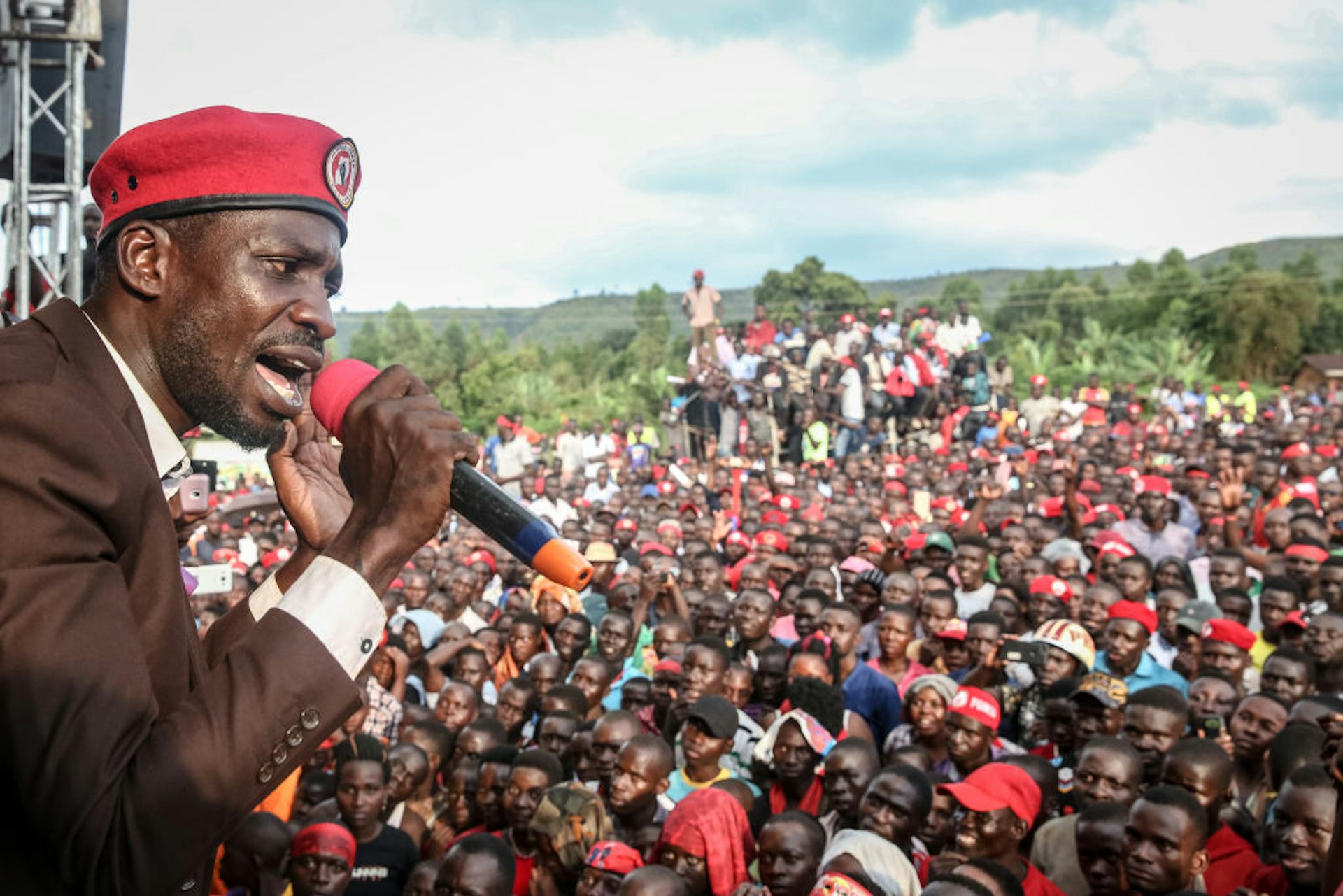
Unlike Luzzi, Mr. Rubongoya launched his campaign with a rally in Kamwokya, emphasizing urgent reforms aimed at transforming urban services, expanding economic opportunities, and improving governance in the capital. His immediate priorities include overhauling the taxation system, upgrading education and healthcare facilities, and improving roads, drainage, and waste management.
He also highlighted the need to create more employment opportunities, promote economic empowerment, provide affordable housing for low-income earners, and enhance access to technology and internet connectivity.
“We are committed to pushing for a Kampala that works for everyone,” Rubongoya said. “All these programs are better pushed if there is a government that truly represents the people, which is why everyone needs to play their part in the #ProtestVote2026.”
Minsa Kabanda’s Vision
Minsa Kabanda, the NRM flagbearer, has vowed to champion the welfare of market women and residents of informal settlements while challenging the notion that the ruling party cannot win in the city.
“We are going to change the narrative. The people of Kampala Central deserve inclusive development, and the NRM has the means to deliver it,” she said.


