The Complex Landscape of Terrorism and Insurgency in Nigeria
Terrorism and insurgency have significantly impacted various regions of Nigeria since 2009, particularly in the northern parts of the country. These conflicts have resulted in the loss of tens of thousands of lives and have displaced millions of Nigerians. In 2025, Nigeria was ranked sixth in the Global Terrorism Index, with a score of 7.658, reflecting an increase from its eighth-place ranking in 2023 and 2024.
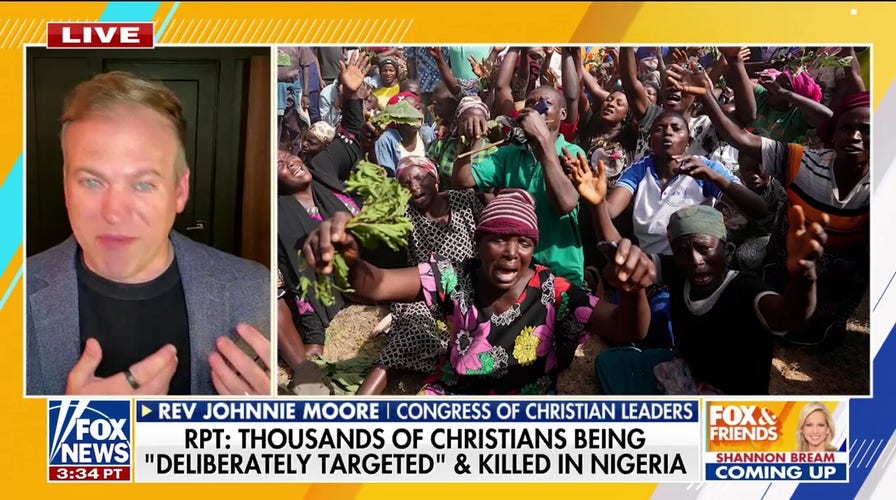
In November 2025, former US President Donald Trump declared Nigeria a “country of particular concern,” following a campaign by US Congressman Riley Moore. Moore alleged that there was an “alarming and ongoing persecution of Christians” in Nigeria. He claimed that 7,000 Nigerian Christians were killed in 2025 alone, averaging 35 deaths per day. Trump also threatened to take direct military action against Islamist militant groups operating in Nigeria.
Nigeria’s President Bola Tinubu responded to this declaration, stating that the US characterization did not reflect the country’s reality or values. He emphasized that successive governments had made efforts to promote peaceful coexistence among diverse faith communities.
Understanding the Scope of Violence
Over the past decade, I have researched conflicts, terrorism, and the formation of insurgent groups in Nigeria. To understand the degree and intensity of terrorist and insurgency activities in the last 10 years, I analyzed data from the Armed Conflict Location and Event Data (ACLED), an independent violence monitor.
The analysis indicates that it is challenging, if not impossible, to distinguish killings based on religious affiliations. All religions in Nigeria have been affected, with fatalities occurring across multiple ethnic and religious lines.
Is There a Religious Genocide in Nigeria?
Religious violence in Nigeria dates back to 1953, seven years before the country gained independence. Since then, both military and civilian regimes have struggled to curb the persistent religious violence, often linked to issues such as ethnicity, resource management, and competition for resources. Colonial boundaries, established by British colonizers, placed different ethnic groups with varying values into one country.
Figure 1 shows that while the number of attacks by terrorist and insurgent groups has remained roughly similar in the last four years, the number of fatalities has declined. However, this chart does not explain the categories of people attacked. To determine if there is a disproportionate attack on Christians, I compared the number of attacks on churches and mosques in Nigeria over the last 10 years.
The data reveals that non-state actors have attacked both churches and mosques. While there have been more attacks on churches in the last six years, the data shows that there were more attacks on mosques in 2015 and 2017. Generally, Nigeria’s population is considered to be evenly split between Christianity and Islam, with only around 0.6% adhering to traditional African religions or other beliefs.
Although it is difficult to extract the exact number of fatalities in these cases, the number of attacks on places of worship indicates that both Christians and Muslims are under attack by terrorist and insurgent groups in Nigeria.
Trump’s History with Nigeria
This is the second time Trump has designated Nigeria as a country of particular concern. The first designation occurred in December 2020, when he stated that the Nigerian government was not doing enough to protect the safety of Nigerians, especially Christians. This was during the tenure of former president Muhammadu Buhari.
The events leading to this designation began in March 2025, two months after Trump was sworn in for his second term. The US House foreign affairs sub-committee on Africa approved measures urging the president to impose sanctions on Nigeria due to the widespread persecution of Christians. Additionally, the US Commission on International Religious Freedom report on Nigeria (2025) argued that religious freedom in Nigeria remains poor. It stated that federal and state governments continue to “tolerate attacks or failed to respond to violent actions” by non-state actors on Christians in the country.
The commission recommended that the US government designate Nigeria as a country of particular concern for “engaging in and tolerating systematic, ongoing, and egregious violations of religious freedom, as defined by the International Religious Freedom Act.”
What the Designation Means for Nigeria
The “country of particular concern” status is an official classification under the US International Religious Freedom Act of 1998. The act requires the president of the US to declare this status where the government of a country has “engaged in or tolerated particularly severe violations of religious freedom.” Such violations include arbitrary execution based on faith, torture or inhuman treatment based on religion, as well as other denials of the rights to life, liberty, or security because of a person’s religion.
In the case of Nigeria, there is no evidence that any of these acts have been carried out by the government. The designation of a country as a country of particular concern requires the US government to consider a range of options for ending the violations identified. The first steps include diplomatic or direct engagement, public condemnation, or withdrawal of assistance. This could be followed by further actions such as economic sanctions and withdrawal of aid or other forms of economic assistance.
Instead of engaging in diplomatic or direct engagement with the Nigerian government as a first step, the US government has already threatened sanctions, such as the withdrawal of aid and direct military action.
What Should the US Do to Support Nigeria?
To assist Nigeria in its fight against terrorism, the US needs to reconsider the classification of Nigeria and revert to the first step: diplomacy and direct engagement. Second, the US should support Nigeria’s efforts to identify the sponsors of these groups and their sources of finance within and outside the country. Third, there is a need for a regional and international approach to curb the menace of terrorism in Nigeria and the West African and Sahel region. The US could play a significant role in supporting organizations such as the Multi-National Joint Task Force, which was set up to fight terrorism in the region.


