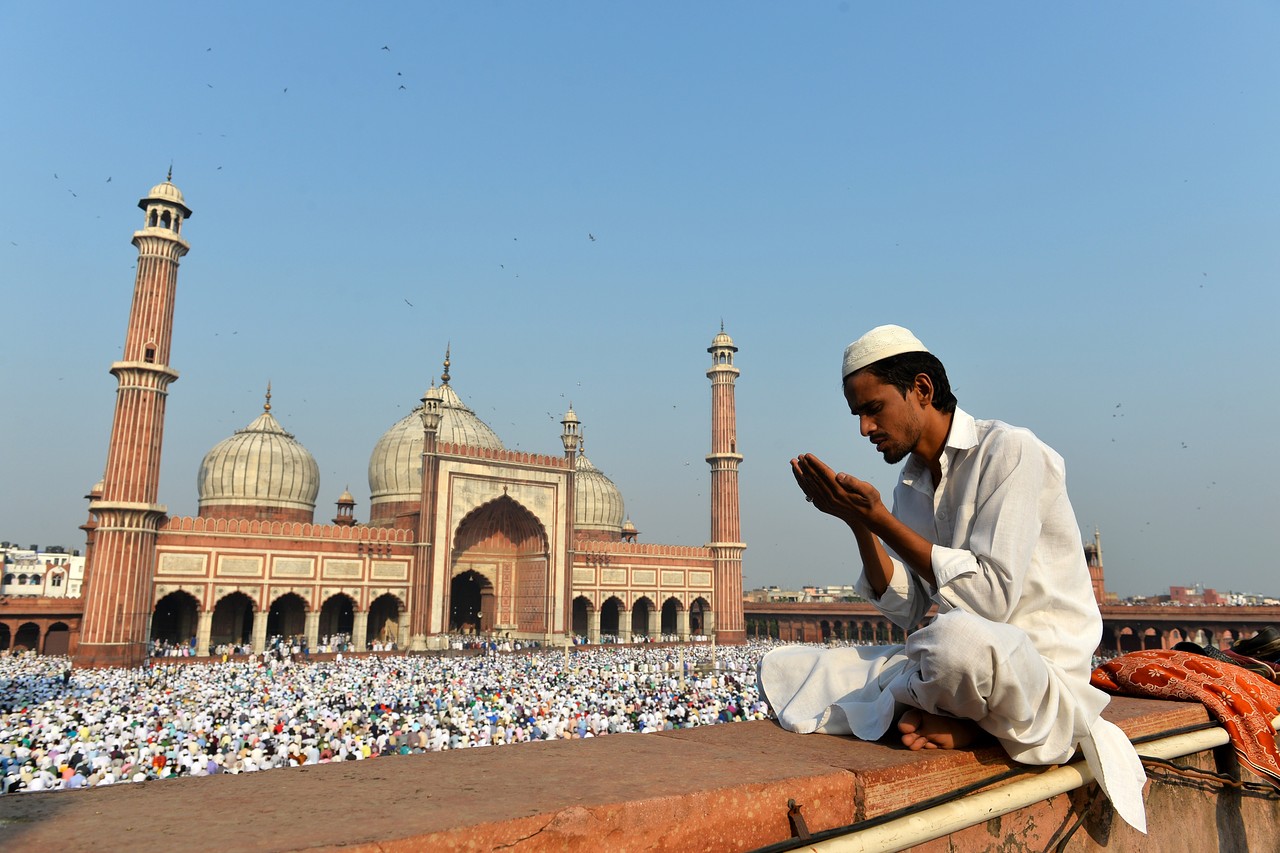
A Muslim’s Perspective on Faith, Submission, and the Meaning of Islam
I am a Muslim, and I consider myself to be a particularly devout one. To me, faith—religion—is the greatest achievement or invention of mankind. The thought process that led to the discovery or creation of religion is still the anthropological framework upon which human society is built. In fact, I believe that science itself is an offshoot of the idea of religion.
Being alive in this day and age, when the cultural clash between the West and the Muslim world is at its peak, I have witnessed and heard it all. Since the events of 9/11, the Muslim identity has become highly sensitive. Every Muslim who wishes to avoid being ostracized from mainstream global society has had to overcompensate defensively. It was in the aftermath of that event that a trend began among Muslims: branding Islam as the religion of peace. They often tell anyone who listens that the Arabic word “Islam” means “peace.”
However, this is not accurate. The word “Islam” does not mean “peace.” I remember clearly from my primary school Islamic Religious Knowledge (IRK) class in the 1990s, before the events of 9/11, that we were taught that “Islam” means “total submission to the will of Allah.” That was the exact definition we were given. If you were to translate the word “Islam” into a single English word, you would get “submission.” Therefore, “Islam” actually means “submission,” not “peace.”
Despite this, there are syntactic and morphological connections between “Islam” and the Arabic word for “peace,” which is “salaam.” “Salaam” is indeed the root of “islaam.” So, what does it mean to be a Muslim if “Islam” means submission? First and foremost, it means total submission to Allah. It means surrendering your affairs and subordinating your intellect to the dictates of Allah.
I have heard many Muslims with an agenda repeating the “Islam means peace” narrative, and it often feels misleading. It is not because I think that if Islam did not mean peace, it must mean the opposite of peace. Rather, it is because such statements reflect our insecurity and uncertainty about our own philosophical beliefs. These kinds of disingenuous tactics ultimately do more harm than good.
Imagine telling a non-Muslim, who already has a pre-existing bias against Islam, that “Islam” means “submission”—a derivative of subjugation. Without context, this can sound extremely offensive. It may lead them to believe that Islam is anti-freedom, and freedom is often seen as the (false) cornerstone of Western civilization.
This has led to some anti-Muslim voices using this argument against us. They claim that we have always been lying to them, that we are taught to lie and deceive non-Muslims, and that we are secretly plotting their subjugation. They paint us as initiates of a death cult that submits to a demon god, aiming to extinguish all freedom. This is how the “religion of peace” narrative is twisted.
But why does “submission” sound so terrible? It doesn’t necessarily. As I mentioned earlier, I believe religion is the most impactful discovery of mankind. When humans first looked up at the heavens in helplessness, the idea of God became apparent. We were fighting a losing battle against nature and our own consciousness. God became evident because we had no control, but He did.
If I imagine myself living in Neolithic Mesopotamia, it would have been easy, even scientific, to let go and submit to an unseen force. According to a Christian gospel song, this force “leads me to the place where I’ll find peace again.” It calmed the storms and gave me rest. You stop fighting and resign, you surrender. You submit. And you find peace. Just like Muslims do. Islam is a religion of peace because it calms the tempest in the restless souls of its adherents.
As humanity navigated this sense of helplessness, we began to understand and predict natural phenomena. Over time, we became less reliant on blind submission to an unseen being. What we once asked of God, we now have the power to create or control through science. Today, we don’t fear raiders, wilderness, or natural disasters as much as we once did. We can predict and prepare for them. We no longer fear unexplained health challenges. We have found peace. What we once relied on faith and religion for, we now rely on science—the spinoff of religion.
Yet, even in science, we must submit. Einstein had to accept the cosmic constant. Science is a mix of immaterial conjectures and sometimes anecdotal evidence. We submit to the idea of gravity, electromagnetism, and other forces, even though we don’t fully understand how they work. We submitted to the lockdowns during the pandemic and other restrictive measures. I must also submit to the Constitution of the Federal Republic of Nigeria or risk treason. In return for peace, I must submit to the laws of the land and the facts of reality.
This is the peace that Islam offers through submission. The same peace we receive from every other aspect of reality, and we gladly accept it given the stakes. That is what makes Islam a religion of peace—even though it does not literally mean “peace.”


