
(JWST).
— seem to host rapidly feeding, or “accreting,” supermassive black holes.
at their hearts.
“We’re confounded by this new population of objects that the JWST has found. We don’t see analogs of them at lower redshifts [corresponding to smaller distances], which is why we haven’t seen them prior to the JWST,” team leader Dale Kocevski of Colby College said in a statement.
“There’s a substantial amount of work being done to try to determine the nature of these little red dots and whether their light is dominated by accreting black holes.”
Seeing red with the JWST
Upon their discovery back in 2022, astronomers already knew that the JWST’s little red dots represented a new galaxy type that had never been seen before. They were also baffled by how common these galaxies seemed to be in the early universe.
(JWST Advanced Deep Extragalactic Survey), the NGDEEP (Next Generation Deep Extragalactic Exploratory Public), and the RUBIES (Red Unknowns: Bright Infrared Extragalactic Survey).
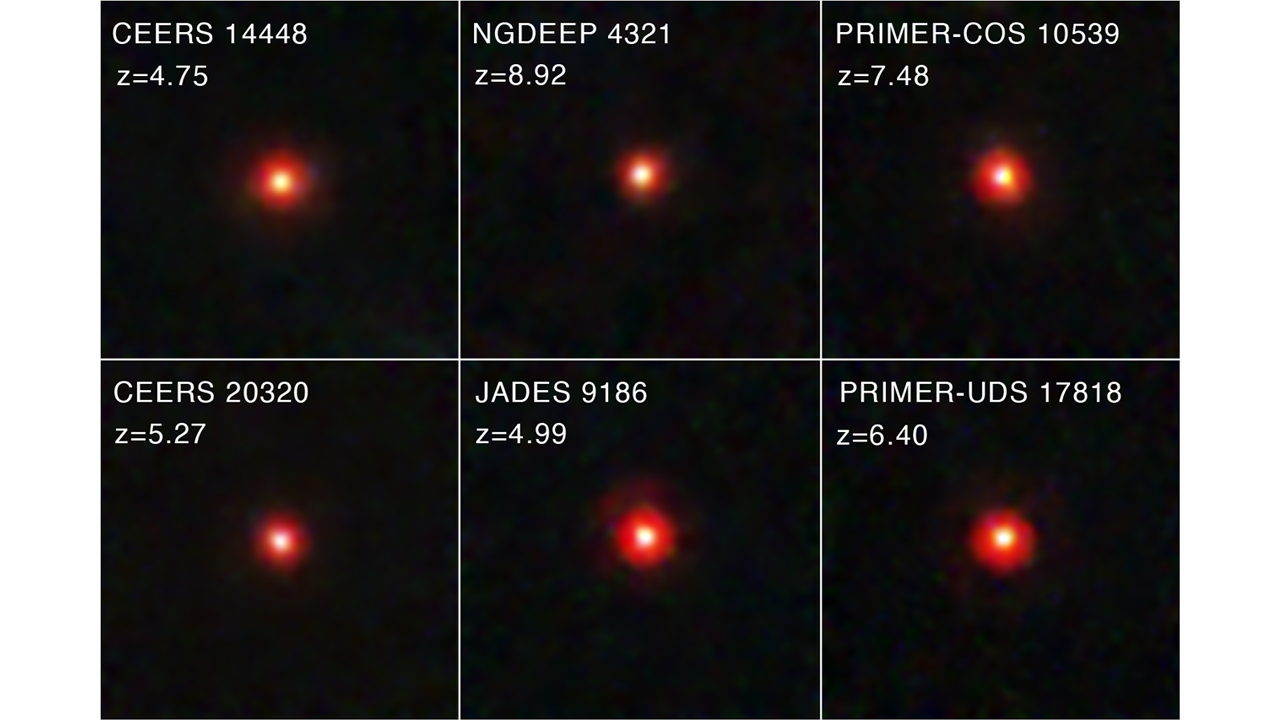
Particularly important to this little red dots research was data from the aptly named RUBIES project.
active galactic nucleus (AGN).
Little red dot galaxies owe some of their coloration to a phenomenon called “redshift.” As light from a galaxy travels toward Earth, the expansion of the universe stretches its wavelength, simultaneously lowering its frequency.
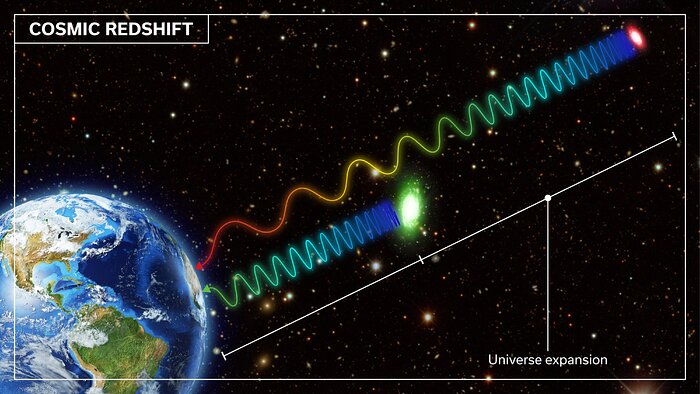
This shifts the light toward the “red end” of the electromagnetic spectrum. The longer the light travels, the more extreme this redshift effect is. Thus, ancient galaxies are described as “high redshift galaxies.”
After traveling for many billions of years, light shifts into the near-infrared or infrared wavelengths, which are the wavelengths the JWST is designed to see.
“The most exciting thing for me is the redshift distributions. These really red, high-redshift sources basically stop existing at a certain point after the Big Bang,” team member and University of Texas at Austin researcher Steven Finkelstein said. “If they are growing black holes, and we think at least 70% of them are, this hints at an era of obscured black hole growth in the early universe.”
Cosomology is fine thanks to feeding supermassive black holes
You may have read headlines suggesting that “cosmology is broken” since the JWST started detecting these ancient little red dots.
large enough to pump out so much light when the 13.8 billion-year-old cosmos was no more than 12% of its current age. This discovery could help explain that puzzle.
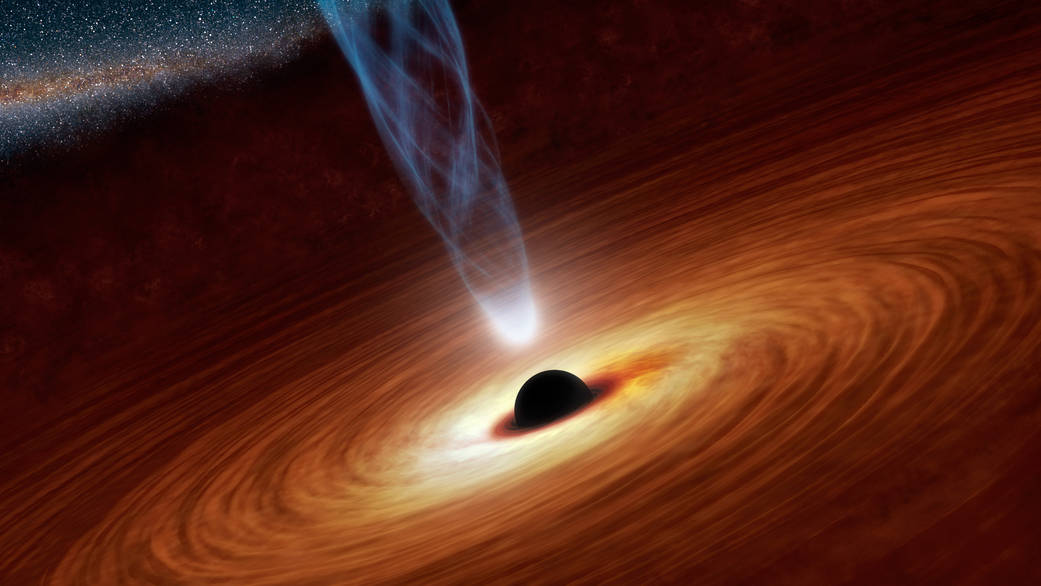
AGNs are extremely bright due to the turbulence created in accretion disks by the incredible gravitational influence of supermassive black holes with masses equivalent to millions or billions of suns.
Thus, much of the light from these galaxies could be coming from feeding black hole-powered AGNs, not from stars. That means the population of stars in little red galaxies doesn’t have to be paradigm-shatteringly high to explain their brightness.
“This is how you solve the universe-breaking problem,” team member and University of Texas at Austin scientist Anthony Taylor said.
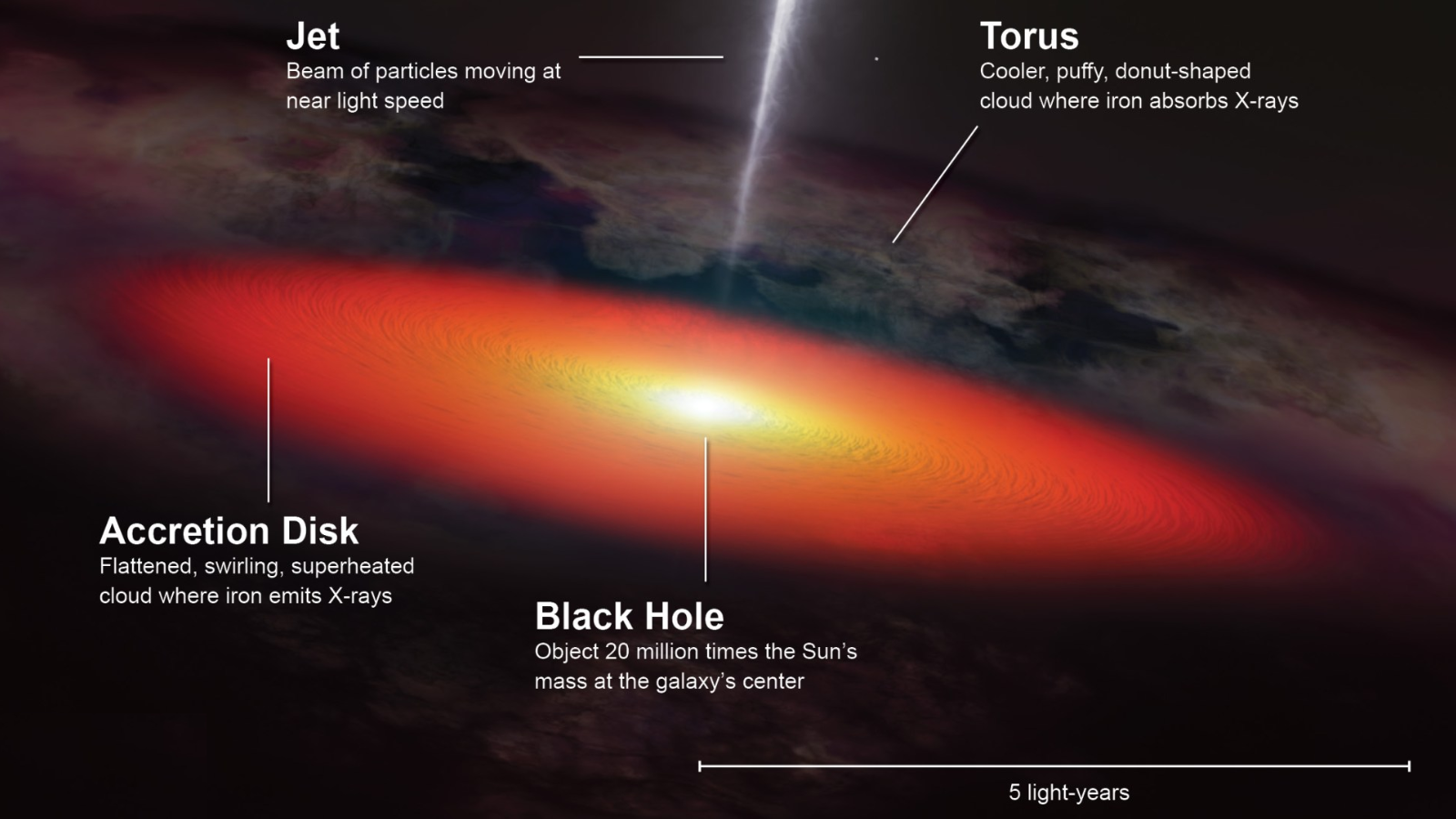
This doesn’t mean that all the questions about little red dots have been addressed, however. One mystery that persists is the absence of less redshifted galaxies resembling these little red dots in the local universe.
One possible explanation could be the “inside-out” growth of galaxies.
are depositing less and less gas in the vicinity of the central accreting supermassive black hole. This means over time, the AGN becomes less obscured by surrounding dense gas and dust. As the black hole sheds its cocoon, pushing away matter with the powerful jets of plasma it launches, the galaxy becomes brighter in bluer wavelengths and less red ones, thus losing its little red dot status.
which are bright in X-rays.
This could be because dense clouds of gas and dust are adept at absorbing X-rays, stunting the emission of this high-energy light. Thus, the lack of X-rays from little red dots could indicate densely-shrouded black holes.
The team will now follow a multitude of avenues to better understand little red dot galaxies. This will include examining their sample of galaxies in mid-infrared light.
A deeper view of little red dots and carefully selected follow-up observations could help finally solve the mystery of these challenging ancient galaxies.
“There are always two or more potential ways to explain the confounding properties of little red dots,” Kocevski said. “It’s a continuous exchange between models and observations, finding a balance between what aligns well between the two and what conflicts.”
The team’s results were presented at the 245th meeting of the American Astronomical Society in National Harbor, Maryland, on Tuesday (Jan. 15) and have been accepted for publication in The Astrophysical Journal.


