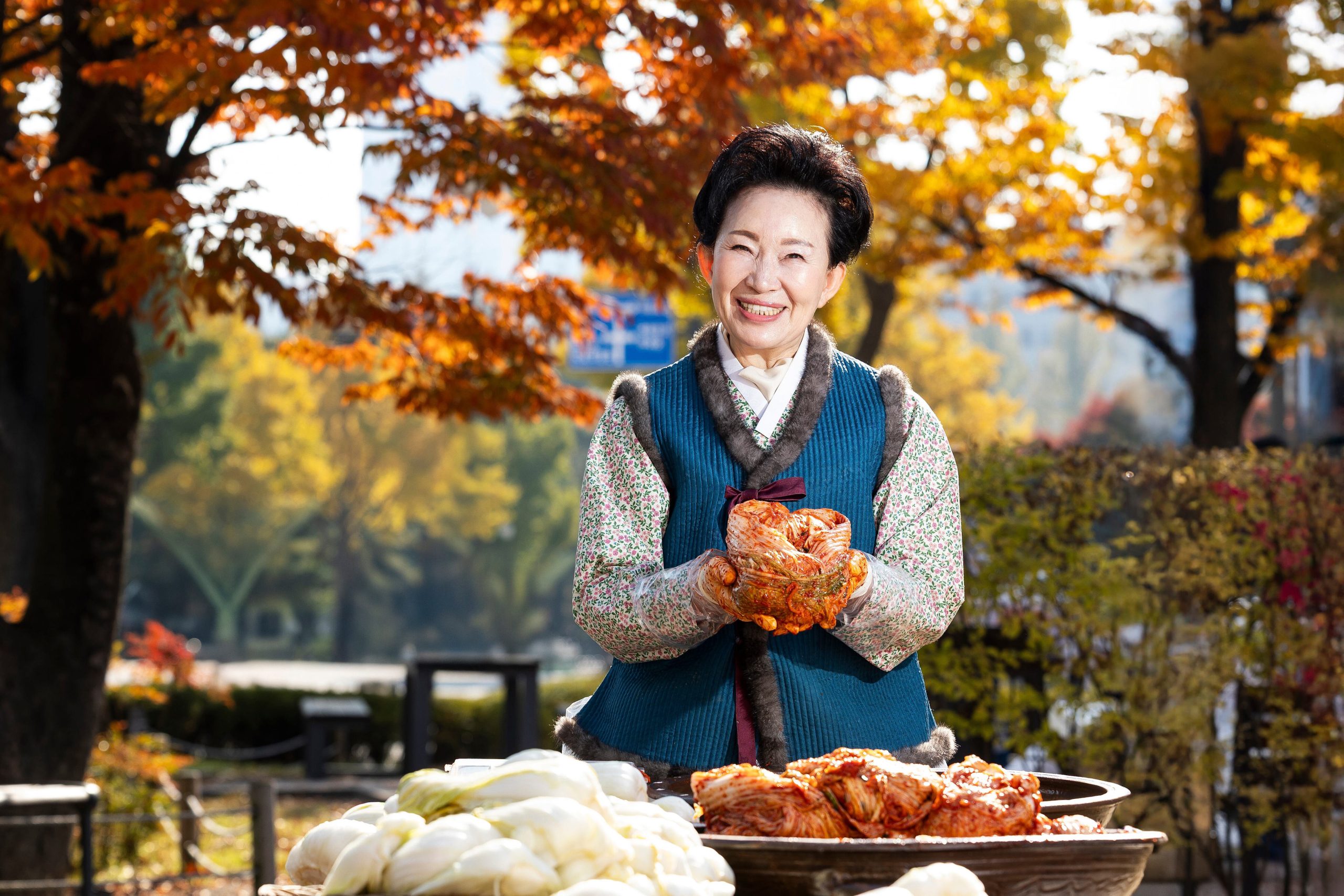
To celebrate the traditional kimchi-making season, a special event called “Half-Price Kimjang” took place on the 4th in front of the National Assembly Communication Hall. Over 30 lawmakers, including National Assembly Speaker Woo Won-shik, Prime Minister Kim Min-seok, and Minister of SMEs and Startups Han Seong-sook, participated in the event. Many of them appeared to be unfamiliar with the process of making kimchi. To guide them, kimchi master Lee Ha-yeon, who is 67 years old, and her disciples stepped in. The master shared, “People call me a kimchi master and the head of the kimchi association, but I prefer to call myself a ‘kimchi evangelist.’ I rush wherever I’m asked to teach kimchi-making.”
Lee Ha-yeon has restored the seafood kimchi “Sutbakji (Seokbakji),” which was mentioned in the Joseon-era text Gyuhap Chongseo and was once presented to the king. She was designated as the 58th Korean Food Master in 2014. Her contributions as the third and fourth chairman of the Korea Kimchi Association were significant in designating November 22 as “Kimchi Day” in 2020. In 2023, kimchi made by this master was delivered as a birthday gift to King Charles III of the UK, and last year, her kimchi was featured in The New York Times.
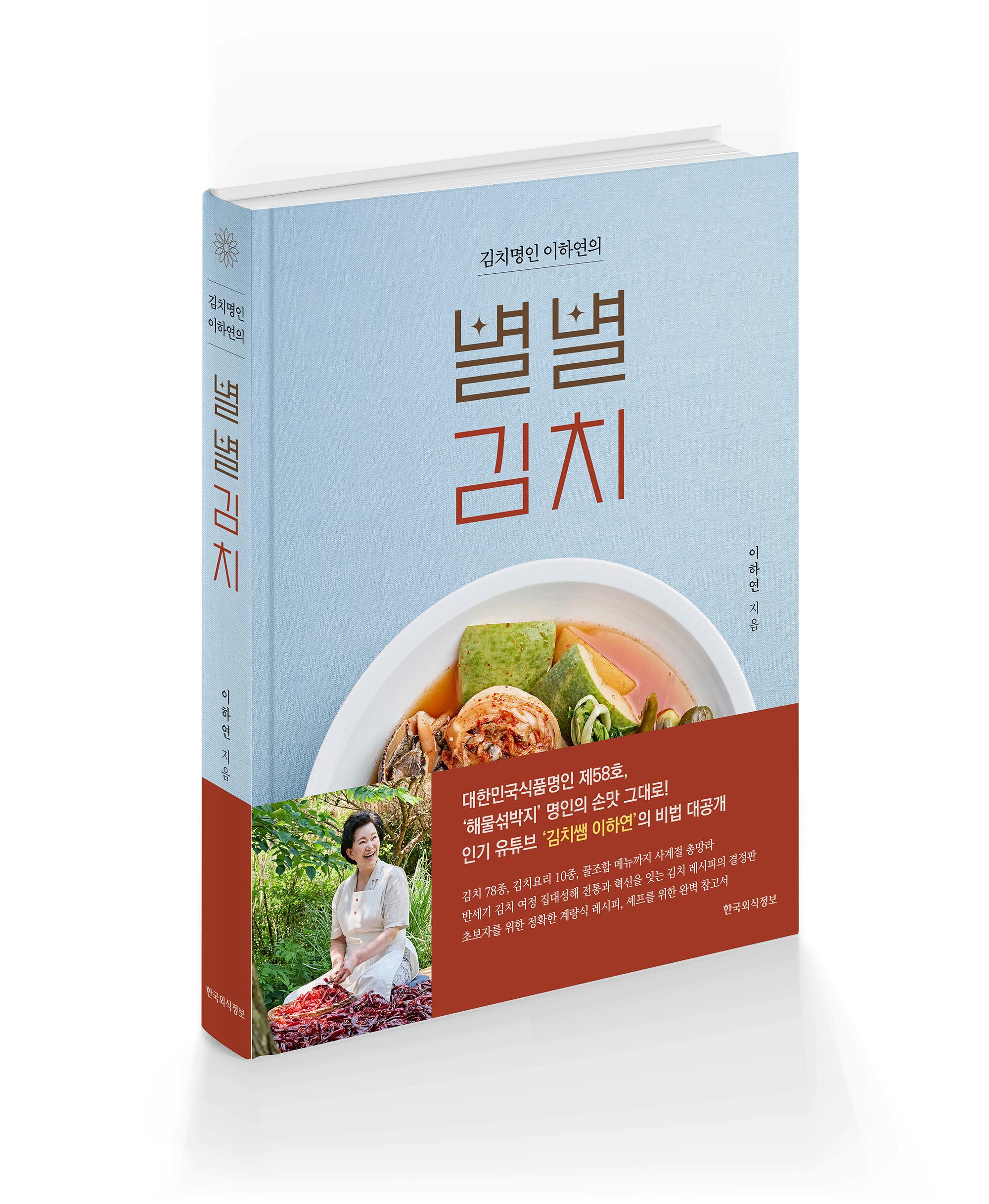
Recently, Lee Ha-yeon published a book titled Byulbyeol Kimchi (Korean Food Information), which contains her lifelong expertise in kimchi-making. The book details 78 types of kimchi, from the seafood seokbakji that made her a master to Seoul and Jeolla-style whole cabbage kimchi, radish sinkengeoji, basil and arugula namul, melon soksongi, and “Charles Kimchi” sent to King Charles III, as well as 10 kimchi-based dishes. She said, “The word ‘kimchi’ still makes my heart race,” and added, “I want to continue making and promoting kimchi until I’m 99 years old and full of energy.”
◇Endless Possibilities, Kimchi
-You made kimchi on your own for the first time in middle school, without your mother’s help.
“I lived with a friend in front of the school. My friend, a study bug, would wake up and study, while I cooked. My friend went to Seoul National University’s College of Pharmacy. I ended up like this (laughs).”
-Did you cook a lot from a young age?
“Cooking was my play. I’d go to the mountains and fields to pick mushrooms and herbs, catch minnows, and make soup with dried radish greens for my father. Friends and I would pick squash from our yard and make pancakes with oil from the miller’s daughter. Making kimchi is still as fun as childhood pretend play.”
-Your mother must have helped a lot.
“As the youngest of nine siblings, I learned kimchi-making and cooking by helping my mother from a young age. I sometimes wondered if I was the only one doing harsh kitchen work. My sisters were all married off, leaving me as the only daughter to help. These experiences became a great asset when I started various food businesses to make a living.”
-Your grandmother and mother had great taste, they say.
“My grandmother was busy helping neighbors during kimchi season before marriage. My mother, known for her cooking skills, inherited kimchi and jeotgal recipes from her, especially excelling in seafood kimchi.”
-You’ve been making kimchi for 53 years. Doesn’t it get boring?
“Kimchi is the most fun among foods. It’s so diverse—any ingredient can become kimchi. It’s limitless, making it a creative endeavor. I once made baek kimchi with pine mushrooms, reducing garlic to highlight their aroma. The mushroom scent blooms subtly as the kimchi ferments, which is fascinating. ‘Minyeo Kimchi’ made with summer croaker is also delicious.”
-What is “Charles Kimchi”?
“I have a British kimchi disciple, Justina Jang, founder of the Korea-Britain Cultural Exchange (KBCE). In 2023, she contacted me: ‘King Charles III will visit a Korean town in New Malden, southwest London—the first royal visit to a Korean town. We want to gift kimchi. Can you make some?’ After a kimchi festival in the provinces, I bought cabbages at 10 p.m., salted them in Seoul, and made kimchi from 6 a.m. to deliver it by noon to someone taking it to the UK.”
-How does it differ from regular kimchi?
“Since he doesn’t eat spicy food, I reduced gochugaru and used roasted garlic. I minimized fishiness by using boiled shrimp jeotgal broth. Abalone added a luxurious umami. Though I didn’t hear his review, it was rewarding to have our kimchi enter the British royal family.”
-You introduced kimchi made with basil, arugula, and mini cabbage—vegetables typically eaten as salads.
“All vegetables in the world can become kimchi. To globalize kimchi, it should be made with locally available ingredients.”
◇Why Koreans Eat Less Kimchi
Kimchi, a globally recognized health food, is consumed less in its homeland, South Korea. Fewer households make kimchi in large quantities or at all.
-Why do people eat less kimchi?
“Because it doesn’t taste good. Children avoid it for the same reason. When I was young, kimchi was truly delicious.”
-Why has kimchi lost its flavor?
“Researching kimchi history, I found it was most elaborate in the 1800s, using pheasant, beef, abalone, and octopus. During Japanese occupation, kimchi became simpler, like Japanese pickled radish. Post-Korean War, kimchi quality declined due to poverty. As the economy recovered, imported kimchi flooded restaurants—a heartbreaking trend.”
-What about homemade kimchi?
“Ingredients make 80% of kimchi. When asked for secrets, I say, ‘No secret is the secret.’ Good ingredients create flavor naturally. The crisp, refreshing taste develops during fermentation—no need for artificial additives like soda or plum syrup. Kimchi isn’t a crude dish.”
-How to choose ingredients?
“Cabbage should have vibrant green, elastic leaves, and be 2.5–3.5 kg. Well-dried chili peppers are glossy, with few seeds and a crisp sound when shaken. The skin should be thick, sweet, and spicy. Good jeotgal, made with aged salt, tastes salty upfront but sweet afterward. Shrimp and akjeot create cleanliness; anchovy or hwangseokeo jeotgal add depth. Salt should be aged over three years, milky-white, granular, and crumble without sticking.”
-Many young people find kimchi-making daunting.
“Buy salted cabbage and make one head. Skipping salting simplifies the process. Kimjang’s scale intimidates people, but starting with one head lightens the burden. You’ll find it easier than expected.”
Recipes for Charles Kimchi, Basil Namul, and Arugula Namul
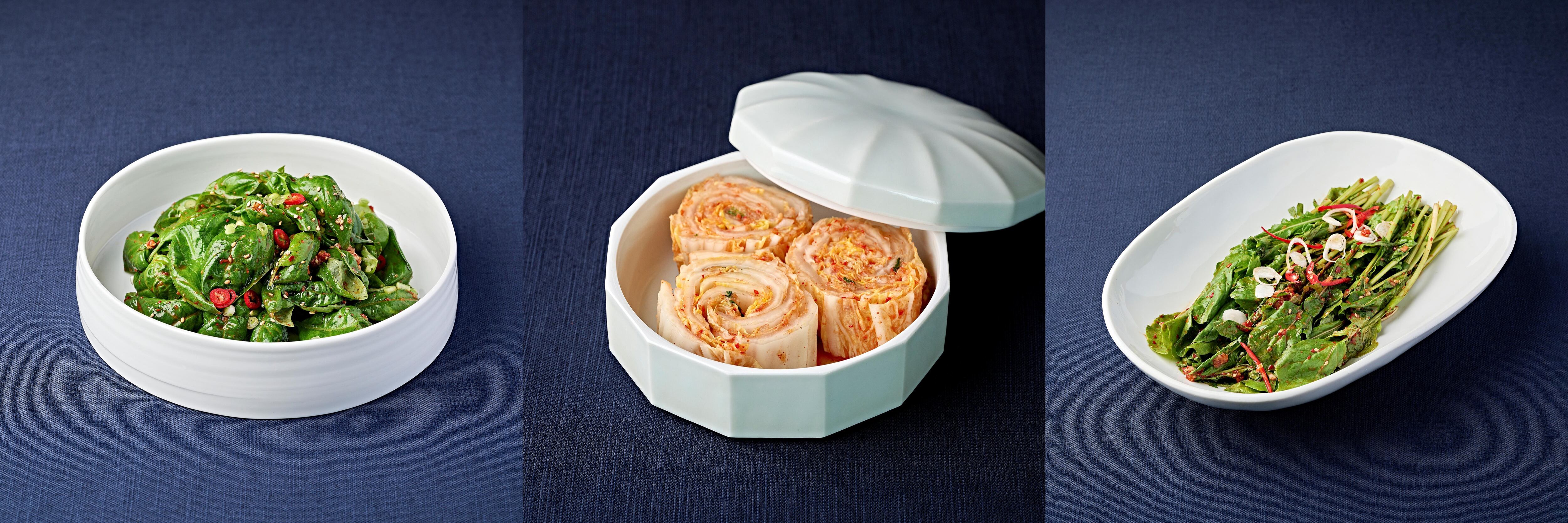
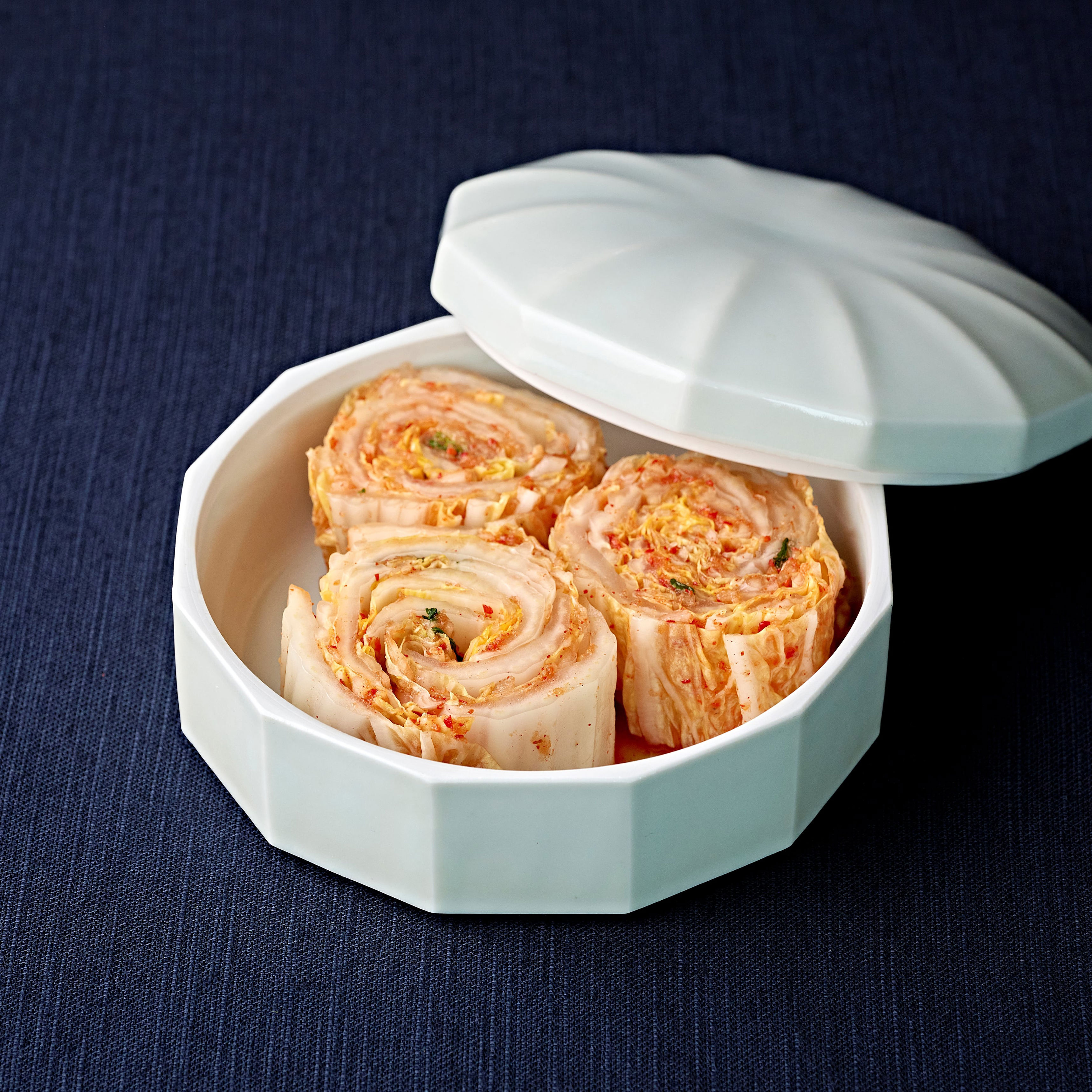
Charles Kimchi
5 kg salted napa cabbage, 1 kg radish, 1 kg Asian pear, 60 g chives, 60 g mustard leaves, 40 g water celery, 4 fresh abalones
Seasoning: 800 g kelp water, 200 g glutinous rice porridge, 100 g shrimp sauce, 100 g garlic, 10 g ginger, 100 g gochugaru, 60 g solar salt
- Drain salted cabbage for 3 hours, cut-side down.
- Boil kelp water, add abalones and garlic. Remove abalones once cooked; cool the broth.
- Blend cooled broth with porridge, shrimp sauce, and ginger.
- Mix in gochugaru and season with solar salt to make the paste.
- Julienne radish and pear; chop chives, mustard leaves, and water celery into 3–4 cm pieces.
- Combine vegetables with the paste to form kimchi filling.
- Layer filling between cabbage leaves, wrap with outer leaves, and pack into a container.
- Cover with cabbage leaves, press down, and ferment at room temperature for 2–3 days before refrigerating.
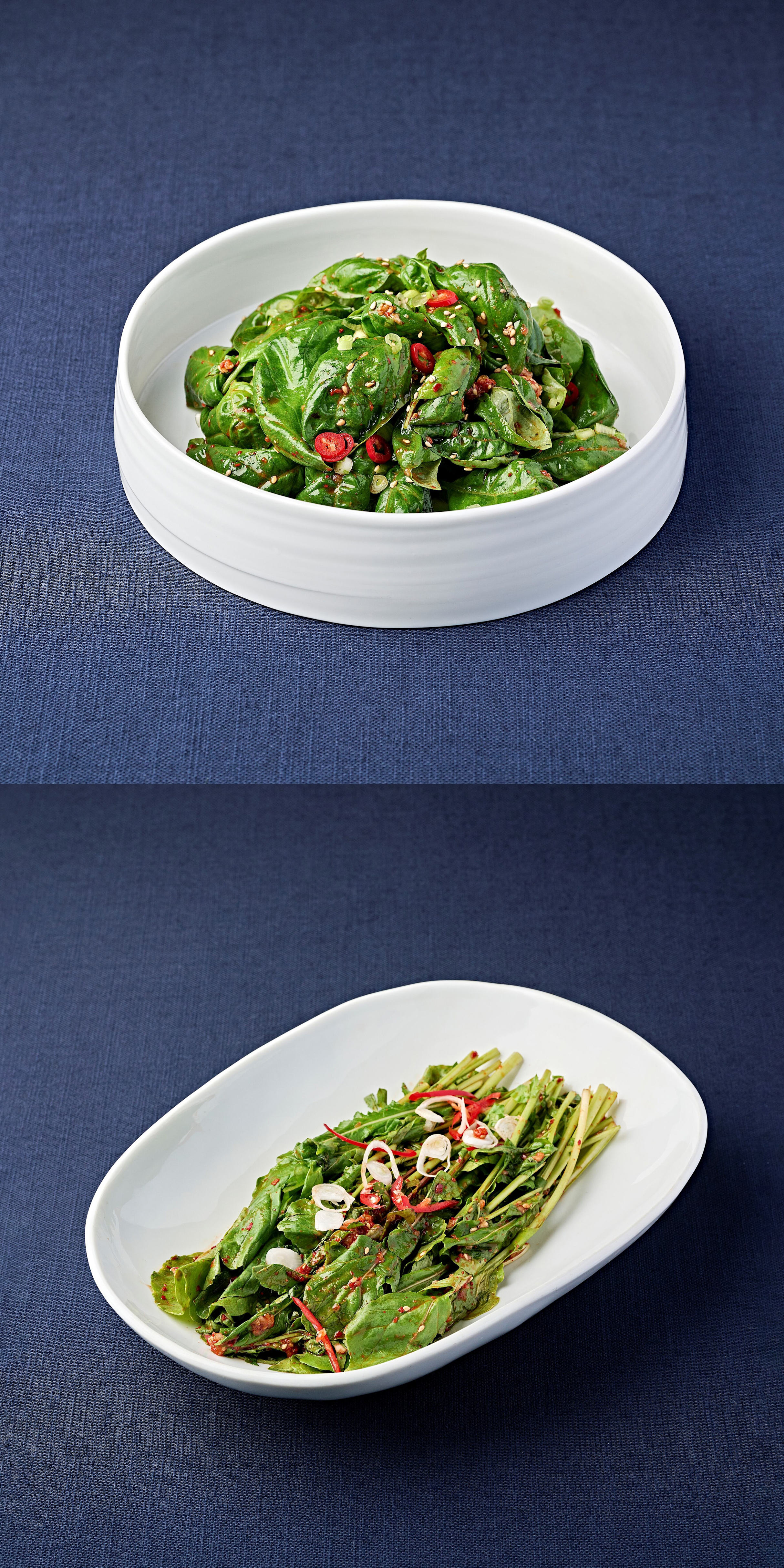
Basil Namul
150 g basil, 1 L water + 15 mL vinegar (vinegar water), 5 g red chili
Seasoning: 10 g gochugaru, 15 mL anchovy sauce, 5 g minced garlic, pinch of sesame seeds
- Soak basil in vinegar water for 3 minutes, rinse 2–3 times, and drain.
- Slice red chili into rings.
- Mix gochugaru, anchovy sauce, and garlic for seasoning.
- Toss basil and chili with seasoning; plate and sprinkle sesame seeds.
Arugula Namul
300 g arugula, 30 g chives, 10 g green chili, 10 g red chili
Seasoning: 15 mL soy sauce, 15 mL anchovy sauce, 30 mL kelp water, 10 g gochugaru, 15 g minced garlic, 15 mL sesame oil, 10 g sesame powder
- Wash arugula and drain.
- Julienne green and red chilies.
- Mix all seasoning except sesame oil and powder. Toss with arugula and chilies, then add sesame oil and powder.
Long arugula stems can be halved before mixing.