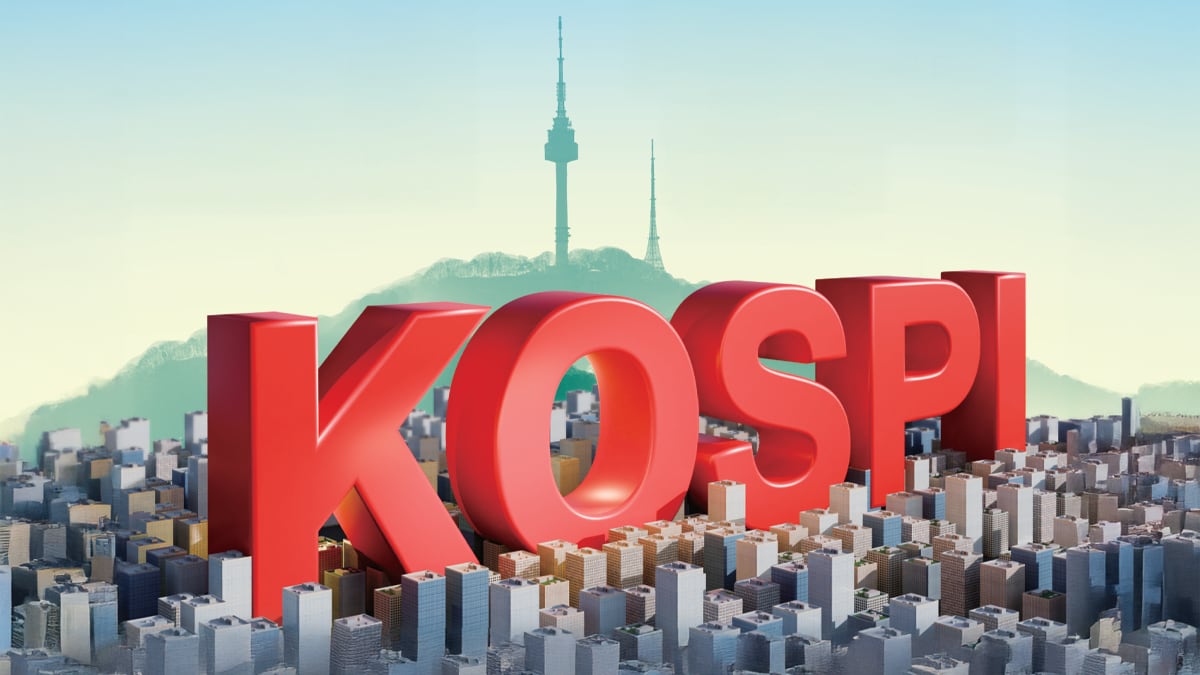
The Rise of the Kospi 200: A New Era for South Korean Investors
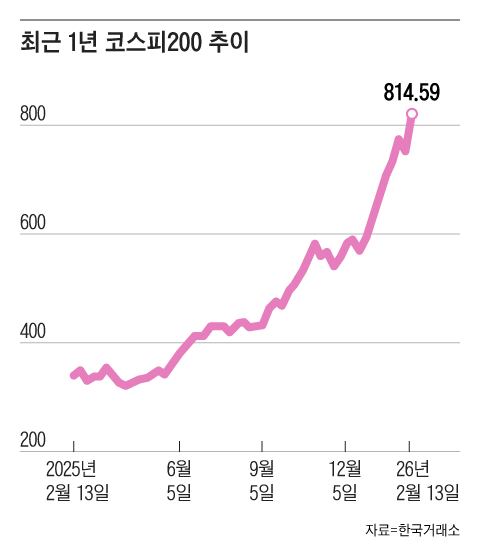
Last year alone, the Kospi 200 surged by 95%, recording historic returns, and this year it has already jumped by 34%. Since this is not an individual stock but a representative index, isn’t this the “money-copying machine ETF”? Such exclamations are frequently heard among individual investors these days. Investors who painstakingly selected promising stocks day and night have seen much lower returns compared to those who simply bought the index and waited patiently.

Investors’ attention has turned to the Kospi 200, South Korea’s flagship stock index. Major overseas media outlets, including Bloomberg and Nikkei, have also recently highlighted the Kospi 200’s high returns and the strong performance of the South Korean stock market.
The Kospi 200 is an index created by carefully selecting 200 high-quality stocks representing the securities market, including Samsung Electronics and SK Hynix. It is a “dream team” of the South Korean stock market, comprising only the most elite companies with market dominance and liquidity among the approximately 840 companies listed on the Kospi.
In particular, the Kospi 200’s upward momentum has been bolstered as foreign funds flowed into large-cap stocks amid expectations of a recovery in the semiconductor industry. According to Bloomberg, the two semiconductor giants drove 52% of the Kospi’s gains over the past year. Some individual investors have lamented, “I struggled to pick stocks, but I should have just invested in the index.”
Focus on Kospi 200 ETFs, Even Held by the President
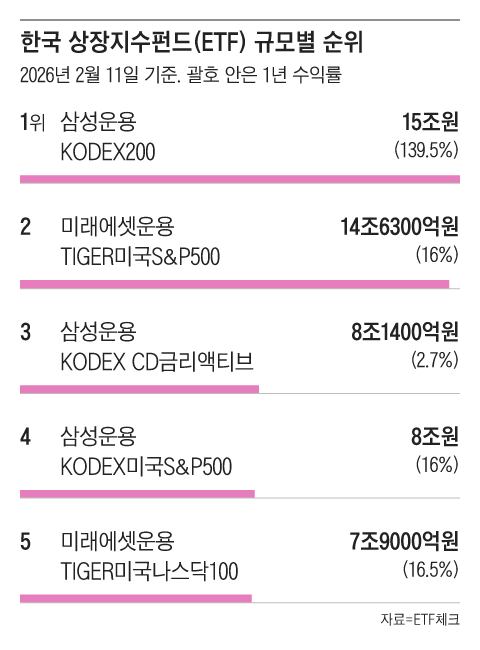
ETFs based on the Kospi 200 are currently offered by most domestic asset management companies. Their names include the number “200.” Among them, Samsung Asset Management’s KODEX200 ETF and Mirae Asset Global Investments’ TIGER200 ETF, which track the Kospi 200, have gained the nickname “president ETFs” and are enjoying a surge in subscriptions.
President Lee Jae Myung, during his presidential campaign last May, unveiled a plan to invest in the domestic stock market while pledging to reach a Kospi 5,000. He announced that he would invest 20 million Korean won in a lump sum in Samsung Asset Management’s KODEX200 ETF and 1 million Korean won monthly for five years, totaling 60 million Korean won, in Mirae Asset Global Investments’ TIGER200 ETF through a savings plan. At the time, President Lee mentioned on a broadcast, “By the time I leave office, the returns will likely be quite high.”
In reality, the KODEX200 ETF, into which President Lee Jae Myung invested 20 million Korean won in a lump sum, is estimated to have risen by over 132% since purchase, with an estimated valuation gain exceeding 26 million Korean won (excluding dividends). The profit has surpassed the principal investment.
When President Lee Jae Myung publicly disclosed his subscription to the KODEX200 ETF last year, its net assets were around 6 trillion Korean won. Although it was the first ETF launched in South Korea in 2002, its scale was not large compared to its age. This was perhaps natural given the domestic stock market’s prolonged sideways movement, which earned it the label “box range.”
However, a surprising turnaround followed. The KODEX200 ETF’s assets under management have now swelled to 16 trillion Korean won, making it the largest listed ETF in South Korea. Its major holdings include Samsung Electronics (30.5%), SK Hynix (18.2%), Hyundai Motor (2.5%), KB Financial (2.0%), and SK Square (1.9%). While trading is convenient due to high liquidity, its actual cost burden of 0.19% is relatively high compared to competitors.
Low-Cost ETFs More Advantageous for Long-Term Investment
Kospi 200-tracking ETFs are mechanically managed to follow the index. Therefore, the holdings and returns of individual products are similar. However, actual costs borne by investors range from a high of 0.19% to a low of 0.04%. If investing 100 million Korean won, the annual fees would differ by approximately 150,000 Korean won, ranging from 40,000 to 190,000 Korean won.
Generally, products launched by later asset management companies tend to have lower fees. Hana Asset Management’s 1Q 200 Active ETF recently reduced the cost borne by investors to 0.04%, the lowest among domestically listed Kospi 200-based ETFs.
According to Hana Asset Management, assuming an annual return of 20% on a 100 million Korean won investment in a Kospi 200-tracking ETF, a 0.15 percentage point difference in costs could lead to an asset gap of up to 1.2 billion Korean won after 30 years. The explanation is that cost differences are magnified through compounding effects over the long term.
Note that Kospi 200-tracking ETFs with “TR (Total Return)” automatically reinvest dividends. Since dividends (1–1.5%) are reinvested rather than received, their long-term returns are slightly higher than regular Kospi 200 ETFs. Currently, nine asset management companies offer such products, with Samsung Asset Management’s KODEX200TR ETF (approximately 5.472 trillion Korean won) being the largest. Its one-year return is around 145%.
Kospi 200 Rally… the Party Isn’t Over Yet
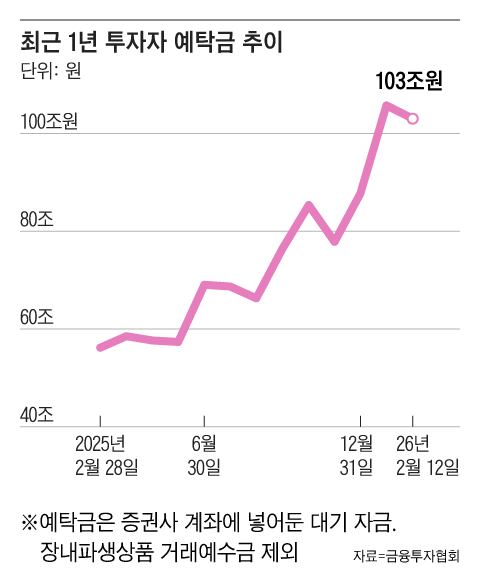
Investing in the Kospi 200 is a representative strategy to avoid the burden of selecting individual stocks and ride the growth of the South Korean economy. However, some worry, “Hasn’t it already risen too much?” Will the market continue to favor index investors?
Park Jin-hwan, CEO of V Asset Management, said, “The South Korean stock market has entered a phase of structural growth led by the semiconductor sector. There are forecasts in the investment community that the combined operating profit of Samsung Electronics and SK Hynix could approach 200 trillion Korean won this year.” He added, “It is clear that the domestic stock market’s earnings capacity is stronger than ever before.”
Kang Dae-kwon, CEO of Life Asset Management, stated, “Last year, a mechanical investment strategy in representative indices like the Kospi 200 was effective. However, starting this year, gaps between asset classes, countries, sectors, and individual stocks are likely to widen, making stock-picking capabilities crucial.” Kang mentioned he is seeking opportunities in governance-related stocks currently undergoing re-rating.
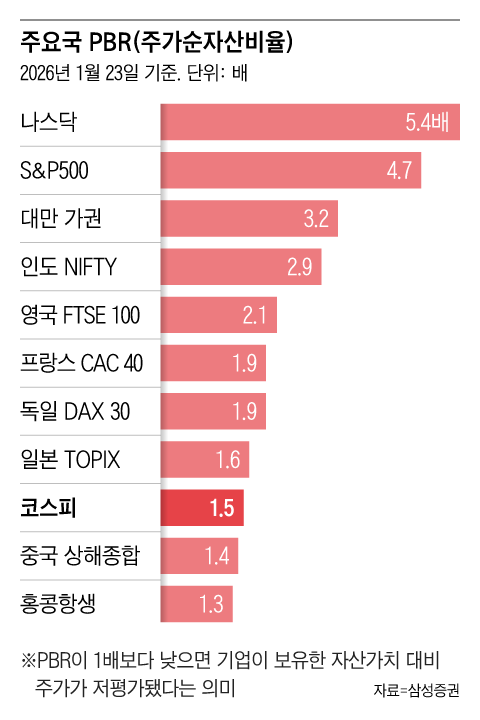
Some advise, “Don’t dismount from a running horse too early.” At least until the first half of the year, it is necessary to monitor the trend. However, once signals of a “peak-out”—where corporate profits reach their peak—begin to emerge, experts note that investment strategies should be re-evaluated.
Kim Joon-young, a researcher at iM Securities, analyzed in a recent report titled “Do Buy Kospi,” “During the semiconductor supercycle of 2016–2017, Kospi earnings forecasts were rapidly revised upward, but the market entered a sideways phase as growth slowed. If signs of weakening market confidence in earnings estimates appear in the second half of the year, this could signal a shift in the market’s direction.”
월 5900원 멤버십, 신문 독자에게는 2900원, 조선멤버십
55000원 상당의 신문-잡지 8종 마음껏 보기, 조선멤버십
현금처럼 쓸 7000포인트 받아 알뜰한 쇼핑, 조선멤버십