The Urban Challenge of Lagos
Lagos, the vibrant heart of Africa’s urban civilization, is a city that never seems to sleep. With a population exceeding 22 million, it stands as a testament to the dynamism and complexity of modern African cities. Its sprawling highways, elevated flyovers, and bustling commercial corridors are constantly alive with a diverse array of vehicles, pedestrians, and entrepreneurial activity. This relentless energy underpins Nigeria’s economic engine but also presents a recurring challenge: urban gridlock, which daily tests the patience and resilience of its citizens.
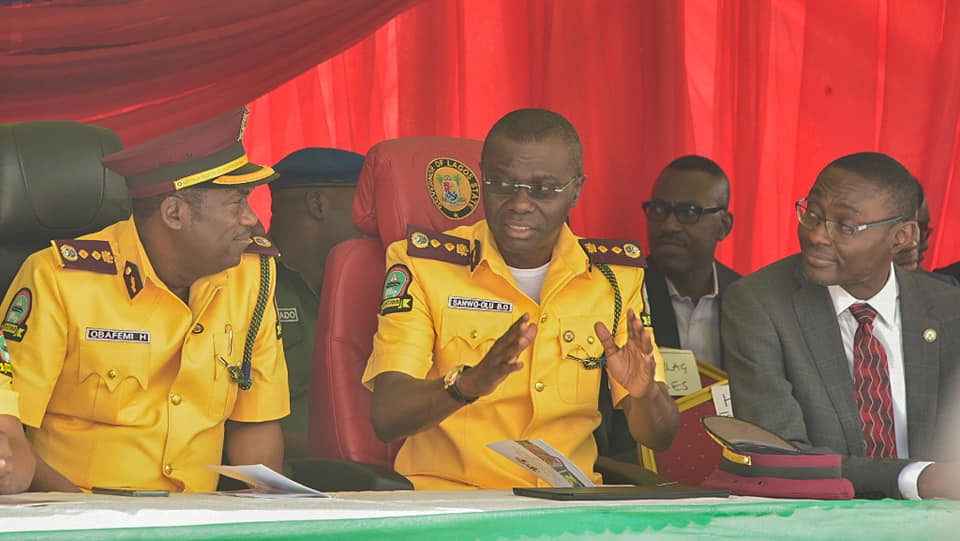
Managing this intricate web of human and vehicular movement is no small task. It requires discipline, innovation, and a strong culture of civic responsibility. For decades, the Lagos State Traffic Management Authority (LASTMA) has been at the forefront of this effort. Its officers, easily identifiable in their mustard-yellow uniforms, have become symbols of order amidst the city’s often chaotic streets.
A New Approach to Traffic Governance
As Lagos continues to expand and vehicle numbers surge beyond expectations, LASTMA’s mandate becomes increasingly challenging. Enforcement alone is no longer sufficient. Recognizing this, the General Manager of LASTMA, Mr. Olalekan Bakare-Oki, introduced a groundbreaking initiative: the establishment of LASTMA Media Mayors. These civic ambassadors are not just symbolic figures; they are tasked with amplifying LASTMA’s communications, supporting operations, and acting as a bridge between the public and the agency.
Launched with great fanfare at LASTMA headquarters in Oshodi, Lagos, the initiative has been hailed as a transformative milestone in Nigeria’s urban transportation narrative. Under Bakare-Oki’s leadership, LASTMA has undergone a renaissance, implementing measures that go beyond traditional enforcement. The introduction of a toll-free hotline and the use of drone technology for real-time traffic monitoring have revolutionized congestion management. His tenure has also seen enhanced advocacy campaigns, improved officer training, and deeper community engagement.
The Role of Social Capital
Bakare-Oki understands that technology and enforcement alone cannot fully address Lagos’ traffic challenges. Equally important is social capital—the power of communication, persuasion, and citizen participation. This insight led to the creation of the LASTMA Media Mayors, who serve as advocates, educators, and feedback channels.
The media mayors are not substitutes for uniformed officers but complementary agents, bridging the gap between the agency and the millions of Lagosians whose lives are shaped by urban traffic. Their responsibilities include traffic advocacy, acting as a feedback mechanism, and embedding themselves within the social fabric of Lagos.
Advocacy and Feedback
In his keynote address at the induction ceremony, Bakare-Oki outlined the duties of the Media Mayors. They are to amplify LASTMA’s voice through various platforms, embed road safety principles into Lagosian life, and act as the “eyes and ears” of the agency within communities. This two-way communication transforms LASTMA into a more adaptive and responsive institution.
The mayors are expected to engage with markets, religious institutions, transport unions, and youth organizations, ensuring that traffic awareness becomes a shared, community-owned creed. Beyond communication, they must personify LASTMA’s values of professionalism, integrity, and service.
During high-traffic seasons, the mayors will bolster LASTMA’s efforts through roadshows, town hall engagements, and broadcast programs. Their involvement aims to reinforce safe driving practices and reduce accidents.
A Collaborative Effort
Bakare-Oki emphasized that the media mayors are not substitutes for uniformed officers. The men and women in yellow remain the backbone of traffic enforcement, stationed across intersections and thoroughfares. Rather, the mayors act as partners in persuasion, mitigating the friction between enforcement and compliance.
Through explanation, mediation, and storytelling, they foster voluntary compliance, the most sustainable form of civic order. The formalization of feedback as a strategic policy instrument is a significant feature of the initiative. Historically, public agencies in Nigeria have struggled to institutionalize genuine two-way communication. The media mayors rectify this by collating public sentiments, identifying bottlenecks, and highlighting innovative suggestions.
Impact and Future Prospects
Analysts believe the initiative could recalibrate Lagosian civic consciousness in profound ways. From enforcement to cooperation, the transformation of traffic governance into a shared civic responsibility is a key goal. A data-driven LASTMA, structured feedback loops, and enhanced public trust are among the potential outcomes.
Voices at the induction ceremony praised the initiative. One newly inducted mayor described the role as “a civic priesthood, mediating between the imperatives of law and the lived realities of the people.” Transportation analysts lauded the agency for embracing participatory governance, noting that global megacities thrive in traffic management only when citizens are actively engaged.
Ordinary Lagosians expressed cautious optimism, appreciating the potential of the mayors to clarify regulations and bridge understanding between the public and enforcement officers.
A Bold Experiment in Civic Partnership
The induction of the LASTMA Media Mayors transcends administrative innovation; it is a bold experiment in democratic civic partnership. It embodies Bakare-Oki’s conviction that the future of Lagos traffic management lies in the synergy of law, advocacy, and citizen participation.
By entrusting the media mayors with dual responsibilities of advocacy and feedback, LASTMA has effectively democratized traffic governance, sowing the seeds of a collective civic order. The initiative underscores a timeless truth: road safety is not the burden of uniformed officers alone but a shared societal creed.
As these civic stewards embark upon their mandate, Lagosians will watch attentively not merely to witness how they amplify LASTMA’s voice, but how they embody its vision of a safer, more disciplined, and harmonious metropolis. Should this initiative flourish, it may well serve as a model for other Nigerian cities and a global exemplar of urban civic partnership in traffic governance.


