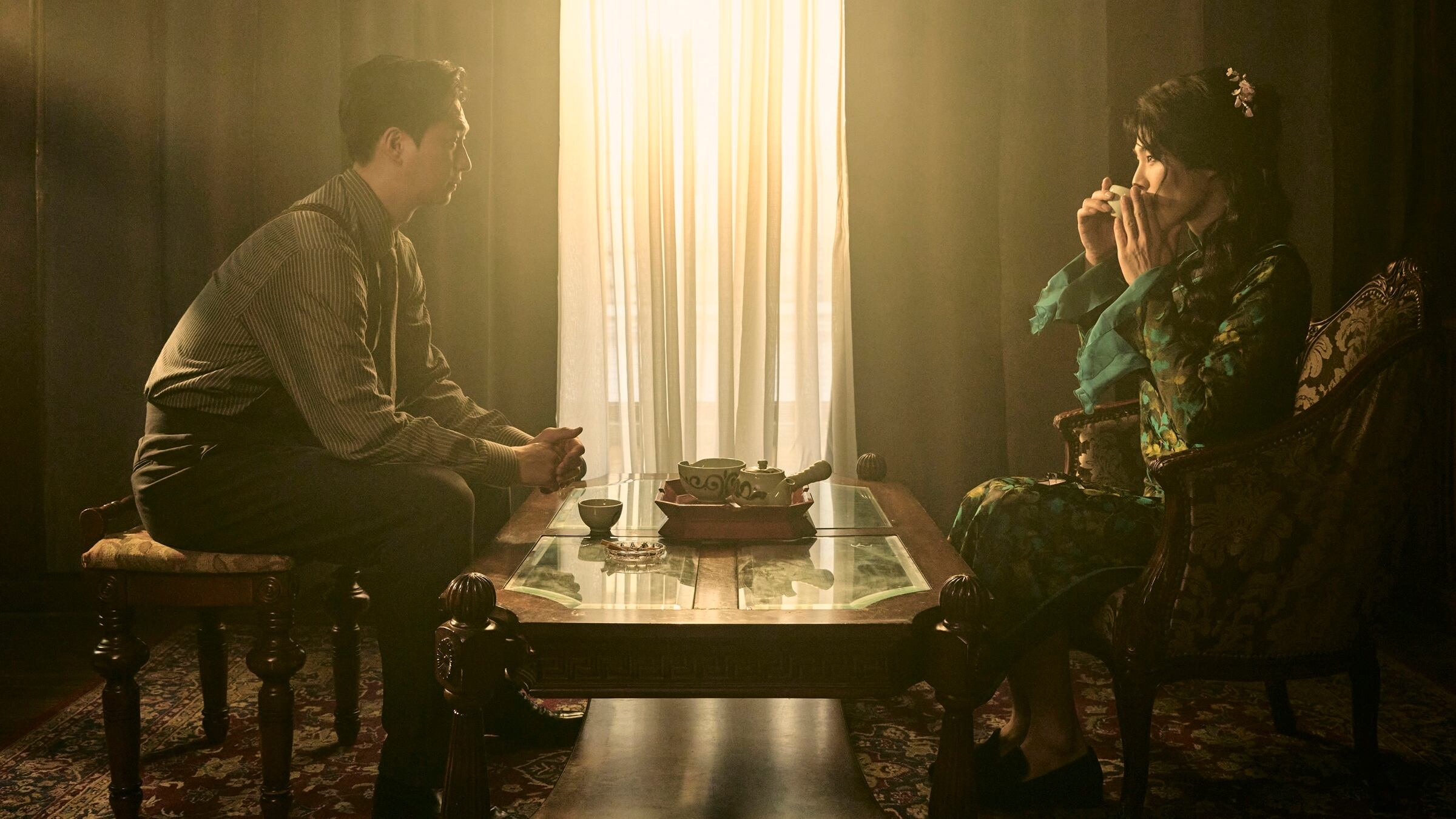
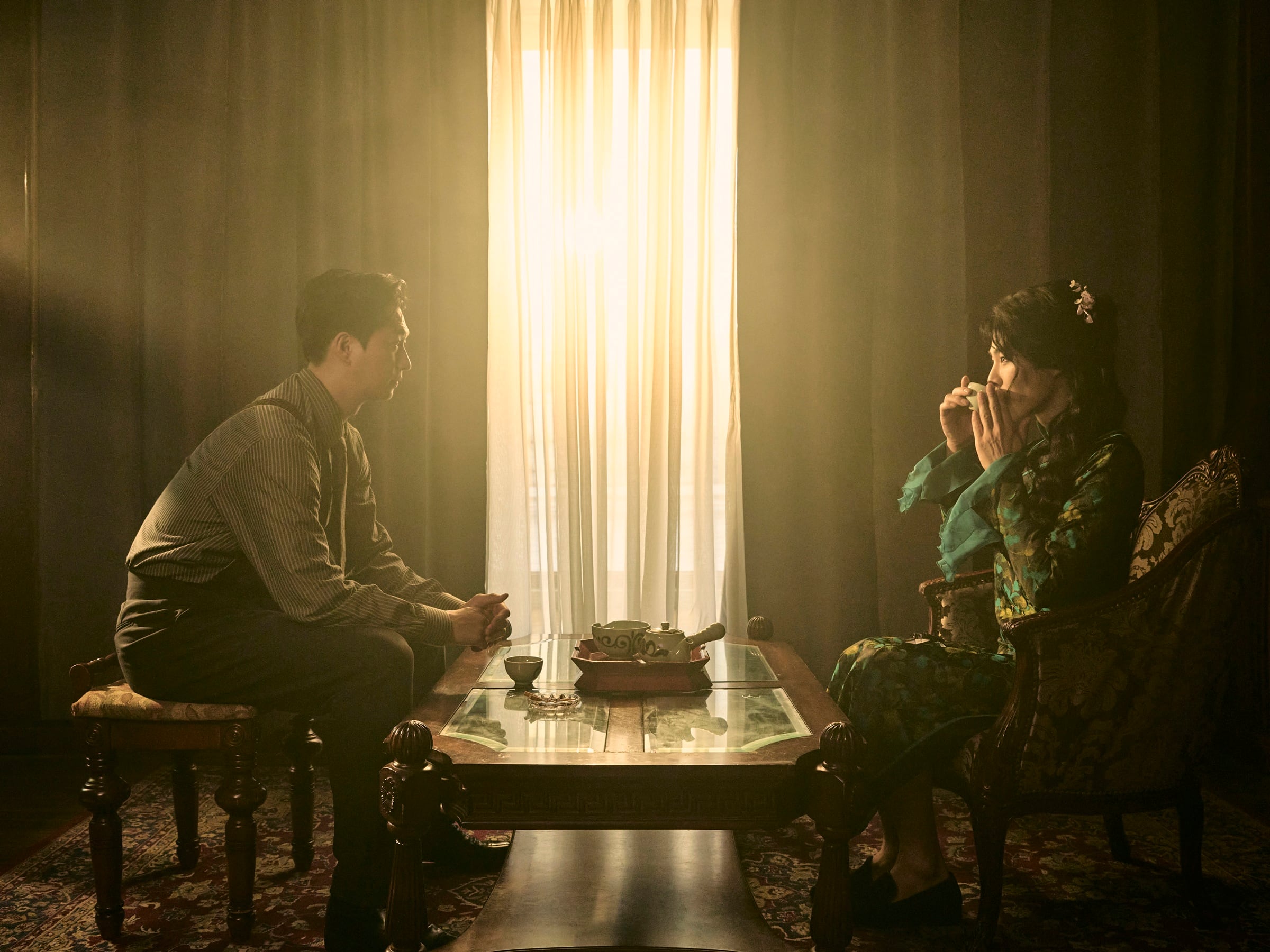
The fascination that changes a life strikes like lightning. But is this love directed at the person, or an illusion created within oneself?
In the 1960s, during the height of the Cold War, René Gallimar, a French consulate employee in Beijing, falls for Song Liling, a mysterious Peking opera actress who plays the lead in the opera *Madama Butterfly*. What he thought was a secret, perfect love… the hidden horrific truth eventually surfaces. This is *M. Butterfly*, famous for its shocking twist ending.
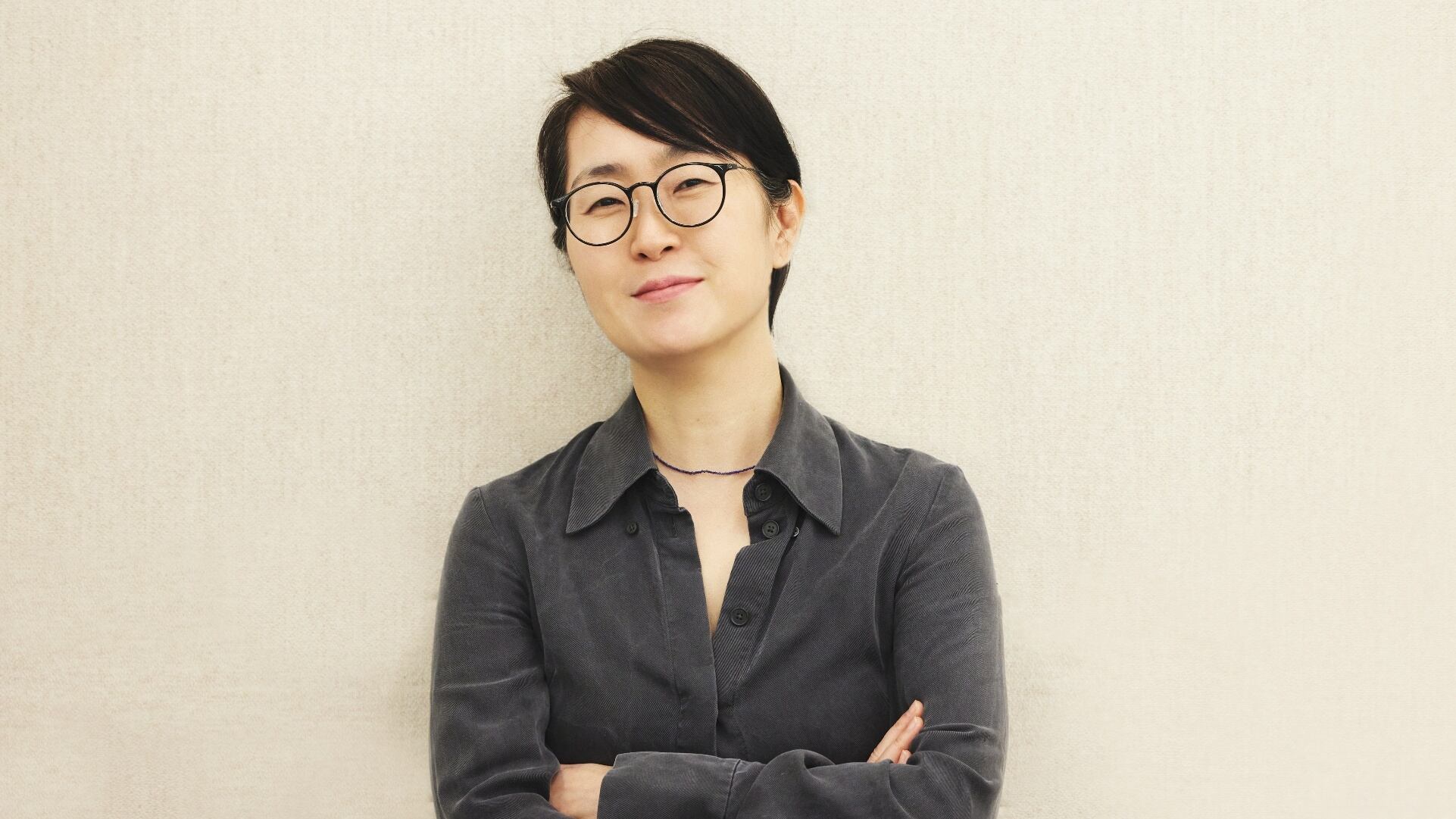
After over 40 years of global acclaim, *M. Butterfly* has been reborn as a musical by a Korean creative team and premiered on September 22 at the YES24 Stage in Seoul’s Daehakro. While playwright David Henry Hwang, 71, a Chinese-American Columbia University distinguished professor, previously adapted his play into an opera, this musical adaptation is the world’s first attempt 38 years after the original play. We met playwright Jeong Eun-bi, who wrote the musical’s script and lyrics, and director Kim Min-jung.

◇Why Did He Believe the Illusion to Be the Truth?
The work, which set a long-running record on Broadway after its 1988 premiere and won the Tony Award for Best Play, was also a Pulitzer Prize finalist. The 1993 film starring Jeremy Irons and John Ron is widely known, and the play has been performed in Korea five times since 2012. Hwang himself introduced this Seoul production as the first musical version of the work on his official website.
The real twist of *M. Butterfly* lies not in the widely known fact that Song Liling is a man, but in why René believed his desired love to be the truth for so long. The musical *M. Butterfly* delves into this question through song and dance.
Jeong Eun-bi, who wrote the script and lyrics, said, “There was never an intention to completely disguise Song as a woman.” “I think the focus is not on how Song deceived but why René was deceived. After all, people might only see what they want to see.” The musical retains the original’s themes of Orientalism, imperialism, and gender issues from the 1980s but dives deeper into the ‘desire’ beneath them. Jeong added, “Whether it’s a foreigner, family, or someone close, people project their desires onto others and create illusions. Thinking about what would resonate most with Korean audiences, I focused more on individual desire and illusion, even as an Asian woman myself.”
◇‘Song’ Gains a Voice in the Musical
The character who changed the most in the musical adaptation is the Peking opera actor Song Liling. Jeong said, “Song becomes the second narrator.” While the original play and stage version are closer to a ‘theater of memory’ where René, the imprisoned French diplomat, reenacts his past, the musical sees Song actively intervening in the story driven solely by René.
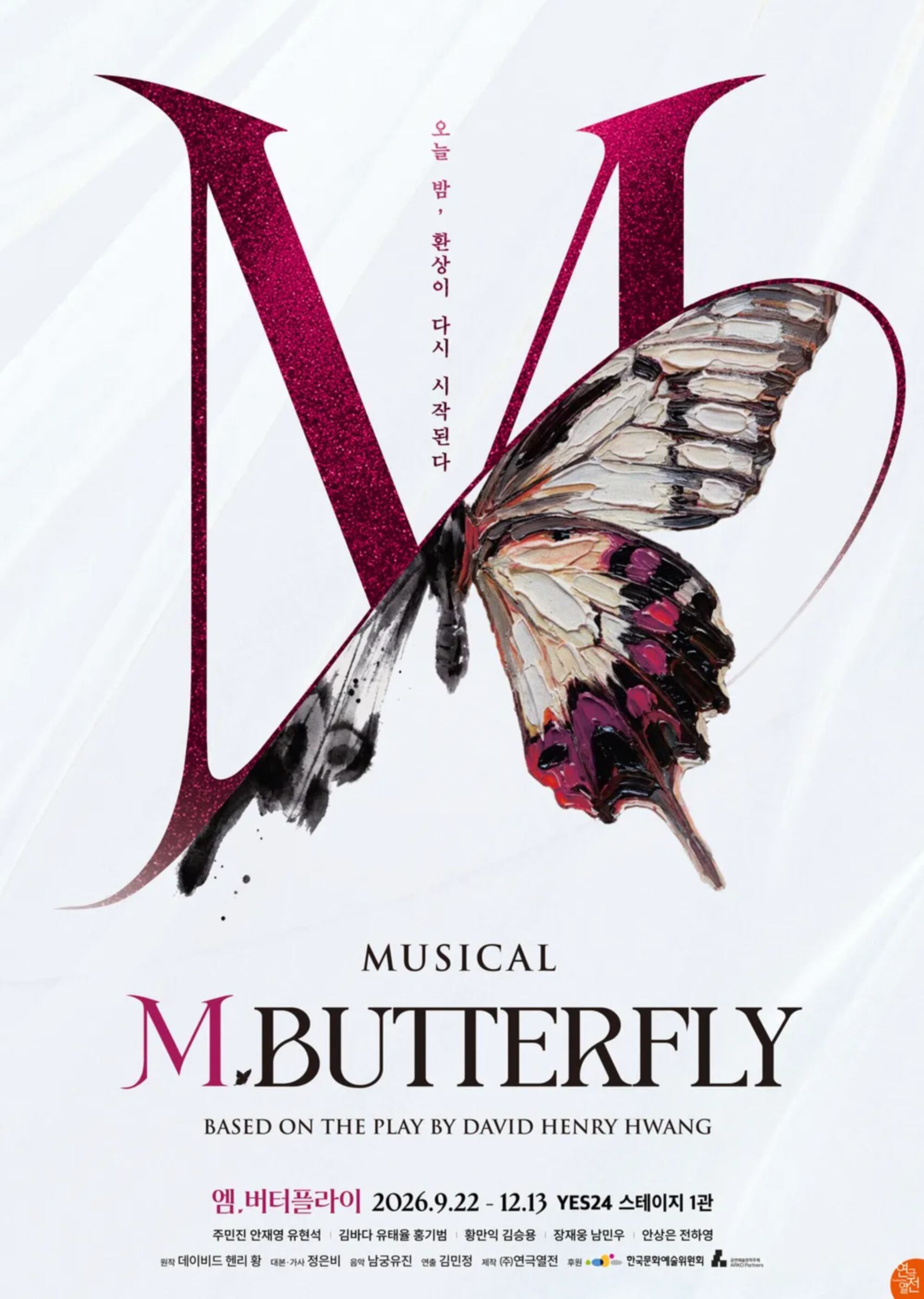
If Puccini’s *Madama Butterfly* symbolizes René’s illusion, Song’s story overlaps with the Chinese folktale and Peking opera *Butterfly Lovers*. In *Madama Butterfly*, the Eastern woman sacrifices herself for a Western man, but in *Butterfly Lovers*, the lovers become butterflies and fly together after death.
If one assumes the musical merely sets the original’s dialogue to melodies, that would be a mistake. Jeong said, “For the scene where René and Song first make love and the jazz-infused ‘Dance in the Dark,’ I imagined it on a musical stage long ago.” Director Kim described the difference between play and musical as a “difference in the way one contemplates.” “While a play makes one contemplate discourse through characters’ words, a musical makes one contemplate visually and aurally. The elegant and sophisticated face of French imperialism flows through swing rhythms, and the collective energy of China’s Cultural Revolution is expressed through intense percussion and rhythms that push forward.” Though classical, rock, jazz, string, and Eastern instruments are mixed, the musical avoids another Orientalist cliché by not simply categorizing music by race.
◇‘Pinkerton’ Gains a Body in the Musical
A character who gained a new physical presence in the musical adaptation is Pinkerton, an American officer from *Madama Butterfly*. In the original, he was a masculine illusion onto which René projected himself, but the creators brought him onto the stage as a full character.
Jeong described Pinkerton as “a figure who externalizes René’s pathetic desires that he doesn’t want to acknowledge.” René initially imagines himself as Pinkerton and tries to possess a woman like *Madama Butterfly*, but when he fails to achieve that illusion, he becomes *Madama Butterfly* himself. Pinkerton sometimes seduces, mocks, and provokes René. Director Kim added, “He could be cunning, sexy, or even resemble Mephistopheles.”
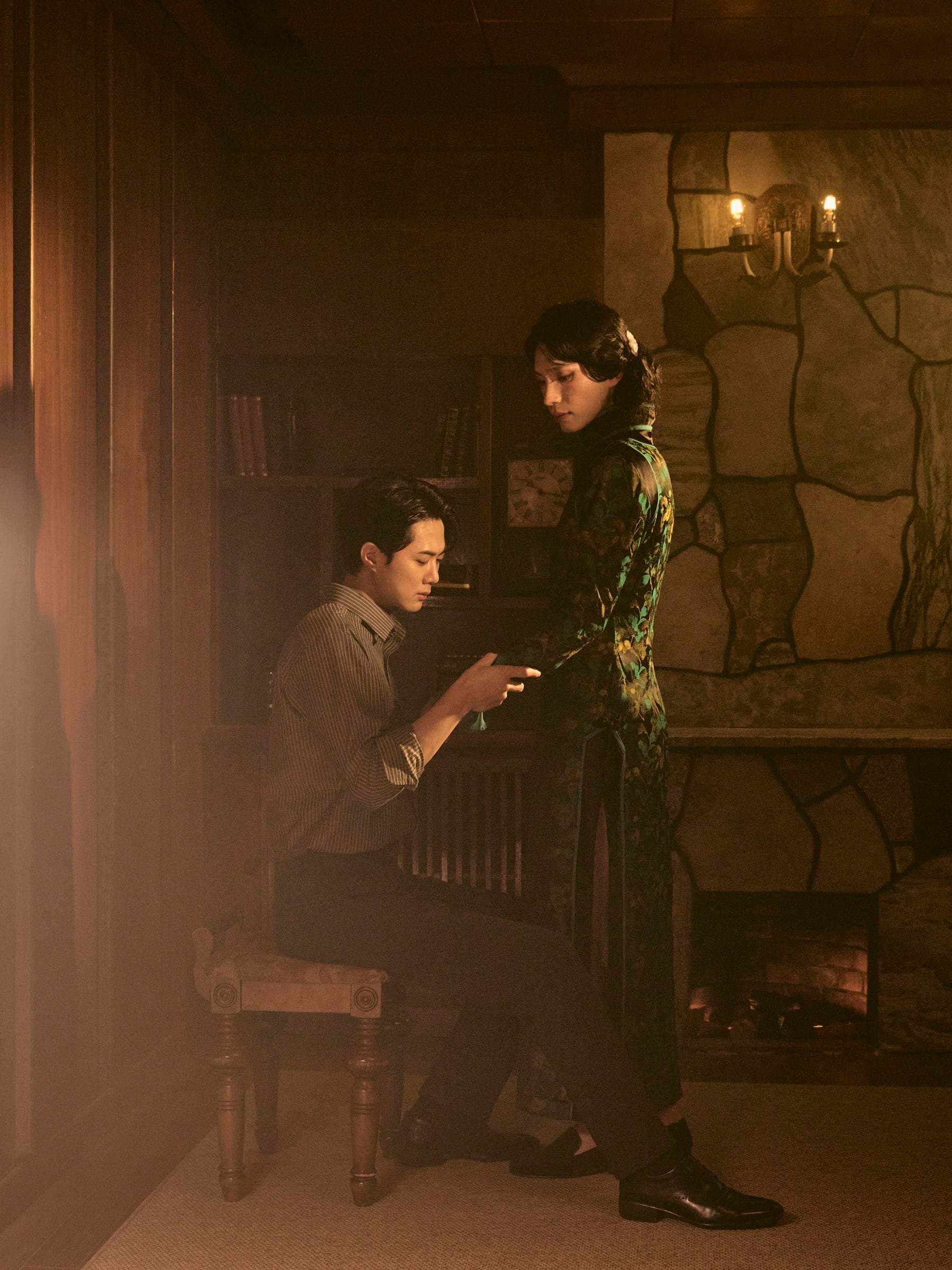
Another change in the musical is the addition of a small stage within the main stage. Kim said, “Imagine an actor playing *Madama Butterfly* on the small stage casually walking into René’s reality.” For example, an actor who was Kate, Pinkerton’s wife in the opera, suddenly becomes Agnès, René’s wife, saying, “Honey, we need to go to the hospital.” The small stage blurs the boundaries between reality, theater, memory, and illusion.
◇Tender, Beautiful, Sad, and Ecstatic
Ultimately, what collapses in *M. Butterfly* is not Song’s lie but René’s illusion—the story René has believed to be true by imposing it on himself all his life. Director Kim said, “René is a character who continues to choose his illusion at every turning point and meets destruction at the end.” Jeong explained this with a different emotion: “René’s goal might be to finally complete the perfect love illusion he has dreamed of. But unwanted truths keep surfacing from his memories, and in the end, when he can no longer bear it, he chooses to walk into the illusion he created instead of reality.” Jeong added, “That’s why it’s tender, beautiful, sad, and ecstatic. The tragic ending is also the price René must pay for his illusion.”
Jeong and Kim agreed, “Though the story seems complex when explained in words, the slightly enigmatic aspect will be the musical’s greater pleasure for audiences.” Jeong laughed, “Capturing the flow so audiences can perceive the boundary between reality and illusion felt like playing an escape room game every day during rehearsals.”
Jeong said, “It’s a work with various layers that audiences can interpret differently,” and Kim added, “If you watch it thinking, ‘This scene in the play becomes this song in the musical,’ it will feel fresh, interesting, unfamiliar, and fun.”
The premiere cast includes Ju Min-jin, Ahn Jae-young, and Yoo Hyun-seok as René Gallimar, and Kim Ba-da, Yoo Tae-yul, and Hong Gi-beom as Song Liling. The show runs until December 13. Running time: 110 minutes. Recommended for audiences aged 17 and older. Ticket prices: 40,000 to 75,000 Korean won.
- 월 5900원 멤버십, 신문 독자에게는 2900원, 조선멤버십
- 55000원 상당의 신문-잡지 8종 마음껏 보기, 조선멤버십
- 현금처럼 쓸 7000포인트 받아 알뜰한 쇼핑, 조선멤버십

Related posts:

Fiction park: He was the best in class. He still wasn’t good enough

Gagan Thapa takes oath as Congress president, vows to regain public trust

Inside knowledge that has locals gripped by fear after gran’s body found decomposing in cattle dip

New property purchase disclosure rule in Japan sparks fears it may curb foreign investment

Dino-mite treasures: inside Singapore’s Fort Knox storing playthings of ultra-rich