A Nation in Turmoil: The Escalating Crisis in Mali
Five years ago, a military junta took control of Mali, promising to end terrorism, restore security, and break free from French influence. However, the situation has deteriorated significantly, with alarming consequences for the people and the region.
Last Saturday, Mariam Cisse, a 20-year-old social influencer with 90,000 followers on TikTok, was arrested by jihadists while creating content in the market in her town of Tonka near Timbuktu. The following day, they returned her to the market, announced that she had been producing video content supportive of the military junta, and executed her. There were no Malian security forces to protect her. Among the onlookers were her brother and uncle. This incident marked a major turning point in the collective trauma experienced by the people of Mali, as terrorists have shifted their tactics over the years.
In 2012, jihadist groups aimed to capture the entire country, starting from the north. They captured territory after territory, establishing administrative and judicial structures to implement Sharia law. They killed or jailed anyone who opposed them and destroyed libraries of the Sufi orders, along with the tombs and mausoleums of their saints. The question arose: how similar would Mali’s current situation be to the previous one?
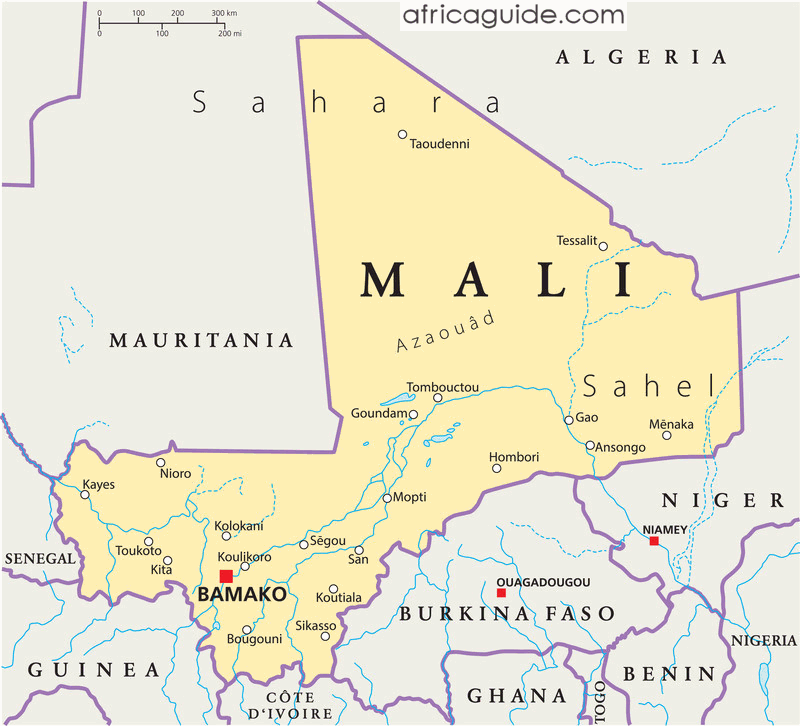
Two months ago, fighters from JNIM, an Al-Qaeda-linked group, imposed a fuel blockade that forced the government to close schools and hindered agricultural activities in several regions. They burnt down over 100 fuel tankers attempting to deliver fuel to Bamako via the Dakar-Bamako route. With this route closed, the government began importing fuel from Côte d’Ivoire in the south, but that route was also closed. An attempt to bring in fuel from Niamey was met with the same fate. As a result, the three million inhabitants of Bamako are now surrounded, with schools and businesses shut down due to fuel shortages. Inflation is soaring because of the lack of goods, and it remains uncertain whether JNIM will take over Bamako. Instead, it seems they are pursuing a strategy of regime implosion, making life increasingly difficult for Malians.
Mali is a vast country spanning 1,241,328 km², with borders touching seven countries: Algeria, Niger, Burkina Faso, Côte d’Ivoire, Guinea, Senegal, and Mauritania. If Mali collapses, the entire West African region could suffer. There is an urgent need for regional intervention and diplomacy. In 2012, ECOWAS failed to deploy forces to combat insurgents, leading to the takeover of much of northern Mali. Without an ECOWAS Standby Force intervention, Mali was forced to call on France to send jet fighters to stop the insurgent advance. Almost a decade later, France was expelled from the country.
The French intervention, which began on January 11, 2013, with air strikes and later ground troops, halted the insurgents’ advances and led to the recapture of all major towns and cities they held. Up until that point, there had been endless discussions about authorizing the ECOWAS/African Union demand for a 3,300-strong mission to Mali, known as AFISMA, for an initial period of one year. However, the international community was slow to act, raising concerns about the “necessity” of a one-year human rights training for the troops. In just three days, the insurgents took over the three key northern towns of Kidal, Timbuktu, and Gao. It became clear that the plan was always to bring in France. When the French took over Kidal, they refused to involve the Malian army and appeared to make a deal with the Tuareg MNLA to run the city. That was when the French agenda became apparent, and the rest, as they say, is history.
The coup d’état led by Assimi Goita in August 2020 was supposed to end the state of insecurity and set Mali on a path of development based on full sovereignty. The French and the United Nations were expelled, and the patriots took over power. However, five years later, the security situation is worse than before the junta came into power. JNIM insurgents are quietly taking over villages, towns, and cities, but they are not establishing direct territorial control or new administrations. They are simply showing the people that they have the power, while the military is powerless. The state is crumbling, poverty is deepening, hunger is spreading, and inflation is out of control. Many Malians are fleeing the country, moving to Côte d’Ivoire.
As the state crumbles, beautiful videos are being produced about the country’s success against imperialism and development. The latest example is the laying of the foundation stone for what will be the best hospital in West Africa. However, the reality is that the government is not in charge of much of the country. The government rightly attributes the massive insecurity to a group of five countries—France, Algeria, Côte d’Ivoire, Mauritania, and Ukraine. It appears that armed Ukrainian drones are being used to blow up fuel tankers and cripple their military escorts. The recruitment of the Wagner group, now rebranded as the African Corps, has not yielded significant gains for the Malian army. In fact, it has worsened their reputation due to a series of civilian massacres.
Given the high level of political repression in the country, there is no opposition to the military within the country. The junta dismisses exiled opposition figures as megaphones of the gang of five orchestrated by France. Rumors that radical Salafist mobilizer Imam Dicko, currently in exile in Algeria, might return to negotiate a way forward have been dismissed by the government. The problem for the junta is that they justified their coup on the promise of improving the security situation, but they have failed. At the same time, there are virtually no other legitimate interlocutors within the country to seek a solution.
The two other AES countries—Burkina Faso and Niger—are experiencing similar levels of insecurity and appear unable to save themselves. The crisis within these countries could lead to the implosion of not just the Sahelian states, but also the Gulf of Guinea countries. We cannot sit back and watch Mali implode. We are all at risk. The time to act is now.


