The Legacy of the People’s War
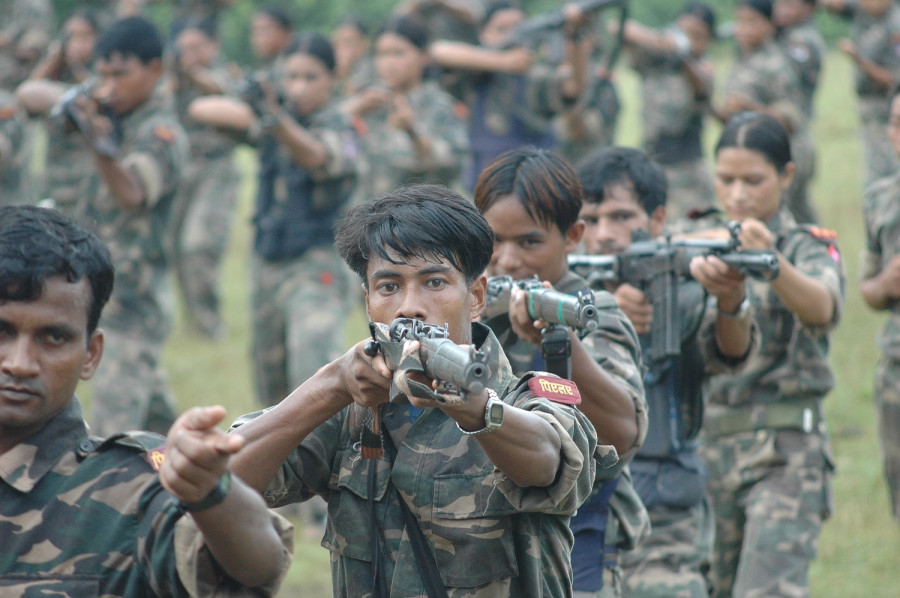
Three decades ago, on February 13, the Communist Party of Nepal (Maoist) initiated the ‘People’s War’ with armed actions in four regions of the country. At that time, the primary source of news was still the printed word, and the attacks that occurred late at night were only reported in the edition of February 15. News of what appeared to be law-and-order incidents received minimal coverage in the media because no one could have predicted that a small faction of Nepal’s communist movement would eventually engulf the entire country for the next decade.
It is intriguing that Pushpa Kamal Dahal, known as Prachanda, the leader who orchestrated this conflict, has remained silent about the 30th anniversary. Perhaps he chose not to remind people of the violence while seeking votes for himself and his party. Alternatively, his silence might indicate internal complications, as the Nepali Communist Party he now leads includes individuals who were once victims of Maoist attacks as members of the CPN-UML. It is also possible that Prachanda simply wants to move forward, even as the issues of truth and reconciliation continue to linger, and the fate of the disappeared remains unresolved.
The Negatives and Positives of the Insurgency
The 10-year insurgency left a trail of negative consequences. One of the most glaring issues is the personal gains made by certain Maoist leaders. Some have been implicated in major corruption scandals, and there are numerous stories about their involvement in various business ventures. Additionally, social media platforms like Gen Z memes often depict these leaders as “Maoist princesses” traveling the world.
Another significant downside is the dashed hopes of the Nepali people. The Maoists were initially welcomed into the political mainstream with high expectations, but these hopes were not fulfilled. Instead of focusing on meaningful reforms, they engaged in petty politics and sought power. They failed to draft a constitution that aligned with their promises, and their revolutionary path turned out to be a shortcut to political prominence for some leaders. The lack of unity among the Maoist factions further weakened their impact, and their actions damaged the image of politics and progressivism in general.
However, it is also important to acknowledge the positive changes that have occurred since 1996. Nepal has undergone considerable transformation, and some of these changes can be attributed to the Maoists. While counterfactuals are always possible, it is reasonable to argue that the pace of change in the 1990s would have been slower without the pressure from the Maoist movement.
For example, the ‘Eight-Point Reform Initiatives for Socio-economic Transformation’ introduced by the Sher Bahadur Deuba-led Nepali Congress government in 2001 was a direct response to the Maoist threat. This initiative included land reforms, an end to untouchability, and rights for women, Janajatis, and Dalits. After Deuba was removed by the king in 2002, political parties began to reassess their strategies, leading to further reforms such as guaranteed representation for women and marginalized groups.
The royal government also introduced measures promoting religious and linguistic diversity, including allowing the use of languages other than Nepali in local bodies. In 2005, the Gyanendra-led government promised affirmative action for women, Dalits, and Janajatis. These developments eventually paved the way for federalism, inclusion, secularism, and republicanism, which form the foundation of the 2015 Constitution.
The Root Causes of the Maoist Movement
The success of the Maoist movement can be attributed to more than just fear of violence. While the Maoists did instill fear in both the population and security forces, their influence extended beyond mere intimidation. The movement was able to exploit real grievances related to caste, ethnicity, gender, and class, giving marginalized groups a sense of empowerment.
Despite their eventual failure to deliver on their promises, the Maoists were driven by a desire to change the world and improve their own future. Thirty years later, while the leaders may have forgotten their original goals, the underlying grievances remain. The legacy of the People’s War continues to shape Nepal’s political landscape, leaving a complex mix of achievements and challenges.


