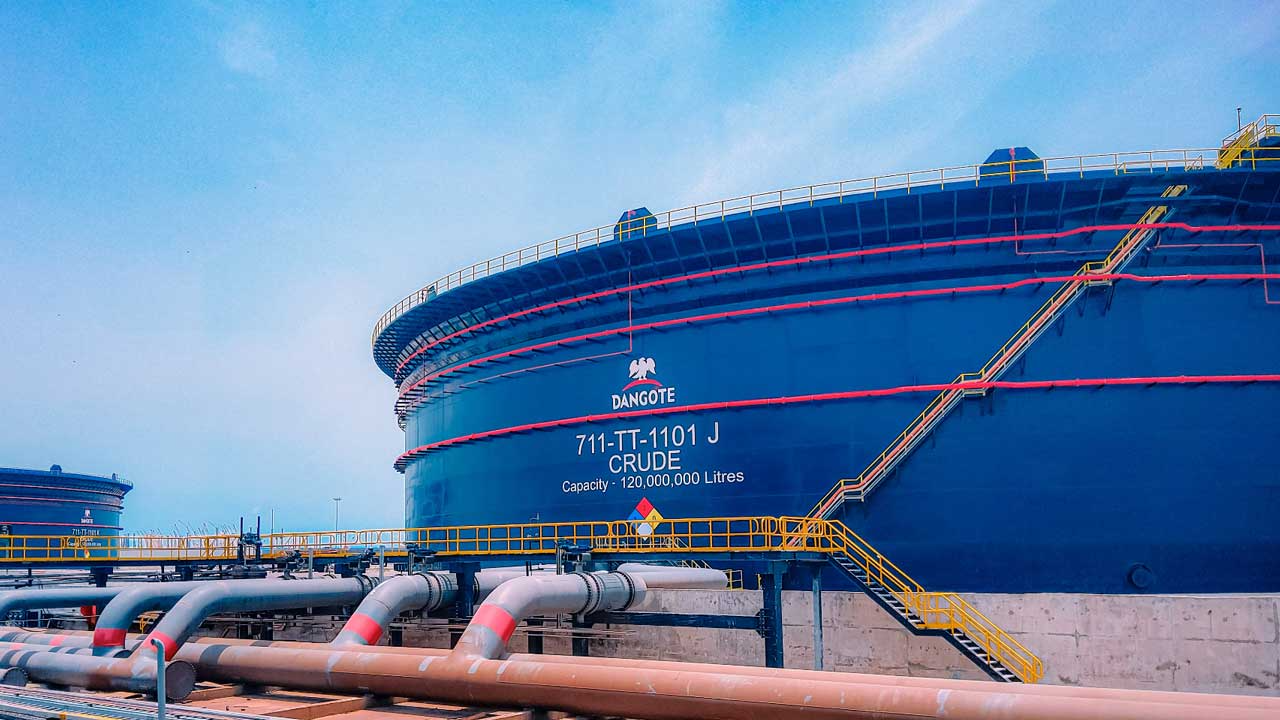
The Dangote Refinery and the Fuel Loading Controversy
Petroleum marketers have raised serious concerns about the operations of the Dangote Refinery, alleging that they are not receiving their fuel consignments despite making advance payments. This issue has sparked a heated debate between the refinery and independent marketers, with allegations of preferential treatment and policy changes causing frustration among those involved in the fuel distribution chain.
Allegations of Unfair Treatment
Two anonymous marketers shared their frustrations with The PUNCH, stating that they had paid for millions of litres of Premium Motor Spirit (PMS) more than two weeks ago but had yet to receive their shipments. They claimed that the refinery had implemented a new policy that reduced their allocations following an increase in the ex-depot price. One bulk buyer expressed disappointment, saying:
“We are seriously disappointed with the current situation at Dangote. Can you imagine that we have been paying for products for two weeks now, and we haven’t been allowed to load products? It looks like the refinery only wants to sell to the 20 marketers and abandon those who paid earlier.”
Another marketer confirmed the situation, explaining that many were forced to borrow heavily from commercial banks to finance their transactions, leading to significant financial losses due to accumulated interest on the idle funds. He also mentioned that the refinery had cut down allocations after adjusting its gantry price from N820 to N877 per litre.
Claims of Prioritization
The marketer further alleged that while independent marketers were waiting, major distributors such as Bovas and A.A. Rano were being prioritized. He emphasized that they had paid before these distributors, yet they were now being served first.
Dangote’s Response
During a tour of the refinery last weekend, Devakumar Edwin, the Vice President of the Dangote Refinery, addressed rumors that the facility was not loading due to maintenance activities. He debunked this claim, stating that the refinery had over 130 million litres in its tanks and challenged marketers to bring any number of trucks for loading.
“Bring your tankers. We will load. Any number of tankers you bring, we’ll load. It’s a challenge I’m throwing today. No one can come and tell me I’m not loading. We can load any number of tankers you bring. So, you can see whether I have the capacity to produce or not. We have more than 310 million litres of PMS as of today inside my tanks, apart from the production which is coming out every day.”
However, the Independent Petroleum Marketers Association of Nigeria (IPMAN) disagreed with Edwin’s stance. Chinedu Ukadike, IPMAN’s Publicity Secretary, argued that the refinery should prioritize clearing outstanding transactions by supplying fuel to marketers who have already paid.
Confusion Over Price Increases
The PUNCH reported that the sudden jump in petrol prices from around N865 per litre to almost N1,000 has left many Nigerians confused. Despite stable crude oil prices and a relatively stable exchange rate, petrol prices have surged, deepening confusion among consumers already struggling with high living costs.
The naira, which once exchanged for around N1,700 to a dollar in the first quarter of the year, now trades at around N1,470. Crude oil, which sold above $80 per barrel earlier in the year, is now around $62. Despite these factors, depot owners and the Dangote Refinery have increased petrol prices, leading to widespread dissatisfaction.
Impact on Consumers
Following the price hike, filling stations across Lagos, Ogun, Abuja, and other regions raised their pump prices to match the new regime. The Nigerian National Petroleum Company Limited retail outlets increased petrol prices to N928 per litre, while Dangote partners MRS and Heyden sold petrol at N925 and N923 per litre, respectively.
The refinery had also raised its petrol gantry price to about N870 per litre, up from N820. These changes have created uncertainty among consumers, who expected a reduction in prices rather than an increase.


