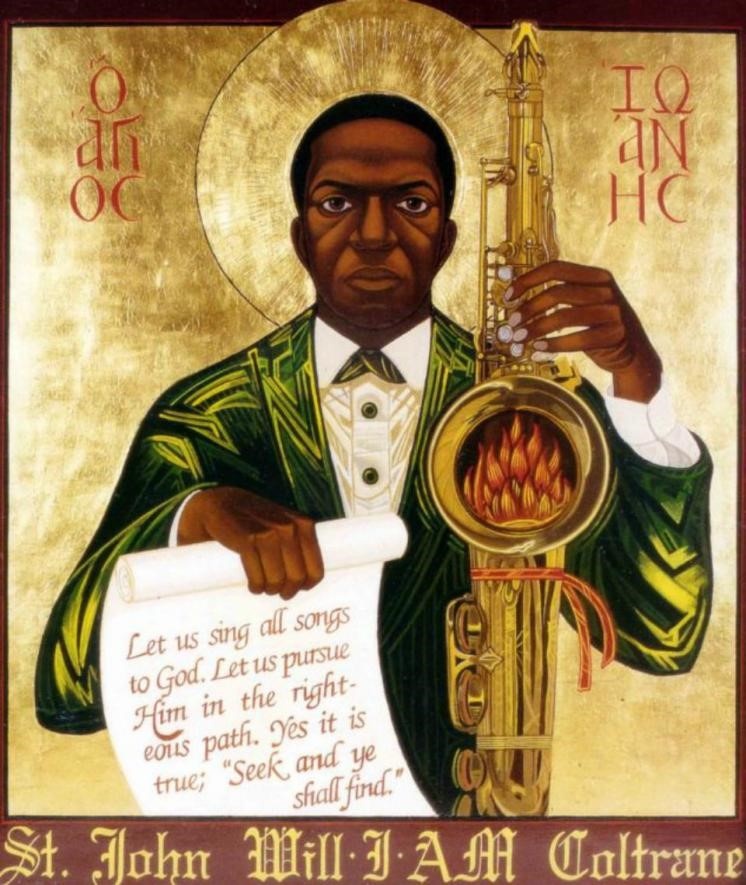
A Night of Spiritual and Musical Transformation
On a typical Tuesday evening, I found myself in church, listening to a sermon delivered by my charismatic pastor. His use of comic illustrations, spontaneous bursts of singing, and dancing not only entertained but also spiritually uplifted the congregation. These evening meetings were more than just a way to strengthen my faith; they were also a much-needed way to unwind after a hectic day at work.
The pastor’s spontaneous singing that day was accompanied by the mass choir on stage, followed by the church instrumentalists who played a frenzied, fast-paced swinging rhythm, often referred to as “Going Baptist” by African Americans. The syncopated tempo, combined with calls of “He’s able,” “God is Able” from the lead chorister, and responses from the choir, added an exciting twist to a popular Deitrick Haddon song.
Suddenly, the charismatic church in Accra transformed into a black Baptist church from the South. Congregants were quick stepping, tap dancing, clapping energetically, and fully immersed in the spirit—just like me. Then, the keyboardist switched the tone to a Hammond B3 Organ, producing bluesy chords and jazz. This was something new for me, and it momentarily distracted me, taking my mind back to my first public performance at a Ghanaian church.
A Meeting That Changed Everything
Years ago, I met Kwame, a Christian brother from the Ashanti Region of Ghana. He had a distinct appearance: short stature, hairy, with slightly protruding front teeth, slightly bow-legged, and always dressed in a white shirt and black trousers with a worn belt. I had encountered him multiple times at different churches, and though I wasn’t a regular churchgoer, I had attended several before settling into a newly established branch of a reputable church in Ghana.
At the end of one service, we exchanged pleasantries. I discovered he was a ministry assistant helping newly established churches. Without warning, he introduced me as a music minister to the head pastor, ruining my plan to leave unnoticed.
A week later, during my “Special Number,” a term for song ministrations, I received a positive response from the congregation. Some even stood to applaud. Though I don’t remember the specific song, it was a popular church chorus performed with minimal embellishment. After the service, members approached me, offering introductions and subtle nudges to join their church.
Then, an elegantly dressed middle-aged man approached me. I assumed he was a deacon. He asked, “Are you a Jazz Singer?” This question caught me off guard. I considered pretending not to understand, but that would have been dishonest. I responded awkwardly, “Yes, but how did you know…?”
“I could tell from the tone of your voice,” he replied with a smile.
Later, I decided to become a member of the church and assist their struggling choir. I informed the head pastor that I was a Jazz singer, a practice I repeated with subsequent pastors.
Church Gossips and Musical Conflicts
About three months after joining the church, the pastor called me to his office during a mid-week service. Two members, a deacon and a deaconess, had reported me. They claimed I had been singing at a lounge. However, the pastor already knew because I had invited him to watch my performance there.
These two individuals, whom I dubbed “Nkonkonsa United” (Ghanaian for gossiper), were likely hoping to have me penalized for performing at a lounge. But I couldn’t help but wonder why an institution responsible for the development of Jazz over a century ago would now demonize it.
The Church and the Birth of Jazz
The African American church played a pivotal role in the development of Jazz. As a cultural and religious center, it provided the musical foundations, performance practices, and community structure that nurtured the art form from its roots in spirituals and hymns to its flourishing in New Orleans and beyond.
Musical Influences
- Spirituals and Gospel: Enslaved Africans created spirituals as a form of religious expression. These songs became the foundation for both gospel and jazz music.
- Melody and Harmony: Exposure to Western hymn harmonies combined with African rhythms and call-and-response patterns laid the groundwork for complex harmonic elements in Jazz.
- Improvisation: The spontaneous nature of church services fostered a culture of on-the-spot creativity, directly influencing the improvisational core of Jazz.
- Call and Response: This traditional African practice became central to African American church services and is a vital element of Jazz.
Community and Performance Traditions
- Incubation Space: Churches served as safe spaces for developing musical traditions, where early forms of blues and gospel incubated.
- Funeral Parades: The Jazz funeral tradition blended sacred and secular music, influencing Jazz instrumentation and performance style.
- Blues and Spirituals Coexisting: Both genres influenced early Jazz musicians, allowing themes of suffering and hope to inform their music.
Spiritual Jazz Movement
In the 1960s, prominent Jazz musicians returned to religious themes. Artists like John Coltrane, Horace Silver, and others created pieces with overt gospel influences, seeking inspiration for a new sound. Alice Coltrane and Dorothy Ashby continued this legacy, blending Christian and other religious traditions.
Modern Legacy
Today, the church’s influence continues in contemporary artists who incorporate religious and spiritual themes into their music. Acoustic qualities of church spaces are also recreated through effects pedals and other means.
Back to My Pastor
My pastor never attended my Lounge performance, but he and several church members honored my invitation to a God Made Jazz Concert I organized. It was a ticketed event, and I paid for the venue. Afterward, my pastor told me I didn’t need to pay for venues when I had the Church’s resources available. The next concert was held at the church auditorium, with almost every member attending along with outside guests.
I believe more Church leaders need to study music history. In the meantime, I shall continue with God Made Jazz.
God Made Jazz
This is an important 30-minute segment of inspirational/Christian Jazz on my radio show, Maximum Jazz, which has existed since 2012. It is also the title of my Jazz Concerts targeting Church musicians and persons of faith. Its theme: Taking Jazz back to Church, from whence it came!!!
About Yomi Sower
Me & My Jazz are the weekly musings of Jazz Singer & Jazz Radio Host, Yomi Sower. Her programme, Maximum Jazz, airs on Saturdays 4-7PM on Ghana’s Guide Radio 91.5FM. She is a Professional Voice Coach also offering Vocal Jazz Tuition @YomiSower -Facebook, Instagram, TikTok, X and E-mail: yomisower@gmail.com


