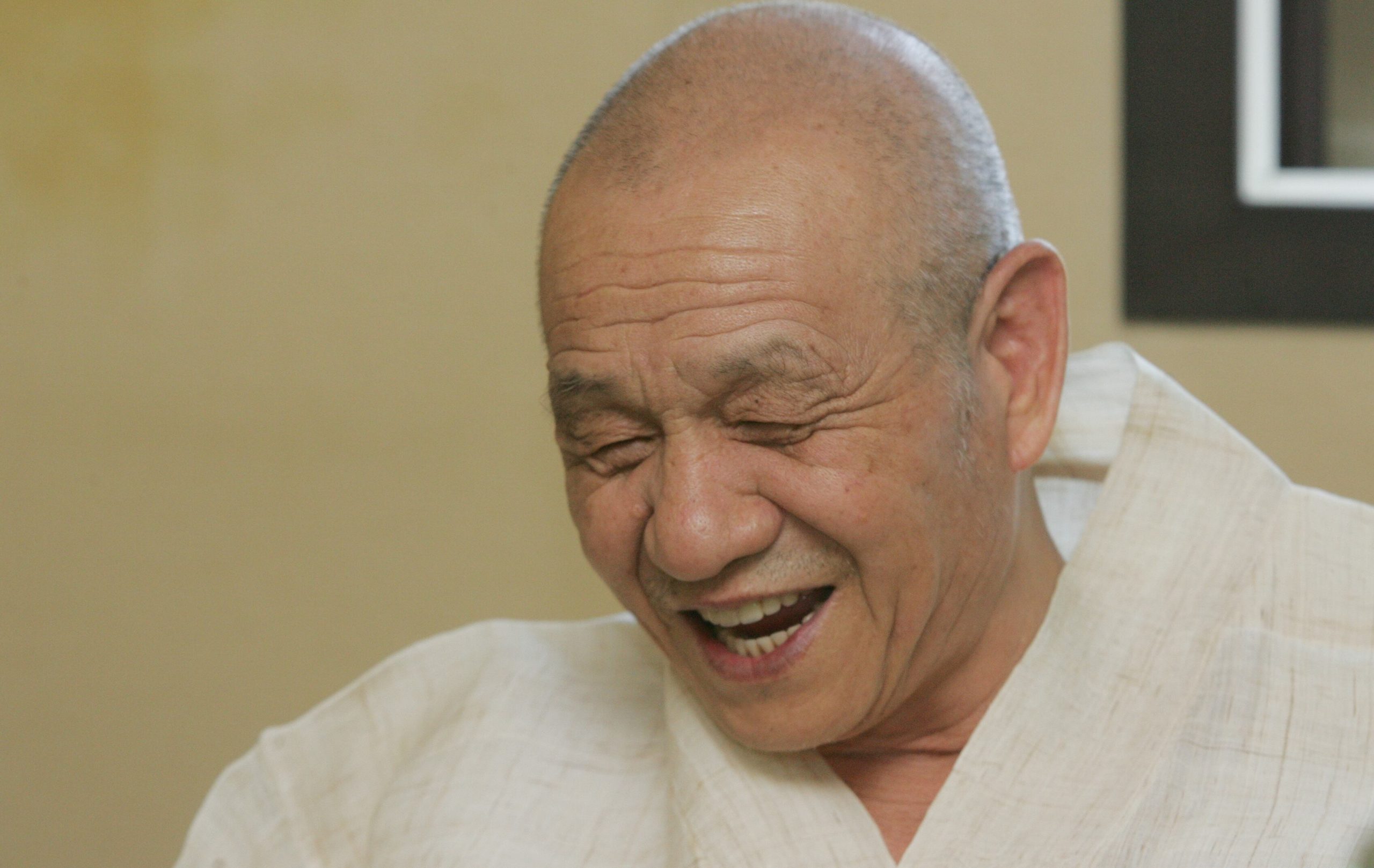
A Monk’s Vision for Innovation in Buddhism
Monk Musan, who passed away in 2018, was a figure of remarkable contrast. He was the head monk of Shinhungsa Temple on Mount Seorak and known for his unconventional approach to Buddhist teachings. Unlike traditional monks, he viewed figures such as Pope Francis, Steve Jobs, and screenwriter Graham Moore as competitors and rivals. His unique perspective on religious practice and innovation made him stand out in the world of Korean Buddhism.
During the March 2015 winter an-go (meditation retreat) closing ceremony at Mugyeomseonwon in Baekdamsa Temple, Monk Musan delivered a sermon that broke from tradition. The an-go is an intensive three-month meditation period where monks refrain from leaving the monastery, focusing solely on hwadu, or meditation topics. Typically, these ceremonies involve solemn sermons citing ancient texts. However, this time, the format was different—a quiz.
Monk Musan posed a question: “Guess what phrase has made the hearts of young people around the world race since 2005.” With the hint being the year 2005, his answer was “Stay hungry, stay foolish”—a famous line from Steve Jobs’ Stanford University commencement address. He then referenced Graham Moore’s acceptance speech for the Academy Award, which included the phrase “Stay weird, stay different.” This led to a bold statement: “It’s okay to be senile.”
This story had its roots in Monk Musan’s rigorous Mumun-gwan (closed meditation) practice that year. Instead of group meditation, he practiced alone in small rooms, receiving one meal daily through a hole. For an 80-year-old, it was a demanding feat. Before entering Mumun-gwan, he sent text messages to acquaintances, joking about going “senile” and not answering calls during the retreat. News of his practice spread, including a message from a high school student who worried about losing her scholarship if he became too old. She left a note saying, “It’s okay if you’re senile,” echoing Moore’s words.
This experience inspired Monk Musan’s groundbreaking closing sermon. He questioned whether quoting ancient Tang-era monks was still relevant. He believed that monks’ words should resonate globally, just like those of Jobs or Pope Francis. After reading the student’s note, he felt reassured that it was still okay to speak in modern terms.
Monk Musan continued his boldness at the summer an-go closing ceremony, directly addressing Pope Francis. He noted that while the Pope’s hwadu addressed contemporary issues, the monks’ were rooted in the dialogues of Tang-era monks. This self-reflection led him to criticize what he called “hwadu addiction,” comparing it to alcoholism. He argued that monks clinging to ancient texts without applying them to modern life were not truly practicing Buddhism.
His critiques extended to the idea of sudden shocks to awaken the mind, using terms like “staff” and “shout” from Buddhist tradition. These were not mere rhetorical devices but reflections of his innovative spirit.
Monk Musan saw innovation in figures like Steve Jobs, whose impact on technology reshaped the world. Similarly, Pope Francis revitalized the Catholic Church with his actions, such as living in the Vatican guesthouse and washing the feet of the homeless. These examples inspired Monk Musan to infuse similar energy into Korean Buddhism.
Despite his criticisms, Monk Musan valued monastic life and supported monks by establishing a basic Seon training center at Baekdamsa. He believed that monks should live enlightened lives, not just recite ancient texts. He once said, “The words of undertakers, blacksmiths, and tavern owners are the Palm Daejanggyeong (Eighty-Thousand Tripitaka).”
He defined monastic life as “deviation,” suggesting that leaving family to become a monk was itself a form of change. This deviation was not about worldly blame but returning to the essence of religion. He emphasized that Buddhism was not just about seeking enlightenment but practicing it.
Monk Musan lived with the mantra memento mori (“remember you must die”), constantly innovating while aware of his mortality. He was also a smartphone expert, adept at messaging and browsing. Despite his age, he used technology to research current issues, even during Mumun-gwan. Although smartphones were surrendered during retreats, he found ways to stay informed, occasionally bending the rules to prepare for his sermons.
His final message to me was a simple exchange: a photo of the full moon followed by a reply, “The apartment is nice. The moon is bright. Seorak Musan, palms together.” It was a fitting end to a life that blended tradition with innovation, challenging the boundaries of religious thought. What would Monk Musan say about today’s world? Perhaps, like his own teachings, it would be both profound and unexpected.


