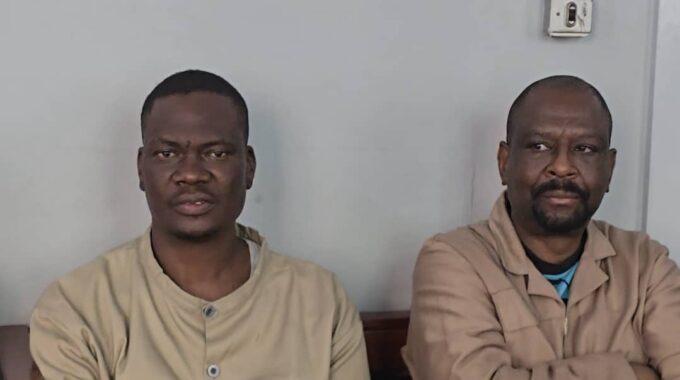
High Court Convicts Zanu PF Members in $7 Million Goat Scheme Fraud Case
Two prominent figures, Moses Mpofu and Mike Chimombe, have been found guilty by High Court Judge Justice Pisirayi Kwenda in a case involving the alleged defrauding of the government of US$7 million through a failed goats deal. The court has also issued a notice to file for the forfeiture of properties obtained using the stolen funds.
Mpofu and Chimombe have been in custody for over a year since their arrest in June last year. They are now awaiting their sentencing, which could potentially result in a 20-year prison term if they are convicted.
During the trial, the judge highlighted several key points that led to the conviction. He stated that the first accused, Mpofu, “shot himself in the foot” by claiming he was acting within his capacity as a director and was directed to do so. This defense, according to the judge, left no further need for evidence from the state.
Chimombe, on the other hand, argued that his case was “strange” because the state closed its case without clearly explaining his involvement. His submission was that he was implicated merely by association, but the judge rejected this argument, stating there was no legal basis for invoking the doctrine of association.
Kwenda noted that the use of the name Blackdeck, which was not registered, might have been intended to add some “color” rather than deceive the ministry. However, the judge emphasized that the company’s legal fiction status meant it could not be held accountable in the same way as an individual.
Mpofu’s failure to call witnesses significantly affected his credibility. The judge pointed out that Mpofu knew these witnesses were important, yet he did not call them, except for one who had died, which was not verified by evidence. The judge inferred that Mpofu had no intention of calling those witnesses, or that they would not support his defense.
The judge dismissed Mpofu’s explanation that he changed his mind after realizing he was being charged personally, calling it “lame.” He explained that a company is a legal entity, and its actions are attributed to the individuals representing it. Mpofu’s submission of a bid with falsified information confirmed his liability, and he should have called witnesses to support his defense.
Regarding Chimombe, the judge noted that he strenuously denied any significant involvement in the scheme. However, the testimony of witnesses John Bhasera and Nhundurwa indicated that Chimombe attended meetings, leading the judge to conclude that he participated in the scheme. The judge rejected the claim that Chimombe was merely attending meetings to resolve disputes as a member of EEG, suggesting there was another reason for his presence.
Kwenda concluded that the version of the first accused, that Chimombe was co-opted to represent the company, was binding. This implied that Chimombe was controlling the affairs of the entity, and his liability stemmed from his participation.
On January 16 this year, Kwenda mentioned that the pair risked facing a 20-year prison sentence if convicted. He also rejected their application for bail, citing the severity of the offense and the likelihood of them fleeing if released.
Mpofu and Chimombe face corruption charges related to the Presidential Goat Scheme, where they are alleged to have defrauded the Ministry of Lands of US$7 million by using a non-existent firm to secure a tender.
Kwenda emphasized that the court must consider the presumptive sentence when dealing with bail applications, especially in cases involving public funds. He noted that the severity of the offense, the value of the funds involved, and the fact that the offenders held public office all contribute to an aggravated sentence.

Related posts:

Fiction park: He was the best in class. He still wasn’t good enough
Gagan Thapa takes oath as Congress president, vows to regain public trust

Inside knowledge that has locals gripped by fear after gran’s body found decomposing in cattle dip

New property purchase disclosure rule in Japan sparks fears it may curb foreign investment
Dino-mite treasures: inside Singapore’s Fort Knox storing playthings of ultra-rich