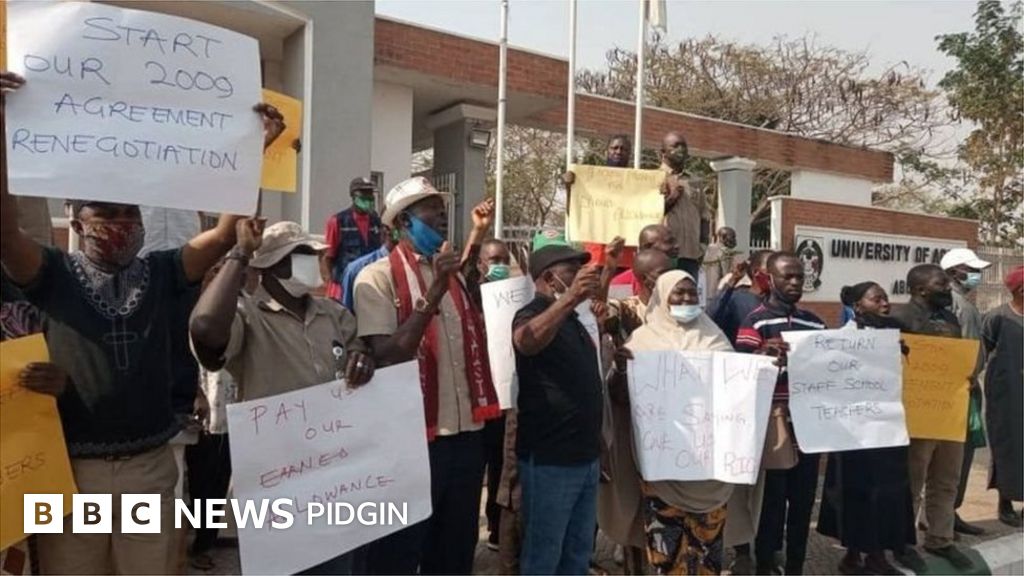
Escalating Tensions Between Students and Lecturers Over University Funding
The National Association of Nigerian Students (NANS) has issued a stark warning that it will shut down critical infrastructure across Nigeria if the Federal Government fails to address the demands of the Academic Staff Union of Universities (ASUU). This comes as ASUU continues to push for resolution of long-standing issues, with threats of a nationwide strike looming over the country.
NANS Assistant General Secretary, Emmanuel Adejuwon, expressed deep concern during an interview in Abuja, stating that students are prepared to take drastic measures. “If this strike is not averted, we will bring the country to a standstill until the future of Nigerian students is secured,” he said. He emphasized that the current situation is no longer tolerable, urging the government to act immediately and hold ASUU accountable.
Adejuwon highlighted that the strikes disproportionately affect the children of ordinary Nigerians, while those in power remain unaffected. “The politicians and government officials whose failures created this crisis are not affected; their children are comfortably schooling abroad or in expensive private universities,” he said. He criticized the government’s pattern of broken promises and called on ASUU to reconsider its tactics, arguing that strikes harm students more than they help.
ASUU Demands for Immediate Action
Meanwhile, ASUU branches across the country have reiterated their demands, warning that another strike is imminent if the Federal Government does not respond promptly. In Ibadan, Zonal Coordinator Prof. Biodun Olaniran urged the government to implement the recommendations from the Yayale Ahmed report, which was submitted in February. He argued that the report captures all contentious issues between the union and the government, representing a consensus after years of negotiations.
Olaniran listed several concerns, including the 2009 ASUU-FGN Agreement on sustainable funding of universities, victimisation of union members in LASU, KSU, and FUTO, outstanding salary awards, unpaid third-party deductions, and over four years of unpaid promotion arrears. He also criticized the continued use of the IPPIS platform for payments, which the union has long rejected, and lamented the non-payment of earned academic allowances.
In Abuja, ASUU Zonal Coordinator Prof. Al-Amin Abdullahi reiterated the union’s demand for the implementation of the 2009 Agreement and the release of three and a half months of withheld salaries. He warned that the neglect of education has led to overcrowded classrooms, inadequately equipped laboratories, and inhabitable hostels, contributing to a decline in the global ranking of Nigerian universities.
Rejection of Loan Scheme as a Distraction
In Uyo, the Calabar Zone of ASUU rejected the recently launched Tertiary Institution Staff Loan Scheme, calling it an insult to the sensibilities of tertiary workers. Zonal Coordinator Dr. Ikechukwu Igwenyi accused the government of using the scheme as a distraction from its failure to implement a new salary structure and honor agreements. He described the loan scheme as a “poison chalice” and warned that the planned meeting with the Federal Government on August 28, 2025, would be the last chance for meaningful dialogue.
Igwenyi criticized the government’s approach, accusing it of puerile duplicity and infantile cunning. He questioned how the government could owe its workforce and then offer an impossible loan scheme in a depressed economy. “How can government impose loan recovery on staff unions as guarantors, as if we are employers of tertiary workers?” he asked.
A Crucial Deadline for Resolution
With frustration building among both lecturers and students, ASUU and NANS have set the August 28 meeting as a decisive moment for the government to act. For NANS’ Adejuwon, the message is clear: “The time for games is over. The Federal Government must act now. ASUU must act responsibly. And Nigerian students will not sit idle while our future is wasted.”
As tensions continue to rise, the pressure on the government to address these critical issues is mounting. Both students and lecturers are demanding immediate action to restore stability and ensure the future of Nigeria’s education system.

Related posts:

Fiction park: He was the best in class. He still wasn’t good enough

Gagan Thapa takes oath as Congress president, vows to regain public trust

Inside knowledge that has locals gripped by fear after gran’s body found decomposing in cattle dip

New property purchase disclosure rule in Japan sparks fears it may curb foreign investment

Dino-mite treasures: inside Singapore’s Fort Knox storing playthings of ultra-rich