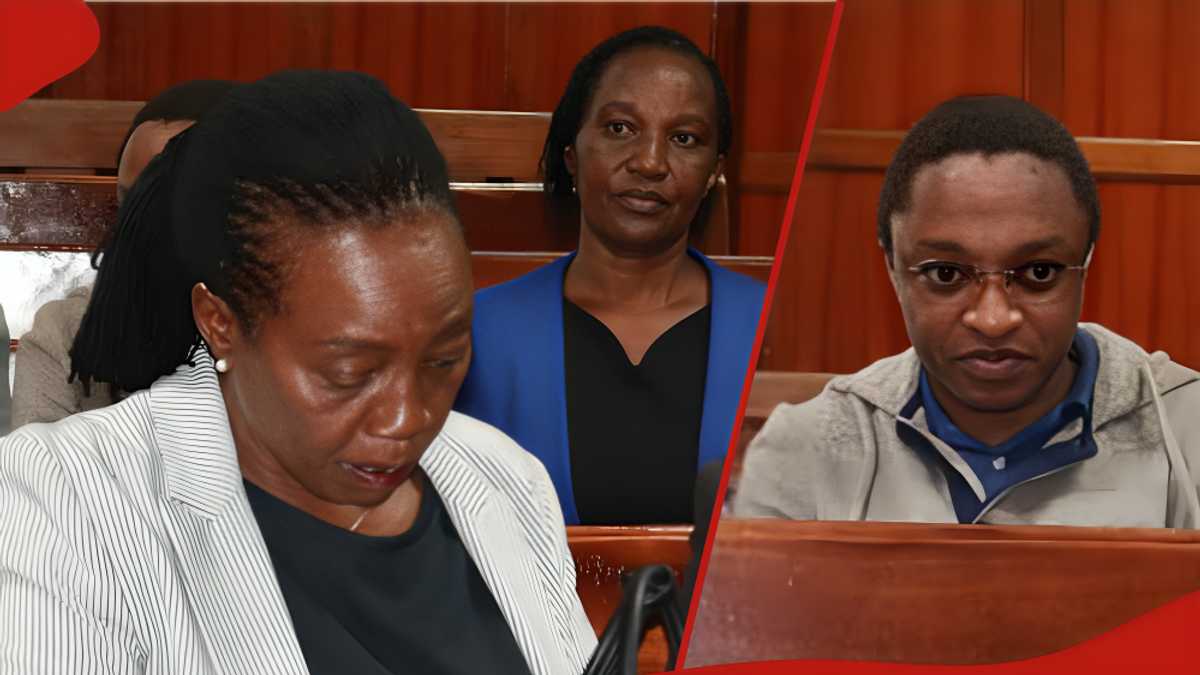
The Resurfacing of Blogger Ndiangui Kinyagia
After a week-long disappearance, blogger Ndiangui Kinyagia made an unexpected return to the courtroom, shocking many by revealing that he had not been abducted but had chosen to go into hiding. His appearance in court came after a High Court judge ordered his presence, and during the proceedings, he provided a detailed account of the events that led to his self-imposed isolation.
Ndiangui’s lawyer, Senior Counsel Martha Karua, presented an affidavit on his behalf, explaining the circumstances that forced him into hiding. According to the document, Ndiangui had left his home for an errand when he learned that police officers had entered his residence without permission and conducted a search. This intrusion left him feeling unsafe and violated, prompting him to go into hiding. He severed all communication with his family and lived in harsh conditions for several days before eventually reappearing.
The Reason for Hiding
Ndiangui described the experience as traumatic, stating that the invasion of his personal space made him feel as though his home was no longer secure. He expressed fear for his safety, citing previous incidents involving the police that had made him wary of potential threats. As a result, he decided to remain in hiding until he could assess the situation and ensure his own well-being.
It was only after a relative informed him about a court case filed in his name that Ndiangui chose to come forward. He admitted that he had been unaware of the legal proceedings against him and had feared possible abduction, torture, or even death if he had remained in the public eye.
Family’s Reaction and Support
Ndiangui’s mother, Margaret Rukwaru, also provided testimony through an affidavit, detailing her distress upon learning of her son’s disappearance. She stated that she sought assistance from the Law Society of Kenya (LSK), fearing the worst. When Ndiangui finally resurfaced, she described him as physically and psychologically broken, struggling to cope with the ordeal.
Karua emphasized that any parent in her position would have acted similarly, and she urged the court to consider closing the case. She argued that both Ndiangui and his family had responded in a manner consistent with how any reasonable person would under such circumstances.
Court’s Ruling and Next Steps
In his ruling, Justice Chacha Mwita acknowledged the steps taken by Ndiangui but did not view them as extraordinary. He noted that the LSK had acted based on instructions from Ndiangui’s family and found no fault with their actions. The judge also highlighted the importance of bringing the matter to a close, expressing relief that Ndiangui had appeared alive in court.
He ordered that the items seized from Ndiangui’s home be returned to him once investigations were completed, unless another party claimed ownership. Additionally, the judge ruled that there was no immediate need for further judicial intervention, as Ndiangui had already provided statements to the police.
Justice Mwita reminded law enforcement of their constitutional duty to uphold human rights standards and warned that any threats against the petitioner could be addressed if they arose in the future.
Broader Implications
The case has sparked discussions about the balance between police authority and individual rights. It highlights the need for transparency and accountability in law enforcement actions, particularly when they involve private citizens. Ndiangui’s experience serves as a reminder of the potential consequences of unchecked power and the importance of legal safeguards to protect individuals from abuse.
As the case comes to a close, it remains to be seen whether this incident will lead to broader reforms or serve as a cautionary tale for others who may find themselves in similar situations. For now, Ndiangui has returned to the public eye, and the court has officially closed the matter, leaving behind a story that underscores the complexities of justice and personal safety.


