A Call to Action: Nigeria’s Role in Polio Erradication
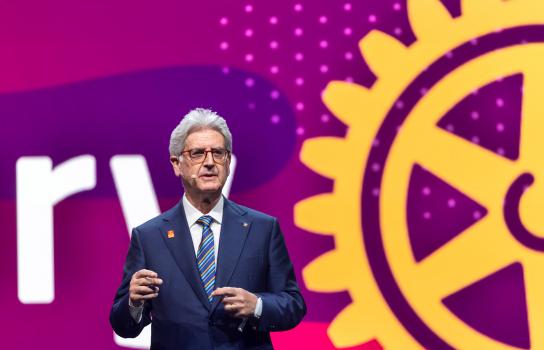
Rotary International President Francesco Arezzo has emphasized the importance of continued efforts in eliminating vaccine-derived polio cases in Nigeria, even though the country was declared polio-free in 2020. He highlighted that this responsibility is not only a scientific challenge but also a tribute to the memory of the volunteers and health workers who lost their lives during immunisation campaigns.
During a press briefing in Abuja, Arezzo spoke about the global progress made in the fight against polio, noting that while significant strides have been made, sustained commitment is essential to eliminate the remaining cases of vaccine-derived poliovirus. He recalled the early days of the campaign, when regions like Africa and India were seen as particularly challenging. Despite these difficulties, he praised the collaborative efforts that led to Africa’s certification as polio-free in 2020.
Arezzo pointed out that although wild poliovirus remains endemic only in Afghanistan and Pakistan, vaccine-derived cases still occur in some countries, including Nigeria. He attributed the decline in these cases to advancements in vaccine technology and ongoing immunisation drives. The introduction of a more stable vaccine has helped reduce mutations that previously caused outbreaks, marking a significant step forward in the eradication of polio.
However, Arezzo stressed that complete eradication can only be achieved if Nigeria maintains very high immunisation coverage. He recommended that at least 90–97% of children under five years old should be vaccinated. This high rate of coverage is crucial for ensuring that no child is left vulnerable to the disease.
The Rotary President also paid tribute to the volunteers who lost their lives during vaccination campaigns, calling their deaths a solemn reminder of the cost of the fight against polio. He mentioned that 76 people had died in Nigeria since 2012, while at least 382 had been killed in Pakistan. These numbers, he said, must serve as a motivation to continue the campaign and honor their sacrifices.
Addressing Ongoing Challenges
Despite the progress, Arezzo identified community resistance and misinformation as ongoing challenges. He urged stronger advocacy involving traditional and religious leaders, as well as increased engagement on digital platforms. With many people relying on mobile phones and online sources for information, it is essential to counter disinformation effectively.
He called for shared responsibility in the fight against polio, emphasizing that it is not solely the burden of one organization. “This is not the problem of Rotary. It’s the problem of all the humanity. It’s our problem,” he said. Arezzo encouraged governments, the media, and the public to keep polio eradication on the national agenda, praising Nigeria’s cooperation with global partners and urging authorities to maintain immunisation coverage above 90%.
Reflecting on his visit, Arezzo described Nigeria as diverse and welcoming, highlighting the importance of unity in achieving success. “We have to stay united. We have to work together. This is the only way to win and to obtain finally the eradication of polio,” he said.
Community Engagement and Vaccination Efforts
At the Area 2 Primary Health Centre in Garki, Arezzo and his spouse, Anna Maria, joined Rotary leaders in administering polio vaccines to children. He expressed the organization’s focus on protecting children through vaccination, describing each dose as a step towards eradication. “For us, it is always a great emotion to give the two drops in the mouth of our children. Because each child that we vaccinate is one child that will be safe from polio,” he said.
Arezzo emphasized the critical role of community engagement, particularly with mothers, in the success of the campaign. “The main job is to explain, to convince, to say how important it is. The goal remained zero-dose coverage nationwide. I won’t put a timeline to it, but Nigeria is on course,” he added.
Concerns and Commitment
Earlier, the Chairman of the Nigerian National Polio Plus Committee (NNPPC), Joshua Hassan, raised concerns over the recent emergence of two vaccine-derived polio cases in Kebbi State and the deaths of two volunteers due to security challenges. He described both issues as significant ongoing worries. Hassan also addressed concerns about declining participation by Rotarians, attributing it to volunteer fatigue and changing demographics rather than lack of commitment.
“Rotarians are volunteers. They are not paid workers; many new members were urban-based and faced competing demands,” he explained. He insisted that polio eradication remained Rotary International’s top priority: “Ending polio has remained Rotary International’s most strategic priority. It is our number one priority. We are 99.9% done. And we must finish the fight,” he said.
9127 District Governor, Princess Joy Okoro, noted that the visit of the Rotary International President was aimed at assessing Nigeria’s use of global grants and reaffirming the commitment to eradication. “We are still fighting polio to make sure that the polio virus is totally eradicated in Nigeria, and our advocacy would be intensified in states recording vaccine-derived cases. The fight is for everyone, not just Rotarians,” she said.