The Impact of the Strait of Hormuz Blockade on Emerging Market Telecom Operators
The ongoing blockade of the Strait of Hormuz, fueled by the conflict between the US and Israel with Iran, is creating significant challenges for emerging market telecom operators. These companies are heavily dependent on diesel generators to maintain their networks, especially in regions where electricity supply is unreliable.
According to reports, around 20% of the world’s oil supply has been disrupted, leading to crude prices rising above $120 per barrel for the first time since 2022. This situation has resulted in increased energy costs for telecom operators across Africa, the Middle East, and Asia. Countries like Pakistan, the Philippines, and parts of Sub-Saharan Africa are particularly affected due to their reliance on imported fuel and unstable national electricity grids.
Emerging Markets Bear the Brunt
Crude oil prices have reached levels not seen since 2022, and this has had a severe impact on emerging markets. Countries that have not diversified their energy supply chains are facing the most significant challenges. For example, the Philippines sources 98% of its oil imports from the Middle East, while Pakistan has experienced disruptions in liquefied natural gas supplies, making daily life difficult for households and businesses alike.
For the telecom sector, it is the operators in emerging markets that are bearing the brunt of the energy shock. Many rely heavily on diesel generators to power base stations and telecom towers, especially in remote areas with little or no access to national electricity grids. This dependency makes the challenge of connecting underserved communities even more daunting.
Diesel Dependence Driving Operational Pressure
According to the environmental certification organization Gold Standard, developing countries host an estimated 350GW to 500GW of diesel generator capacity spread across 20 million to 30 million sites. In many cases, this exceeds the capacity of national grids themselves. Even before the latest conflict, diesel power was already costly, averaging around $0.30 per kilowatt-hour and significantly more in remote regions where the unconnected often live.
Gold Standard estimates that annual spending on generator fuel reaches between $30 billion and $50 billion. CrossBoundary Energy reports that around 70% of Africa’s half a million telecom towers rely on diesel generators, accounting for between 30% and 60% of tower operating expenditure. Fuel costs for operators across parts of Africa have surged by 40% to 60% over the past two years, with the Strait of Hormuz disruption adding further pressure.
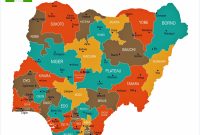
Nigeria has been highlighted as one of the markets facing the most acute energy challenges, with grid availability in some regions falling as low as 40% to 50%. In rural areas of the Democratic Republic of Congo, telecom infrastructure is almost entirely dependent on diesel due to the absence of national grid access.
Across Sub-Saharan Africa, between 60% and 80% of telecom towers experience daily grid outages lasting between eight and 12 hours. The demand for energy is expected to rise further as operators continue expanding 4G coverage and rolling out 5G networks across emerging markets.
Renewable Energy Gains Momentum
According to MTN Consulting, renewable energy accounted for just 23% of global telecom energy consumption in 2024, up from 10% in 2019. However, much of that progress has been driven by operators in Europe rather than developing regions. Operators such as Turkcell, Tele2, Telia, Deutsche Telekom, KPN, Swisscom, A1 Telekom Austria, Telefonica, Telecom Italia, and Liberty Global were highlighted as benefiting from long-term foresight as competitors elsewhere face increasingly volatile energy costs.
Operators Forced to Rethink Network Resilience
Ismail Patel, senior analyst for Enterprise Technology and Services at GlobalData, stated that energy concerns are now becoming inseparable from telecom strategy in emerging markets. “Energy policy is increasingly being integrated into telecoms policy,” Patel said.
“Diesel is used in markets where there are unreliable electricity grids or frequent loadshedding. Thus far, diesel has been a core part of the business model, not just as a back-up for powering towers. The whole ecosystem of diesel – which involves manually delivering fuel to towers and manpower – is also part of the model.”
Patel warned that rising diesel costs caused by geopolitical instability will ultimately push up the price of connectivity or squeeze already-thin operator margins in highly price-sensitive markets. “Operators will be forced to re-evaluate the most optimal back-up power mechanisms for their networks, including clean energy upgrades,” he said.
“This includes solar panels, which are susceptible to theft but do not have the immediate resale value of diesel, which is even more prone to unauthorised misappropriation.”
He added that satellite connectivity could emerge as a medium-term alternative for network resilience, particularly as direct-to-device (D2D) satellite services mature.
“Within this context, satellite as a back-up coverage mechanism might feature in the medium term, with both US and Chinese LEO satellite operators in a prime position to offer back-up connectivity to devices in place of towers,” Patel said.
“As the digital divide decreases and more underserved communities become dependent on connectivity, it will become far less economical for operators and governments to tolerate outages.”
Rather than being driven primarily by sustainability goals, Patel argued the shift towards renewable and satellite-powered infrastructure may ultimately become an economic necessity.
“Operators will start to look at greener options and satellite not because they are green or necessarily offer better coverage, but because they are becoming more cost-effective compared to diesel,” he said.
Patel identified Pakistan, Bangladesh, much of Sub-Saharan Africa including Nigeria and South Africa, Lebanon, and rural regions of India, Indonesia, and the Philippines as among the markets most exposed to the crisis.