Understanding the 2026 Seasonal Climate Prediction for Nigeria
Nigeria is experiencing a significant shift in its weather patterns, with citizens across different regions reporting varied and often unusual conditions. In the southern part of the country, the typical December-January harmattan weather has been notably absent, leading to unusually warm and humid conditions. Meanwhile, in the north, the harmattan has been intermittent and less intense than usual. These changes are not surprising, as they align with broader global trends linked to climate change and global warming.
Climate change is causing rising temperatures in the Sahara and surrounding regions, which weakens the temperature and pressure contrast that usually drives the harmattan winds. This results in weaker winds that do not push as far south or as strongly into Nigeria as before. Consequently, there are now unusual warm, humid conditions along with off-season rainfall. This is why some parts of southern Nigeria have experienced rain, while northern areas have seen a milder and delayed version of the harmattan.
In addition to climate change, other factors such as desertification and land degradation in the Sahel region have altered surface temperatures and wind dynamics. Furthermore, increased urbanization in cities like Lagos, Abuja, and Port Harcourt has created a “heat dome” that traps moisture, contributing to these changing weather patterns. These complex interactions underscore the need for the Nigerian government to implement policies that address climate risks effectively.
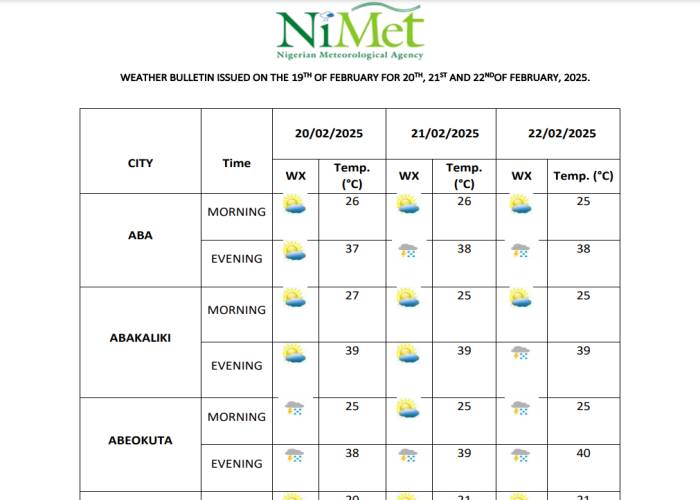
The Nigerian Meteorological Agency (NiMet) plays a crucial role in this regard by producing the Seasonal Climate Prediction (SCP) annually. This prediction serves as a vital tool for advising the government and the public on weather and climate-related matters. The SCP is based on forecasting techniques, long-term meteorological data, and contemporary scientific knowledge, offering an outlook on various climate variables, including rainfall and temperature patterns.
Key Predictions for 2026
The 2026 SCP, recently unveiled in Abuja, highlights several critical predictions. It anticipates a weak La Niña and a neutral phase of the El Niño–Southern Oscillation, which influences global weather patterns. According to the prediction, the rainy season is expected to start early to normally, with a normal to late cessation and normal to above-normal rainfall and season duration. Temperatures are likely to be above normal for most parts of the country.
The SCP also forecasts notable rainfall events in the early part of 2026, particularly in southern Nigeria, where rainfall during January and February may lead to localized flooding and waterlogging in low-lying areas. This scenario is already unfolding, with off-season heavy rainfall increasing flood risk in urban areas. For instance, parts of Lekki in Lagos State have experienced flash flooding, disrupting traffic and infrastructure.
Regional Variations and Impacts
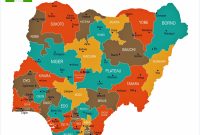
The 2026 prediction indicates that the onset of the rainy season will occur earlier than normal in certain states, including Bayelsa, Rivers, Benue, Kogi, and others. However, Borno State is expected to experience a late onset. Regarding the cessation of the rainy season, most parts of the country will see a normal end, but some states, such as Lagos, Ogun, Anambra, Enugu, and others, are forecasted to have a delayed cessation.
The length of the rainy season is expected to be normal across most of the country, but some regions, such as Borno, Yobe, and Niger, may experience a shorter season. Conversely, several states, including Lagos, Benue, and others, are expected to have a longer-than-normal rainy season. These variations could impact agricultural planning and water resource management.
Rainfall and Temperature Trends
Total rainfall is predicted to be below normal in parts of Katsina, Zamfara, Kwara, Oyo, and Ogun states, while above-normal rainfall is expected in parts of Borno, Sokoto, Kaduna, and others. Temperatures are likely to be above the long-term average nationwide, with both daytime and nighttime temperatures warmer than usual from January to May 2026.
The prediction also highlights potential dry spells, with severe dry conditions expected in Oyo and Ogun states during March-May. A moderate dry spell may occur in southern and central states, while a severe dry spell lasting up to 21 days is anticipated in the northern and central regions during June-July-August. These conditions could significantly affect crop yields and water availability.
The Little Dry Season
The Little Dry Season (LDS), commonly known as the August Break, is expected to commence between July 26 and 30. In areas around Lagos, Ogun, Ekiti, and parts of Oyo State, the LDS is likely to be severe, lasting more than 27 days. In other regions, such as Ondo, parts of Kwara, and Edo States, the intensity is expected to be moderate.
Strategic Importance of the Seasonal Climate Prediction
The SCP is more than just a meteorological exercise; it is a strategic economic and governance tool. In a climate-sensitive economy like Nigeria’s, anticipating rainfall patterns and extreme weather events can safeguard food security, stabilize markets, protect infrastructure, and improve fiscal management. The true value of the SCP lies in its application—embedding climate information into budgeting, agricultural planning, disaster management, and urban development policies can transform Nigeria’s approach to climate governance.
By leveraging the insights provided by the SCP, Nigeria can transition from reactive crisis response to proactive climate resilience, ensuring sustainable economic growth and national development.