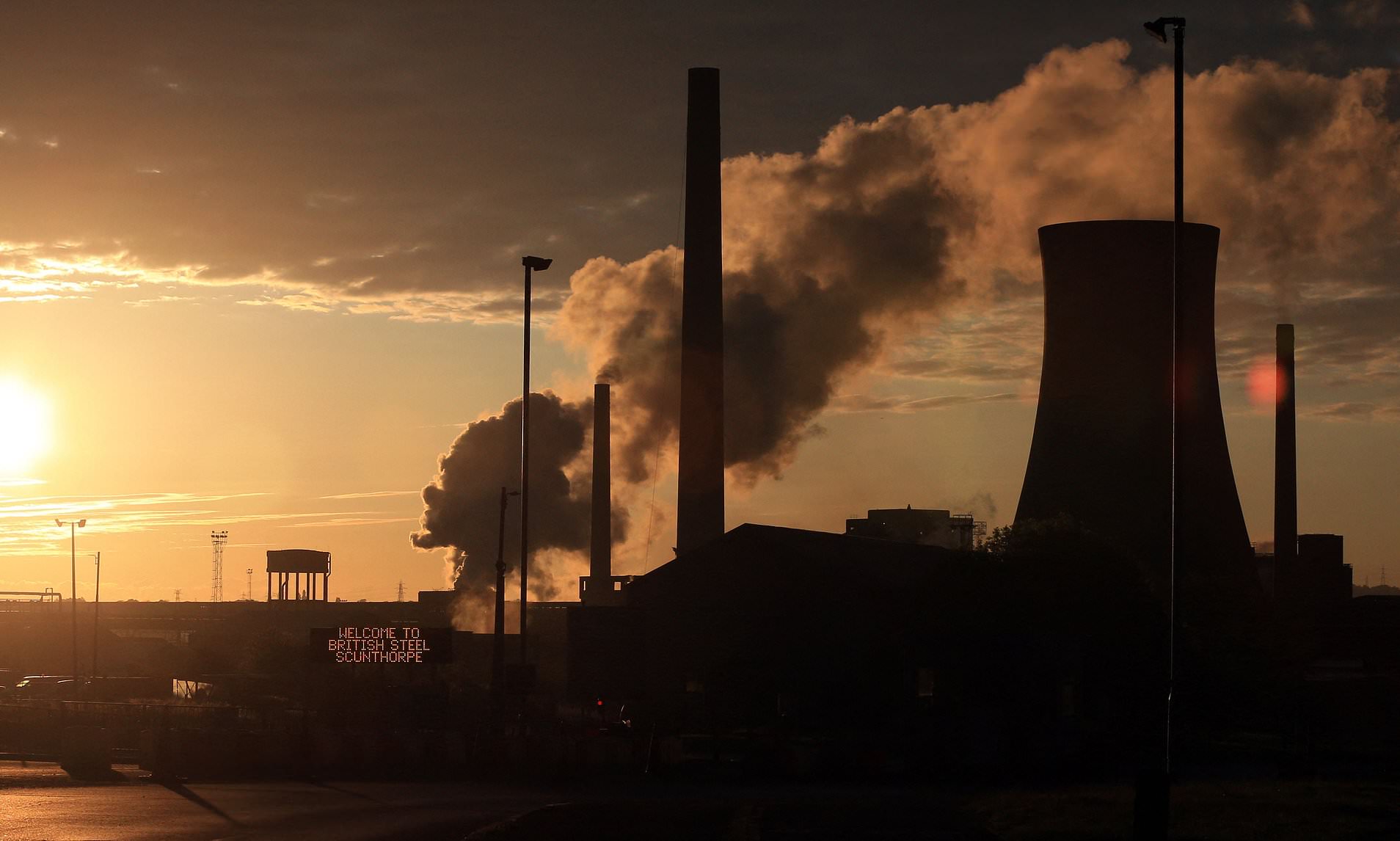
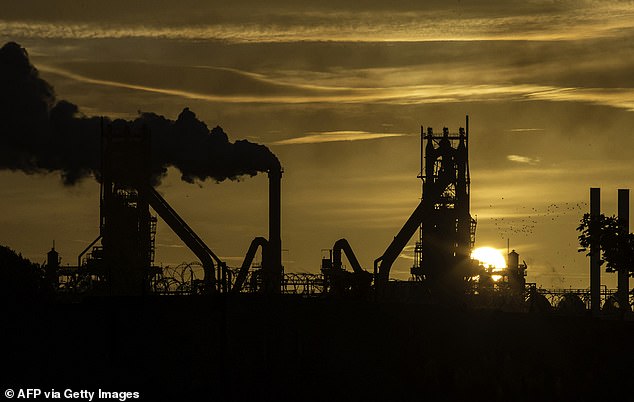
Britain’s last blast furnaces could be turned off under plans considered only eight months after they were saved by unprecedented state intervention, leaving the UK unable to produce virgin steel.
Taxpayers’ money has been used to continue operations at Scunthorpe steelworks, which was losing £700,000 a day under Chinese ownership, but losses have since ballooned to over £1m a day.
British Steel, which runs the giant North Lincolnshire plant employing 2,700 people, was taken under government control under emergency legislation in April after Chinese owners Jingye were days from closing it down.
MPs were called into parliament on a Saturday – for only the sixth time since the Second World War – to approve the move.
Now, it has emerged ministers are considering plans to end steel production at Scunthorpe and merge British Steel with Speciality Steel UK (SSUK), currently in the hands of the official receiver.
The proposal would see SSUK’s mothballed electric arc furnace at Rotherham, South Yorkshire, restarted to provide steel to meet British Steel’s orders which include supplying Network Rail and the construction industry.
Closure of Scunthorpe, home to the UK’s last two blast furnaces still in operation, would make Britain become the only country in the G7 group of the world’s leading industrialised nations unable to produce its own virgin steel – the reason the government stepped in to keep it open.
Electric arc furnaces recycle existing scrap steel rather than make the product from new.
Despite ministers pledging support for Scunthorpe, a string of government-backed projects could use foreign steel, including offshore wind turbines as well as a £2.1bn scheme to build new small modular reactor nuclear power stations.
Today, the Mail on Sunday revealed another £4bn gas-fired power station and carbon storage scheme, Net Zero Teesside – part-funded by taxpayers – may use 7,000 tonnes of Chinese steel.
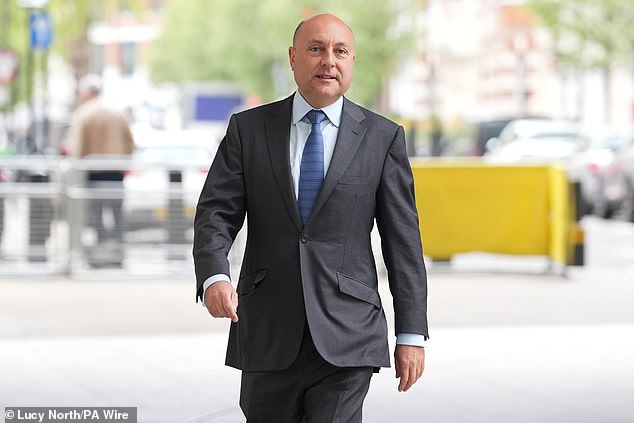
Andrew Griffith, Conservative shadow business and trade secretary, accused the government of a ‘lack of joined-up thinking’ in failing to ensure taxpayer-funded contracts use British steel – when it is being subsidised by another part of the state.
He said: ‘This is an example of a botched renationalisation’.
Mr Griffith said he is concerned Jingye, who still own Scunthorpe steelworks as no agreement has yet been reached with the government, may yet be ‘let off the hook’ for ‘potentially huge’ clean-up costs if the works close.
He said: ‘I fear the government may leave the taxpayer picking up China’s liabilities.’
Alasdair McDiarmid, assistant general secretary at the steelworkers’ union Community, called the proposals to close Scunthorpe ‘extremely concerning and scarcely believable’.
He said: ‘The loss of the UK’s last-remaining primary steelmaking facility — a vital strategic asset for the country — would represent a devastating blow to national security and sovereignty.
‘Community and the wider trade-union movement will not accept the closure of the blast furnaces outside of a long-term investment strategy that secures the future for Scunthorpe steelmaking.’
The proposed merger of British Steel with SSUK, formerly part of Indian-born tycoon Sanjeev Gupta’s metals empire which was taken under state control in August, is among ‘one of several options’, Whitehall insiders say.
The condition of the blast furnaces at Scunthorpe is understood to be poor and they will need to be replaced in the long-term – either with new blast furnaces or with an electric arc furnace, a proposal the government was discussing with Jingye.
Merger is said to be favoured by Jon Bolton, who co-chairs the government’s Steel Council, The Sunday Times reported.
But the mothballed furnace in Rotherham would require significant investment to get back up and running, senior industry sources say.
Industry figures are reportedly split on whether Rotherham could produce the correct types, grades and gauges of semi-finished steel — and in sufficient quantities — to meet British Steel’s contracts.
Jingye is believed to be seeking £1 billion compensation from the UK government in return for handing over its shareholding in British Steel.
UK government officials are understood to be offering to ‘wave through China’s controversial new “mega embassy” in London’ in exchange for reducing the bill.
The scale of how much British Steel has cost taxpayers was revealed by industry minister Chris McDonald earlier this month – totalling £274m, or over £1m a day.
Steel has continued to face difficult market conditions due to pressure from a glut of cheap, state subsidised steel – principally from China – driving down prices, US tariffs and the threat of European tariffs of 50pc next year.
The government has yet to announce what action it will take to curb cheap imports, currently subject to a quota system which industry insiders dismiss as pointless because levels are set too high.
A spokesperson for the Department for Business and Trade, which has postponed publication of its long-awaited Steel Strategy setting out how £2.5bn will be spent safeguarding the industry this parliament, said: ‘We will ensure a bright and sustainable future for steelmaking and steel jobs in the UK and are continuing discussions with Jingye over the long-term future of the site.’
British Steel declined to comment further.
In a fresh blow to UK steel producers, it emerged manufacturers face mountains of paperwork from January on exports to the EU because the government has yet to secure an expected exemption from new green taxes.
Brussels’ carbon border adjustment mechanism is due to begin in the New Year but UK Steel says Britain’s exemption is unlikely to be in place before Easter, resulting in a requirement for detailed paperwork on exports.
This includes a detailed paper trail of carbon emissions generated during the manufacturing process.
Frank Aaskov, the director of energy and climate change policy at industry body UK Steel, said: ‘It is going to have significant negative impact. The paperwork is definitely significant.’
It comes after Ineos tycoon Sir Jim Ratcliffe called for the government to ‘scrap carbon taxation’ on carbon dioxide emissions, calling it ‘the most idiotic tax in the world’ which ‘simply squeezes the life out of home production as there is no cash left for investment and we end up replacing home produced goods with imported products from places that still burn coal’.
In one concession, the government is giving heavy industry, including steel, a 90pc rebate on electricity network charges from April.
Read more
- Is the UK poised to revive its steel industry with a billion-pound injection and scrapping of climate levies?
- Will British Steel’s Scunthorpe plant blast furnaces be snuffed out as government scrambles to secure vital coal supplies?
- Can the UK’s beleaguered steel industry triumph as the government battles against the clock to deliver crucial supplies to British Steel’s Scunthorpe plant?
- As UK steel hangs by a thread, will ministers succeed in finding a private partner or turn to nationalisation to save Scunthorpe?
- Could political maneuvering be dooming the revival of British steel-making amidst monumental £700,000-a-day losses?