A Major Scientific Update on Food and Planetary Health
A major scientific update to one of the most influential food and planetary health reports of the last decade is facing a coordinated misinformation campaign promoting meat-based diets. This update, from the EAT-Lancet Commission, presents findings that emphasize the importance of a diet rich in nuts, legumes, whole grains, fruits, and vegetables, while significantly reducing meat, dairy, and sugar consumption.
The EAT-Lancet Commission, an independent scientific body working with the prestigious British medical journal Lancet, has released a major update to its 2019 report on healthy diets that are also good for the environment. The updated findings have been widely accepted by global health and environmental experts. According to Johan Rockström, co-chair of the commission and director of the Potsdam Institute for Climate Impact Research, food systems generate roughly 30% of global greenhouse gas emissions.
Rockström outlined new research from over 35 countries and six continents, highlighting that including healthy foods in dietary guidelines, tackling food loss and waste, choosing local products, and shifting to sustainable agricultural practices could reduce environmental stress and cut emissions by more than half. This approach could also prevent up to 15 million premature deaths every year.
“By uniting the latest science on health and climate, it shows that what we put on our plates can save millions of lives, cut billions of tons of emissions, halt the loss of biodiversity, and create a fairer food system,” he said.
Coordinated Campaign Against Health and Sustainability Findings
Despite the widespread acceptance of the “planetary health diet,” the message has not been well-received in online communities that promote meat-centered diets as natural, essential, and environmentally friendly. The original report faced a torrent of misinformation on social media, with misleading or biased content disparaging the findings.
A new investigation by the Changing Markets Foundation reveals how “industry-friendly scientists, doctors, health influencers, journalists, and authors” connected with the meat industry took part in a “targeted and coordinated campaign” to derail the 2019 EAT-Lancet report and its health and sustainability research. Critics portrayed the report as being “dangerous, elitist, and anti-science.”
Maddy Haughton-Boakes, a senior campaigner at Changing Markets Foundation, noted that the backlash was initially presented as organic but has since been revealed as orchestrated. She explained that “mis-influencers” tagged and shared each other’s content, using similar or identical wording and hashtags like #Yes2Meat, #MeatHeals, and #ClimateFoodFacts to tout the health and environmental benefits of meat.
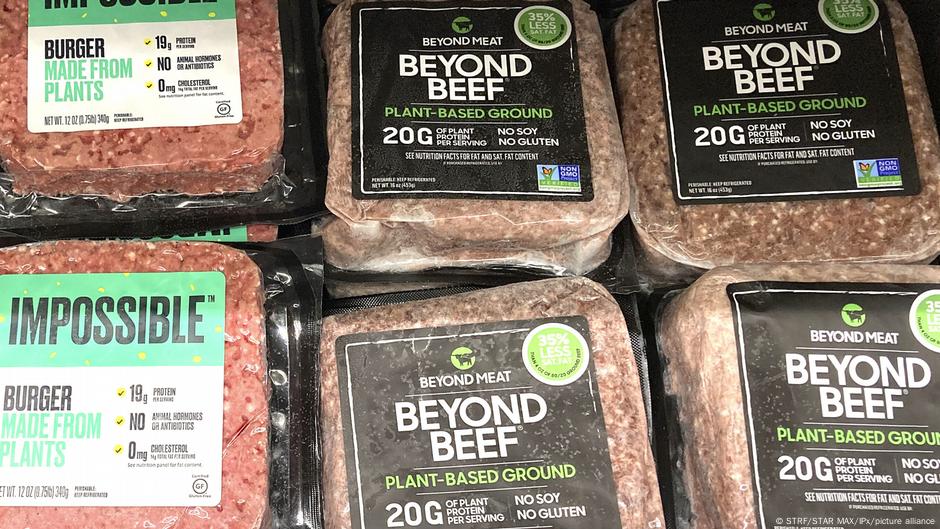
Haughton-Boakes also highlighted the influence of manosphere podcasts and the “Make America Healthy Again” movement in the US under President Donald Trump. Globally, there’s a growing protein boom and the idea that consuming vast amounts of meat and animal protein is essential for health.
Social Media and AI Fueling Misinformation
The weakening of fact-checking units and safeguards against misleading information on social media platforms such as X, Instagram, and Facebook has contributed to the spread of misinformation. The rise of AI tools has further amplified the spread of fake news, deepfake videos, and convincing images.
Jose Henrique Bortoluci, a sociologist from the Paris-based Geopolitical Studies Group, and Emmanuel Guerin, a fellow at the European Climate Foundation, noted that the relative freedom of social media has fostered an environment where climate disinformation has flourished. They emphasized the need for regulation of social media platforms, similar to broadcast media and advertising.
“There is no individual or institutional effort that can limit the spread of fake news and the advancement of disinformation campaigns if the platforms themselves are not co-responsible in tackling the problem,” Bortoluci said.
Taking Back the ‘Emotional Narrative’
Walter C. Willett, professor of epidemiology and nutrition at Harvard T.H. Chan School of Public Health, pointed out that the planetary health diet aligns with many traditional diets around the world. Examples of this healthy meal plan will be displayed on the report website in a series of pictures, aiming to connect with people and take back the “emotional narrative” hijacked by misinformation.
“[The pictures] make the case that this is not a deprivation diet that we’re talking about,” said Willett. “This is something that could be delicious, aspirational, and healthy.”
Johan Rockström emphasized that the new report is ready to meet the assault of misinformation with its rigorous global scientific assessment. He clarified that the planetary health diet is not a one-size-fits-all approach, pushing back against common misinterpretations of the 2019 EAT-Lancet report.


