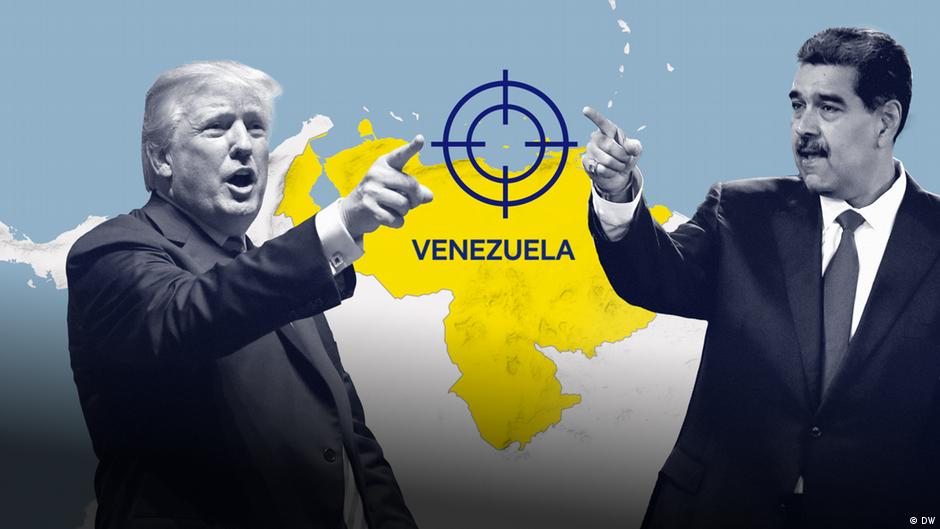
The US Military’s Growing Presence in the Caribbean
The United States has reportedly sunk 20 suspected “drug boats” in the Caribbean since September. This significant naval operation, now officially named Operation Southern Spear, has raised concerns around the globe.
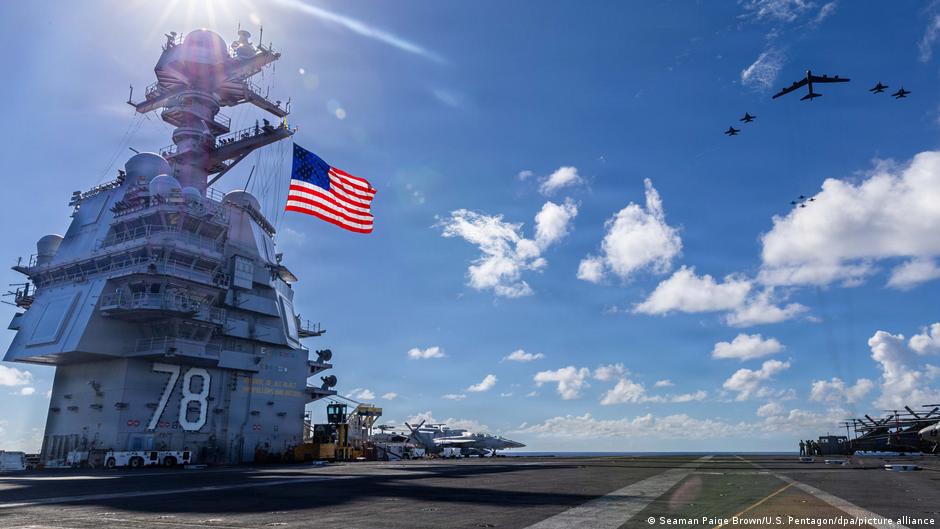
Earlier this week, the USS Gerald R. Ford, the US Navy’s largest aircraft carrier, reached its designated position in the Caribbean. On Thursday, US Defense Secretary Pete Hegseth officially announced the mission’s name: Operation Southern Spear.
Why Is the US Military in the Caribbean?
Since late August, the US has deployed several warships along the Caribbean coast of Venezuela. In early September, the first attack targeted a boat that US officials claimed was smuggling drugs from South America to the US. According to the US government, 19 more attacks have occurred since then.
What Are the Goals of Operation Southern Spear?
The stated objective of these attacks is to prevent drug trafficking from South America to the US. In a post on X, Hegseth emphasized that Operation Southern Spear, in coordination with the US Southern Command, aims to “remove narco-terrorists from our Hemisphere and secure our Homeland from the drugs that are killing our people.”
However, the government in Caracas and other regional actors view this as both a provocation and a direct threat to Venezuela’s national sovereignty. There is concern that the US could use military force to overthrow the ruling United Socialist Party (PSUV), led by President Nicolas Maduro, which has maintained power through increasingly authoritarian methods for over a decade.
Speculation About Domestic Motives
Critics of former US President Donald Trump suspect that these operations may serve as a distraction from domestic issues. Trump has faced growing pressure to release the Epstein files, which remain classified. Some believe these files could contain damaging information about Trump and his allies.
Signs of Potential US Military Action
Various reports suggest that approximately a dozen US warships are now stationed in the southern Caribbean. These include destroyers, cruisers, landing craft, and a nuclear submarine. Additionally, the world’s largest aircraft carrier has been moved from the eastern Mediterranean to the Caribbean. A total of around 12,000 military personnel would be an unusually large force for targeting a few speedboats.
Hegseth described Operation Southern Spear as targeting “narco-terrorists,” a term previously used by Trump to describe the Venezuelan government. Maduro is accused of leading the “Cartel de los Soles,” a drug cartel allegedly run by Venezuelan military officials. The US has offered a $50 million bounty for Maduro’s capture, the highest such reward in US history.
So far, the US government has not confirmed plans for military attacks within Venezuela. However, Trump has suggested that Maduro’s time as president is limited.
Arguments Against Attacking Venezuela
One of Trump’s key promises to voters was to avoid foreign wars, a pledge he has largely upheld. An attack on Venezuela would break this promise, but Trump could argue it serves US interests. Hegseth’s statement hinted at this, saying, “The Western Hemisphere is America’s neighborhood — and we will protect it.”

The US military force, however, may be too small for a large-scale invasion of a country with 28 million people. Venezuela’s armed forces and militias number over 300,000. German Latin America expert Günther Maihold believes the US is more likely aiming for a “fragmentation of the Venezuelan power bloc” through targeted strikes and potential CIA actions.
Venezuela’s Response to the Threat
President Maduro has intensified his rhetoric against what he calls US imperialism. He is mobilizing his population to defend against a possible invasion. In mid-September, he launched a program to mobilize civilians. This week, the Venezuelan armed forces conducted a large-scale military exercise involving 200,000 participants. Maduro also announced the activation of 4.5 million militia members.

International Reactions
The US attacks on suspected drug boats have sparked controversy. The US has not provided evidence of who was on board the sunken vessels, and passengers were killed without posing any apparent threat. Venezuelan allies, including China and Russia, have expressed support for Venezuela. China emphasized its support for fighting transnational crime while cautioning against human rights violations or threats to shipping safety. Russia called for adherence to international law.
NATO and European Responses
NATO has also criticized the US actions. French Foreign Minister Jean-Noël Barrot expressed concerns about the legality of the US military operations in the Caribbean. British sources reported that the UK stopped sharing intelligence with the US for potential attacks in the region. The UK also stated it does not want to be involved in what it sees as illegal actions. US Secretary of State Marco Rubio denied these claims.
EU foreign policy chief Kaja Kallas indirectly criticized the situation during the EU-CELAC summit, urging compliance with international law. A German government spokesperson made similar comments at a press conference.


