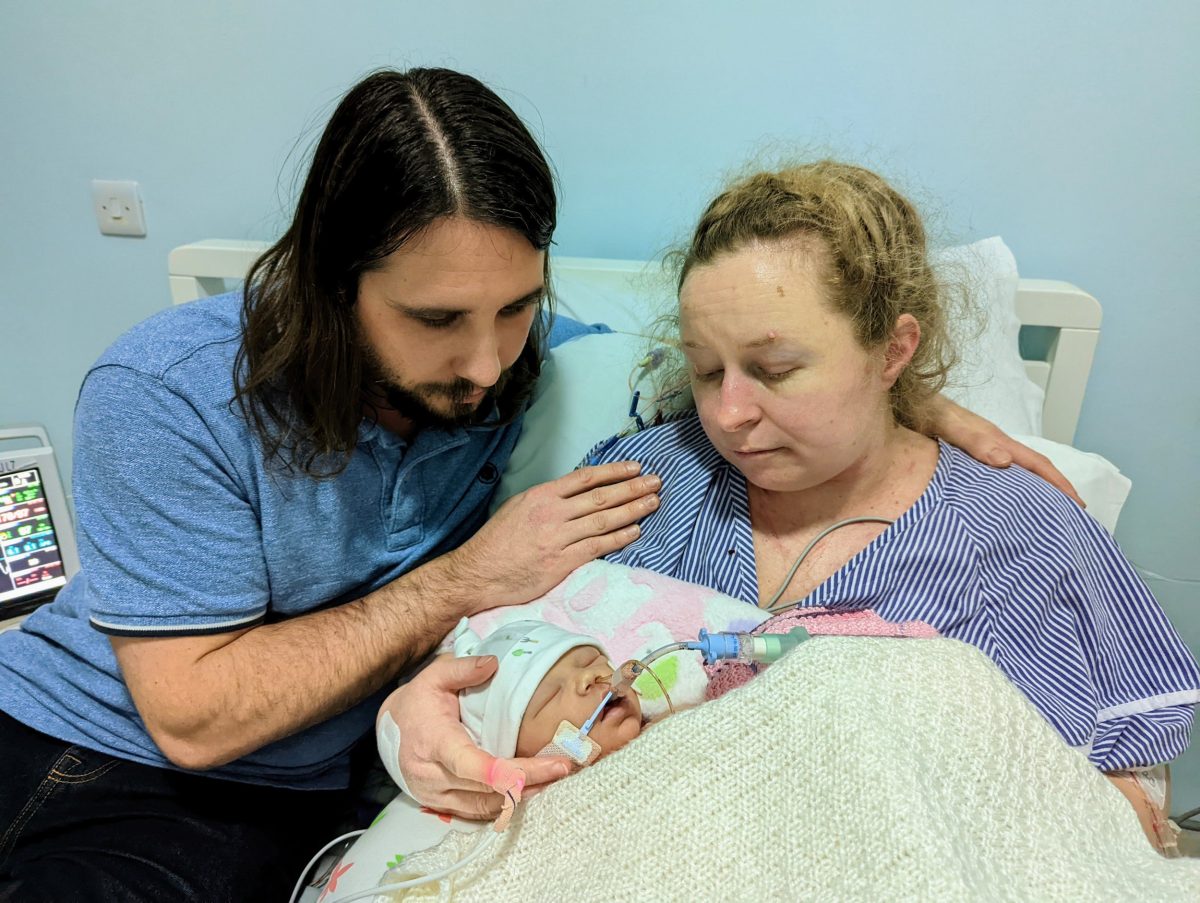
Katie Fowler is determined to see justice for her newborn daughter Abigail – and ensure no other parent has to go through the horrors she and her husband, Rob, endured.
Katie, 39, from Hove, East Sussex, went into labour in January 2022, with their eagerly awaited first child. She experienced bleeding, then turned pale and was short of breath with blue lips, but maternity staff at University Hospitals Sussex NHS Trust, who assessed Katie only over the phone, dismissed it as a possible “panic attack”.
In fact, these were signs of massive internal bleeding and when she pulled up outside hospital in a taxi, she went into cardiac arrest. Surgeons performed a dramatic emergency C-section in the hospital lobby to save her life, while her baby was resuscitated on waiting room chairs. Katie survived, but Abigail died of her injuries two days later.
The couple will never recover from their loss. “She is missing from our lives every day,” says Katie. But they had been hopeful that a “rapid review” of England’s struggling maternity services, including their trust, might prevent other tragedies.
However, Katie has been left disillusioned. She is just one of many maternity campaigners, families and charities now warning the investigation – a flagship project of Health Secretary Wes Streeting – has turned into a “shambles”.
“We were so encouraged when the national maternity investigation was announced, but it has turned into a harmful, stressful mess,” says Katie.
In June, Streeting launched a “national rapid investigation” into maternity care, which he promised would report back “by December”.
“We’re not making progress fast enough on the biggest patient safety challenge facing our country,” he said in a passionate speech, highlighting how UK maternal death rates were at a 20-year high. He promised “a different approach to the one that’s failed before”, adding: “We’re going to do it ‘with’ rather than ‘to’ these families.”
But as December arrives, the investigation is in disarray.
Severe delays mean it will take nearly twice as long as promised and will not report back until at least April. Campaigners have accused the investigation of being over-stretched, disorganised and failing to listen to those most affected by poor maternity care.

“We’re expected to feel grateful this is happening when the truth is it’s a joke,” says one maternity campaigner.
Many feel the Government is deliberately postponing taking action to deal with the country’s unsafe maternity units. “It’s kicking the can down the road. Streeting uses all this punchy rhetoric about the scale of the crisis, yet in the 18 months since Labour came into power, there has been no meaningful action. It’s political gaslighting.”
The NHS spend £1.2bn a year on compensation for maternity care
In the UK, one in four women now say their birth was a negative experience, while Black and South Asian women are at disproportionately higher risk of injury or death. Record numbers of midwives are leaving the profession citing burnout and stress – and the NHS now spends more on clinical negligence compensation for poor maternity care (£1.2bn a year) than it does on providing maternity services.
It’s no surprise that the maternity care crisis is an issue which Streeting says keeps him “awake at night”.
But the investigation he launched with much fanfare in June has seemed chaotic from the start. It took until August to appoint its chair, former diplomat Baroness Amos. In September, it finally named 14 NHS trusts to be investigated, only to U-turn weeks later to remove two (Leeds and Shrewsbury and Telford), without warning the families involved.
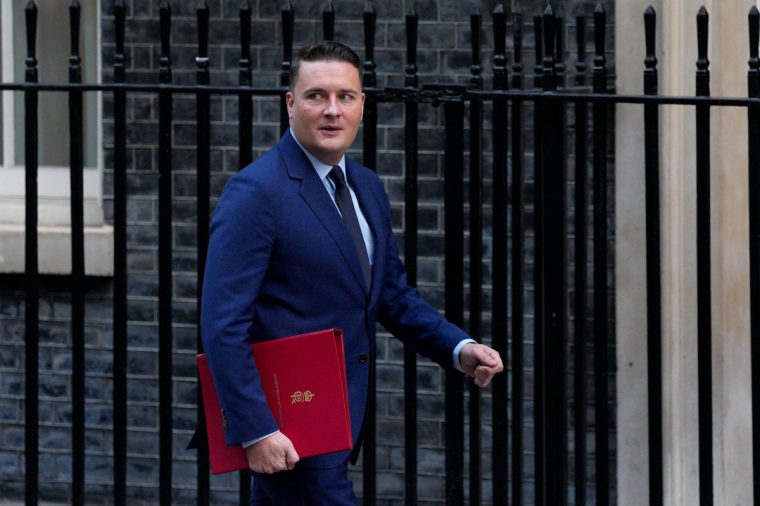
Baroness Amos has written to families pinning delays on the resident doctors’ strikes, although the investigation was already significantly behind schedule before they were announced. Officials now admit the methodology for how to carry out the investigation will not be confirmed until December.
In November, families were told the investigation will no longer have time to work as closely with them as promised. And families were “devastated” when Baroness Amos confirmed she will not “investigate failing trusts or apportion blame”.
“I was really hopeful that this would be the breakthrough we need to see changes in maternity care, but now I feel any hopes I had of seeing justice or change are dashed,” says Emma, 40, from Gloucestershire. She had a traumatic birth at Oxford University Hospitals NHS Trust (OUH), one of the trusts being investigated, after being denied a planned C-section.
‘My baby had to be resuscitated’
Rebecca Matthews, 39, runs Families Failed by OUH Maternity Services, a 700-strong group of those harmed by maternity care at the trust. She says the group was “completely overlooked” until she pushed for meetings between families and Baroness Amos.
Even then, fewer than 50 families – around 7 per cent of members – were able to speak over four short meetings. She says while Baroness Amos was “compassionate and engaged”, the team was “genuinely committed to listening” and participants were offered counselling, the limited time meant families felt rushed and “re-traumatised”, or overlooked. “It compounds the feeling of being invisible and unheard that many already experience,” she adds. “It feels like there should have been more thought put into the entire review process by Wes Streeting to ensure a clearer plan was in place.”
Lucy Crawford, 38, from Bicester, needed three blood transfusions during her 2018 birth and her daughter spent nearly two weeks in neonatal special care, after OUH staff missed signs of a serious pregnancy complication – similar to pre-eclampsia – and delayed an emergency C-section by 36 hours over a weekend.
Lucy became dangerously ill and was put under general anaesthetic as doctors tried to keep her stable for the emergency surgery. Her daughter had to be resuscitated when she was born and Lucy wasn’t able to see her for the first 24 hours of her life. “If they had taken me seriously, and then acted quickly when they finally diagnosed what it was, all of that might have been avoided,” she says.
She tried to speak at one of the meetings but time ran out. “The team wanted to listen, but every family had their own heart-breaking story to tell, which understandably takes a lot of time. Those of us speaking at the end felt really rushed,” she says. “I just don’t think the team allowed enough time or anticipated the depth of what needed to be discussed. It was emotionally exhausting – everyone was crying. I didn’t get a chance to say what I needed to and found it distressing.”
‘We feel ignored’
Katie Fowler has also found the investigation process more harmful than helpful. She and other bereaved families in Sussex were eager to contribute, but they say their input has not been taken seriously. “The Health Secretary said the investigation would be done ‘with us and not to us’,” says Katie. “Unfortunately, the reality has been very far from that.”
She says families felt pressured to provide feedback on plans for the investigation at short notice, without regard for their other commitments and the emotional impact of their grief. “We dedicated many hours to this and feel it has, in large part, been ignored,” she adds.
Dr Kim Thomas, chief executive of the Birth Trauma Association, while supportive of the investigation’s intentions, is worried its rushed nature risks it being “dominated by the strongest voices”. “We really want the review to recognise that there are many ways in which women can be harmed, including being left with birth injuries, or being denied pain relief or experiencing serious conditions that go undiagnosed,” she explains. “So many women we hear from have decided not to have another baby, or have had to give up work, as a result of the harm they experienced. It’s important to listen to them too.”
Crumbling buildings, staff shortages, and mothers and babies at risk
Although Baroness Amos has been praised universally for her respectful conduct, more than a dozen campaigners, charities and families tell me they are frustrated by the management of the wider investigation. But most of all, campaigners fear the investigation is merely a “political tactic” to postpone acting.
The most significant change the Government has made this year to maternity services was to cut ring-fenced funding by 98 per cent, from £95m to just £2m per year.
A Westminster insider describes the investigation as “a classic parliamentary delaying tactic”, saying: “It means the Government can put off having to do anything or spend any money.” The women’s health ambassador for England, Dame Lesley Regan, says there is already ample evidence from previous reports showing what needs to change which could be acted on, yet “the investigation has caused paralysis”.
A landmark report in 2022 by Donna Ockenden into Shrewsbury and Telford Hospital NHS Trust, for example, made “urgent” recommendations for the NHS to improve maternity service management systems, staffing, pregnancy risk assessments, patient information and complaint procedures – and called for an immediate increase in funding of £200m to £350m more per year.
Meanwhile, mothers and babies continue to be put at risk. The campaigning group Delivering Better estimates 200,000 women have had traumatising births since Labour came to power in July 2024. A report in September by NHS England warned pregnant women are giving birth in maternity units plagued by water leaks, power outages and faulty equipment – with more than 14,000 safety incidents at maternity units in the past three years. This was fuelling delays and disruptions during births, such as delays to planned C-sections.
Earlier this year, a report by The i Paper found the number of clinical claims made against the NHS for stillbirths rose from 129 cases in 2019-20 to 200 cases in 2023-2024 – a 55 per cent increase.
‘We know what the failings are – the Government could act now’
Many campaigners fear the investigation has neither the time nor the resources to unpick the multiple issues in England’s maternity services in such a short period.
In 2024, Theo Clarke, then a Conservative MP, led the Birth Trauma Inquiry. It collected evidence from more than 1,300 people and made several recommendations, including for the appointment of a dedicated maternity commissioner to oversee reform. She is exasperated no recommendations have been implemented. “The Government is not taking maternity care seriously,” she says. “We already know what the failings are. If the Government wanted to act now, it could.”
The Department of Health declined to comment, saying the investigation was being run independently.
A spokesperson for the National Maternity and Neonatal Investigation said hearing from families “is a priority”, adding: “The timescale for reporting initial findings in December was adjusted due to the resident doctors’ strike, which led to the rescheduling of visits to three trusts. The investigation is confident that there is sufficient time to analyse responses… and the final report remains scheduled for Spring 2026.”
University Hospitals Sussex NHS Foundation trust previously said it had improved staffing levels and training since Abigail Fowler Miller’s death and “extends our deepest condolences” to her family.
Oxford University Hospitals NHS Trust says it had not previously been informed of Lucy Crawford’s case but would be in touch with her to learn about her experience and any improvements that could be made.
A spokesperson adds: “If we identify any aspects of Lucy’s care that were not as they should have been, we will apologise openly. We are committed to providing the highest standard of care for all our maternity patients and their families. We are pleased that the feedback we receive from patients is positive overall, however, we recognise there is more we can do to improve and this remains a top priority.”


